The rise of AI in the classroom: Balancing technological innovation with critical thinking
Artificial intelligence is set to revolutionize education. From personalized learning and instant grading to AI tutors and essay-writing algorithms, technology has the power to fundamentally change what students learn, how they learn, and who does the teaching. The rise of AI in education brings great promise to the classroom, but also presents one very important question: How can we integrate…
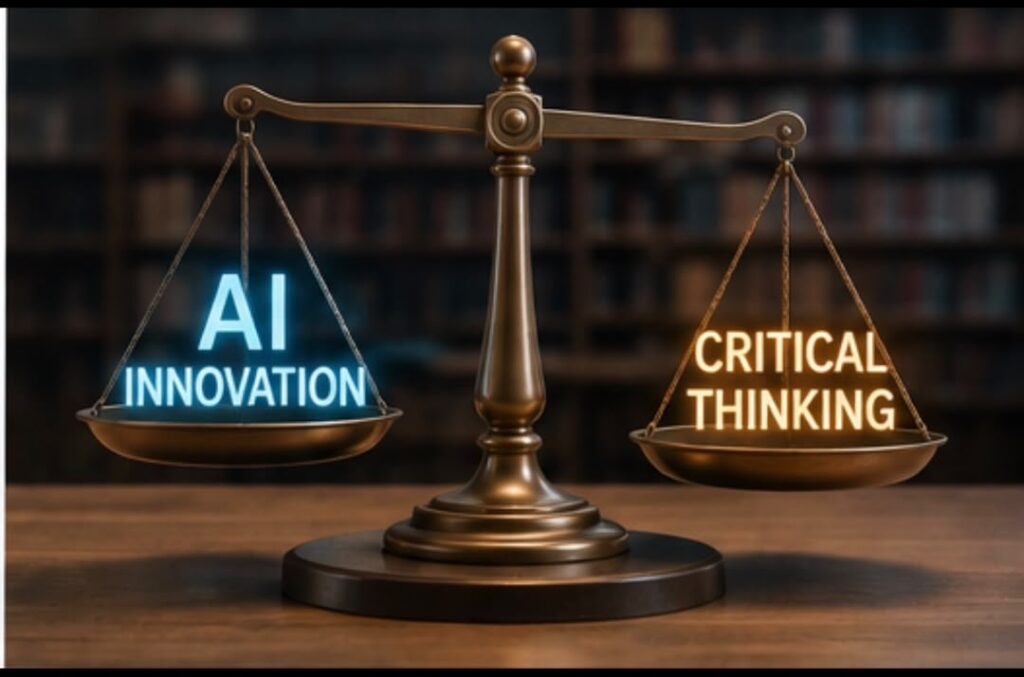
As artificial intelligence continues to reshape education, one crucial question emerges: How can we utilize technology without sacrificing the development of critical thinking skills? The answer lies in striking a delicate balance between embracing AI's potential and fostering students' ability to think independently.
AI offers numerous benefits for both students and teachers. By acting as a brainstorming partner, tutor, writer, or research assistant, it can enhance learning experiences and streamline time-consuming tasks. For teachers, AI can help plan lessons, create practice exercises, organize information, design differentiated activities, and provide feedback – allowing them to dedicate more time to meaningful interactions with students.
However, there is a risk that AI could undermine critical thinking skills if it becomes too reliant on algorithms for thinking and problem-solving. When students use AI to generate essays, mathematical proofs, or lab reports, they may overlook the importance of understanding the information provided. This overdependence on AI-generated content may lead students to accept facts at face value, without questioning the sources or biases behind them.
To counteract this, educators must emphasize the critical evaluation of AI-generated information. Students should learn to ask probing questions about accuracy, sources, potential bias, and alternative viewpoints. By incorporating these questioning habits into education, students will develop the discernment needed to critically assess the data presented by AI.
Furthermore, assessments must evolve to reflect the changing landscape of education. While written essays, mathematical proofs, and lab reports remain valuable, they should not be the sole measures of a student's understanding. Incorporating alternative assessment methods, such as oral presentations, project-based learning, and in-class exercises, allows educators to gauge students' comprehension more holistically.
In this evolving educational landscape, teachers retain their indispensable role. They provide contextual understanding, encouragement, and the ability to detect when students struggle. Teachers also serve as facilitators for discussions, encouraging collaboration and critical thinking among students. As AI becomes more prevalent, teachers must adapt their strategies to guide students in navigating the balance between technological assistance and independent thought.
Written by urgent.news from MyJoyOnline Ghana's reporting — not their text. Machine-written — may contain errors; check the original before relying on it.