The proton is more quantum than we thought
Our understanding of the internal structure of protons is largely based on classical physics, but data compiled from accelerator experiments has uncovered quantum behaviour that has never been seen before
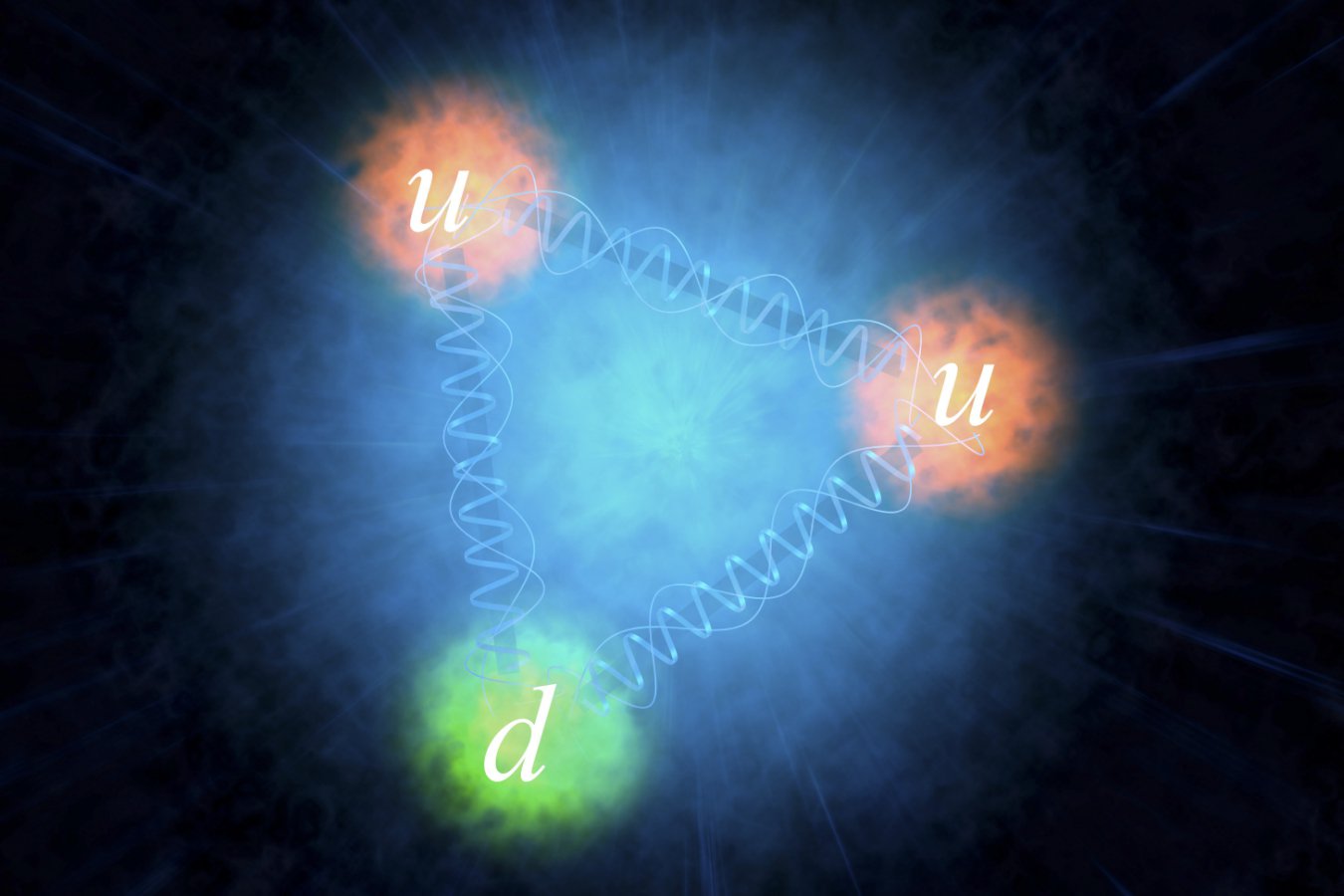
Protons possess more quantum properties than previously believed, challenging our understanding of these fundamental particles that reside at the core of every atom. Scientists have long known that protons are composed of smaller entities called quarks and gluons, but comprehending their behavior and distribution has been a complex task.
This knowledge is crucial as it influences the interpretation of experiments where protons are collided, potentially leading to the discovery of new particles or insights into the basic forces of the universe.
The parton model has been the primary mathematical framework for studying the proton's internal structure, enabling researchers to probabilistically calculate the density of particles inside the proton. However, critics argue that the classical nature of this model undermines the fundamental quantum mechanics that governs the subatomic realm.
While the idea of quantum effects within protons has been proposed and investigated since the 1980s, previous experiments yielded inconsistent results, leaving the quantum nature of protons unclear.
In an attempt to clarify the situation, researchers focused on a specific quantum phenomenon known as interference. In quantum mechanics, particles exhibit wave-like behavior, and interference occurs when two quantum waves overlap, amplifying or canceling each other, depending on their phase. Unlike classical probabilities, where the sum of probabilities determines the outcome, interference introduces additional mathematical complexity through multiple terms.
To identify quantum interference within protons, the researchers compiled data from numerous experiments conducted at diverse facilities, including CERN's particle physics laboratory in Geneva, Switzerland, and the German national laboratory DESY. By analyzing over a dozen distinct datasets, they managed to extract mathematical signatures of quantum interference. These signatures included instances where a gluon interfered with a combination of a quark and an antiquark, the antimatter counterpart of a quark.
The identification of quantum interference within protons suggests that the particles may be more quantum than previously thought, challenging the widely accepted notion that protons behave like a classical bag of particles. This revelation underscores the need for scientists to consider the quantum nature of protons more seriously.
Vladimir Braun, a physicist at the University of Regensburg, emphasizes the significance of this study by highlighting the collection of data from various sources, which provides compelling evidence of quantum mechanical effects within protons.
This research marks the first comprehensive analysis of its scale, aiming to motivate further experiments that could uncover additional signatures of quantum interference within protons. Future studies at facilities like the Thomas Jefferson National Accelerator Facility in Virginia could potentially detect more pronounced interference effects and link them to other phenomena occurring during high-energy particle collisions.
While the researchers were not surprised by the existence of quantum effects in protons, the new work provided unexpected insights into the specific ways interference manifests. For instance, the interference effects are closely tied to the quantum mechanical spin of quarks and gluons, a property that has been challenging to measure accurately.
Additionally, the study raises questions about the relationship between interference and the fundamental forces acting on quarks and gluons, particularly the strong nuclear force responsible for binding quarks together. Understanding this connection could deepen our comprehension of the fundamental laws governing the universe.
Written by urgent.news from New Scientist's reporting — not their text. Machine-written — may contain errors; check the original before relying on it.