The ESCAPE Mission Will Study the Evolution of Exoplanet Atmospheres
Exoplanets need to be habitable for a long time for complex life to develop. To sustain habitability, exoplanets need to retain their atmospheres. But many exoplanets are exposed to extreme ultraviolet light and coronal mass ejections that can strip atmospheres away. A new mission aims to understand these processes and help exoplanet scientists identify exoplanets that can stay habitable for…
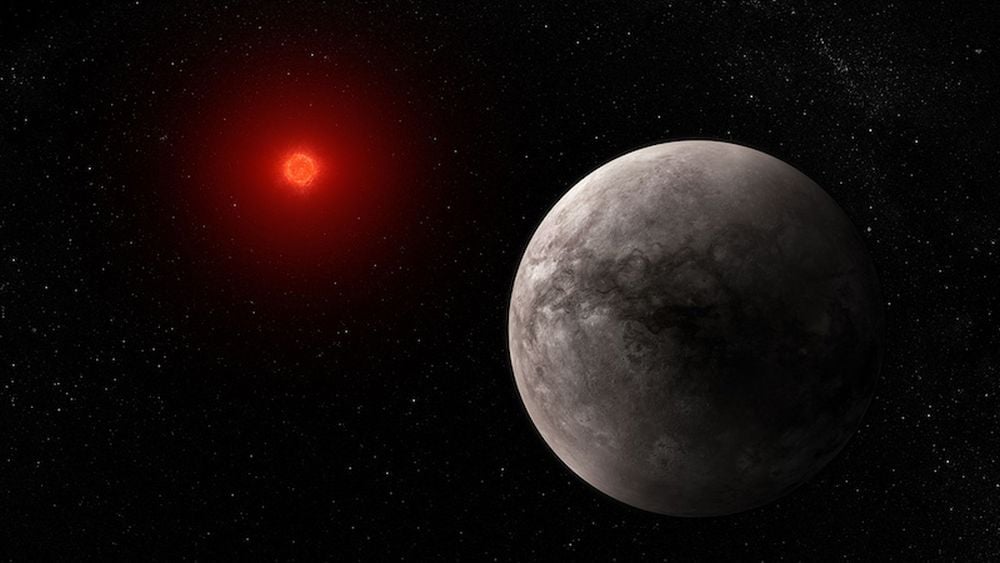
The Extreme-ultraviolet Stellar Characterization for Atmospheric Physics and Evolution (ESCAPE) mission, proposed by NASA, aims to study the evolution of exoplanet atmospheres. The mission, led by research astrophysicist Allison Youngblood, will focus on the extreme-ultraviolet (EUV) photon and high-energy particle fluxes from host stars, which are currently poorly understood.
By examining EUV and coronal mass ejections (CMEs), ESCAPE seeks to better understand how these factors contribute to atmospheric loss and determine the habitability of rocky exoplanets.
The Cosmic Shoreline concept divides planets into those that can retain their atmospheres and those that cannot, based on their ability to withstand extreme-ultraviolet (EUV) radiation and escape velocity. ESCAPE will use extreme- and far-ultraviolet spectroscopy to investigate EUV and CMEs, aiming to create more accurate models for predicting atmospheric retention in temperate, rocky planets around different types of stars.
The mission's two surveys, Stellar Euv ENvironments (SEEN) and Dedicated Euv Eruption Program (DEEP), will observe various F, G, K, and M-dwarf stars, addressing key questions about EUV irradiance, stellar EUV evolution, and stellar CME properties.
Written by urgent.news from Universe Today's reporting — not their text. Machine-written — may contain errors; check the original before relying on it.