Tesla faces uphill battle for FSD entry as China rewrites self-driving car rules: analysts
The likelihood that US electric vehicle (EV) giant Tesla will obtain Beijing’s approval for higher-level autonomous driving remains a distant prospect, according to analysts. Though Tesla recently hired people to test its Full Self-Driving (FSD) system in China, many obstacles remained, with data regulation a core issue, they said. Earlier this month, China outlined its first mandatory standards…
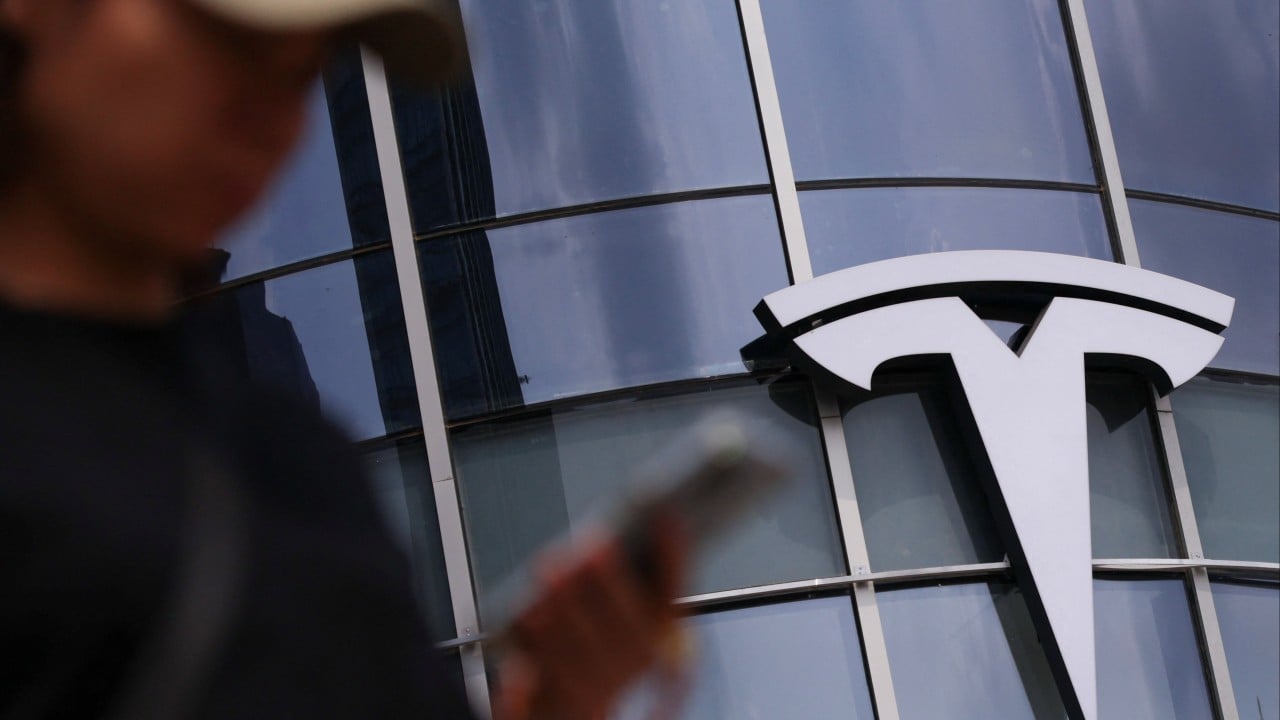
Analysts predict a significant challenge for Tesla as it strives to secure Beijing's approval for its Full Self-Driving (FSD) system in China. Despite recent efforts to test the FSD system in China, analysts highlight several hurdles that hinder the company's chances of obtaining higher-level autonomous driving certification. One of the primary obstacles is China's strict data regulation, which is expected to come into effect on July 1, 2027, as per the new mandatory standards set by the government.
These regulations place a greater emphasis on safety, requiring autonomous systems to provide at least 10 seconds of notice before transitioning control back to the driver in case of an impending accident. This stricter standard surpasses the global guidelines established by the United Nations in June.
Xing Lei, an independent analyst and founder of automotive platform AutoXing, emphasizes that the approval process would hinge heavily on the regulations surrounding data. Tesla's current FSD system operates at the Level 2+ (L2+) capability, which falls short of the Chinese government's new requirements. L3 capability, which involves "hands-off" driving in conditionally automated vehicles, and L4 capability, where drivers can be "minds-off," represent the next steps Tesla must achieve to comply with China's standards.
However, Tesla is reportedly considering prioritizing its FSD entry into China over obtaining L3 or higher approvals. In May, the company announced that its "FSD Supervised" feature became available in China, representing a step closer to a full entry. In December, Beijing granted Level 3 licences to two models from state-owned automakers Changan Automobile and BAIC.
Currently, the L2 market in China is highly competitive, with major players like Xpeng and third-party suppliers such as Momenta heavily investing in research and development.
Tesla's technological edge in autonomous driving, however, is primarily based on its advanced model honed in the United States. Yale Zhang, managing director at automotive consultancy Automotive Foresight in Shanghai, points out that data collected within mainland China is not allowed to be transmitted abroad, presenting a significant challenge for Tesla's data training needs.
Zhang asserts that the key to securing Tesla's license in China will depend on the company's determination to expand and upgrade its computing infrastructure and data centers within the mainland.
Written by urgent.news from SCMP Business's reporting — not their text. Machine-written — may contain errors; check the original before relying on it.
This story
This is one outlet's version. Read the fullest account.