Tesla faces uphill battle for FSD entry as China rewrites self-driving car rules: analysts
The likelihood that US electric vehicle (EV) giant Tesla will obtain Beijing’s approval for higher-level autonomous driving remains a distant prospect, according to analysts. Though Tesla recently hired people to test its Full Self-Driving (FSD) system in China, many obstacles remained, with data regulation a core issue, they said. Earlier this month, China outlined its first mandatory standards…
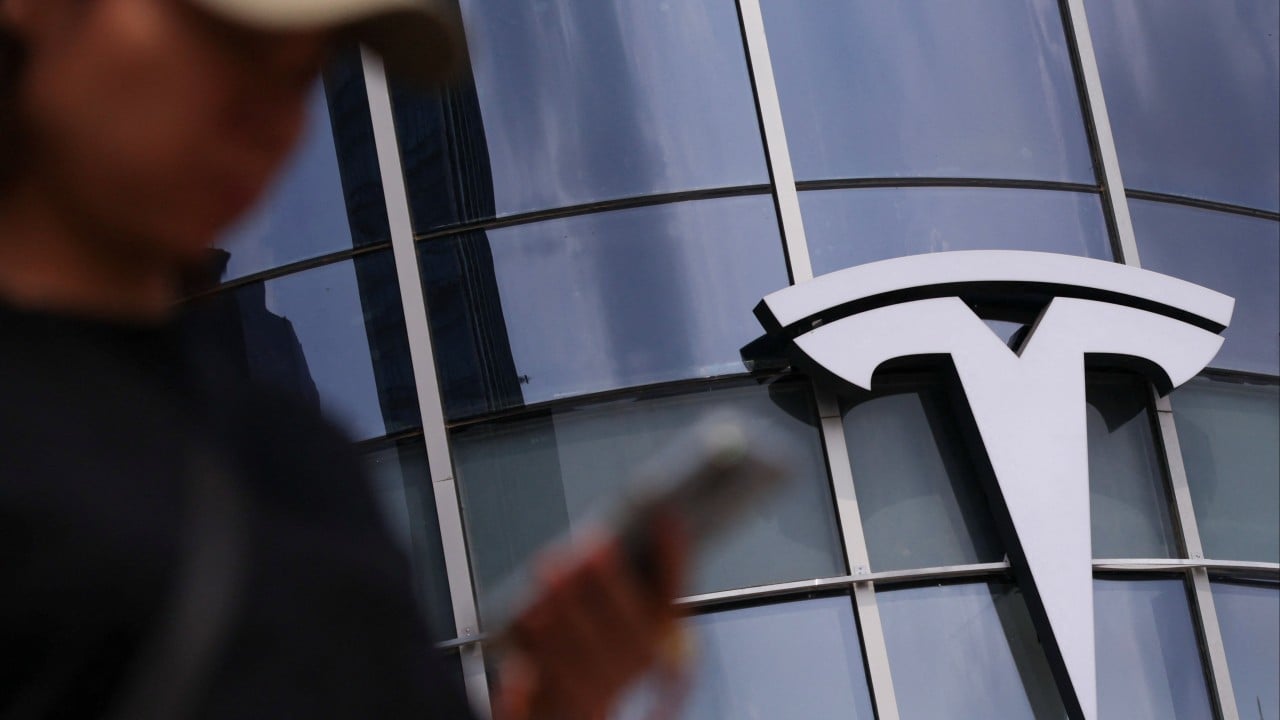
Analysts predict that Tesla's full self-driving (FSD) system entering the Chinese market will be a challenging endeavor, as the country has recently unveiled stringent regulations for autonomous driving systems. Beijing recently released its first mandatory standards for L3 and L4 self-driving functions, set to take effect on July 1, 2027.
These rules mandate that carmakers bear responsibility for accidents during active system use and require systems to give drivers at least 10 seconds to regain control before a potential incident. This stricter standard surpasses the UN's June global guidelines for self-driving cars. According to Xing Lei, an independent automotive analyst, China's regulatory framework will be the foundation of Tesla's approval.
Currently, Tesla's FSD operates at the L2+ level, which falls short of China's latest requirements. Despite this, Xing believes that Tesla may prioritize full entry into China over L3 or higher approvals. In May, Tesla launched "FSD Supervised" in China, a step closer to a full-fledged market presence. Previously, Beijing granted L3 licenses to two state-owned automakers, Changan Automobile and BAIC, in December.
The competitive L2 market in China is dominated by local firms like Xpeng and third-party suppliers such as Momenta. The L2+ level encompasses driving on highways and city roads, Navigation on Autopilot (NOA), automatic on- and off-ramp maneuvers, and memory parking—however, it remains an L2 classification, keeping drivers fully accountable in a partially automated vehicle.
Tesla's European CEO, Duan Yongping, who holds several high-profile investments, described his autonomous driving experience in California. "It works great," he stated on his Chinese social media account. Nonetheless, Yale Zhang, a managing director at Automotive Foresight in Shanghai, cautioned that Tesla's driving assistance function may struggle with China's roads due to insufficient data training.
Zhang explained that data gathered in mainland China cannot be transmitted overseas, and Tesla's technological edge currently depends on its advanced US-based model. Zhang emphasized that Tesla's licensing prospects in China will hinge on the company's determination to augment compute and training capabilities within its mainland data center.
Written by urgent.news from South China Morning Post's reporting — not their text. Machine-written — may contain errors; check the original before relying on it.