미 국방차관 “미국 배제한 중견국 동맹은 허황되고 무익한 시도”
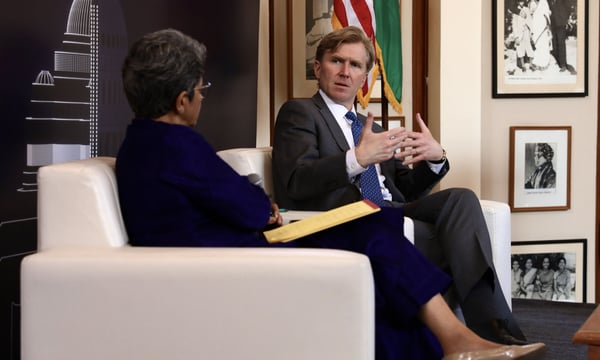
Defense Policy Chief for the United States, Ambassador Elbridge Cole, harshly criticized an alliance of mid-sized countries excluding America, known as the "Mid-sized Nation Alliance." During a speech in Manila, Philippines, on the 10th, Cole referred to the recent discussion of this concept among elite international figures and media as a "vanity project" and "a realm of words and symbols."
He argued that the alliance's pursuit hinges on "hard power" and the political will to utilize it. Cole emphasized that a true deterrent originates from physically stationed power and the political will to employ it. The idea of a mid-sized nation alliance emerged as a response to the unilateral pressure and protectionist trade policies of major powers, particularly the United States, according to Canadian Prime Minister Mark Carney's speech at the 2023 Swiss World Economic Forum.
This concept gained significant attention from American allies who opposed the Trump administration's stance on foreign policy. Cole dismissed these concerns as "trite rhetoric" and insisted that the United States' priority in Asia is not retreat or isolation but rather a strategic realignment according to its priorities. He reiterated that the United States is not weakening but instead, its presence in Asia is increasing.
Cole emphasized that the United States remains committed to maintaining Asia as its top priority and stressed that the goal is to maintain a favorable balance of power in the Indo-Pacific region while maintaining a "hardline stance." He outlined the concept of the "First Island Chain" as a virtual coastal defense line stretching from Japan, Taiwan, the Philippines, Malaysia, to Indonesia.
Cole's speech came amid growing concerns about the reduced military posture of the United States in Asia due to weapon shortages in the Iran war. Cole defined the Trump administration's foreign and security policy as "flexible realism" and strong advocacy for allied defense expenditure increases and role sharing. He urged allied nations to move beyond dependent relationships and seek practical cooperation, noting that a sustainable alliance requires mutual responsibility and real self-defense capabilities.
He quoted NATO's 2025 Heidelberg Summit, where NATO set a defense expenditure target of 2% of GDP, which he noted as a benchmark for measuring the success of the Indo-Pacific strategy for the United States and its allies. Cole stressed that the future success of the strategy will be measured by concrete indicators rather than mere agreements or joint declarations, including military capacity and posture reinforcement in the First Island Chain.
Written by urgent.news from Hankyoreh's reporting — not their text. Machine-written — may contain errors; check the original before relying on it.