NASA Shares Station Research Today Supporting Moon, Mars Tomorrow
The International Space Station has been busy throughout 2026, as it continues to be a bustling workspace for astronauts conducting a variety of scientific experiments that lay the groundwork for missions to the Moon and beyond. NASA’s Artemis II mission in April was the first crewed flight around the Moon in more than 50 years, […]
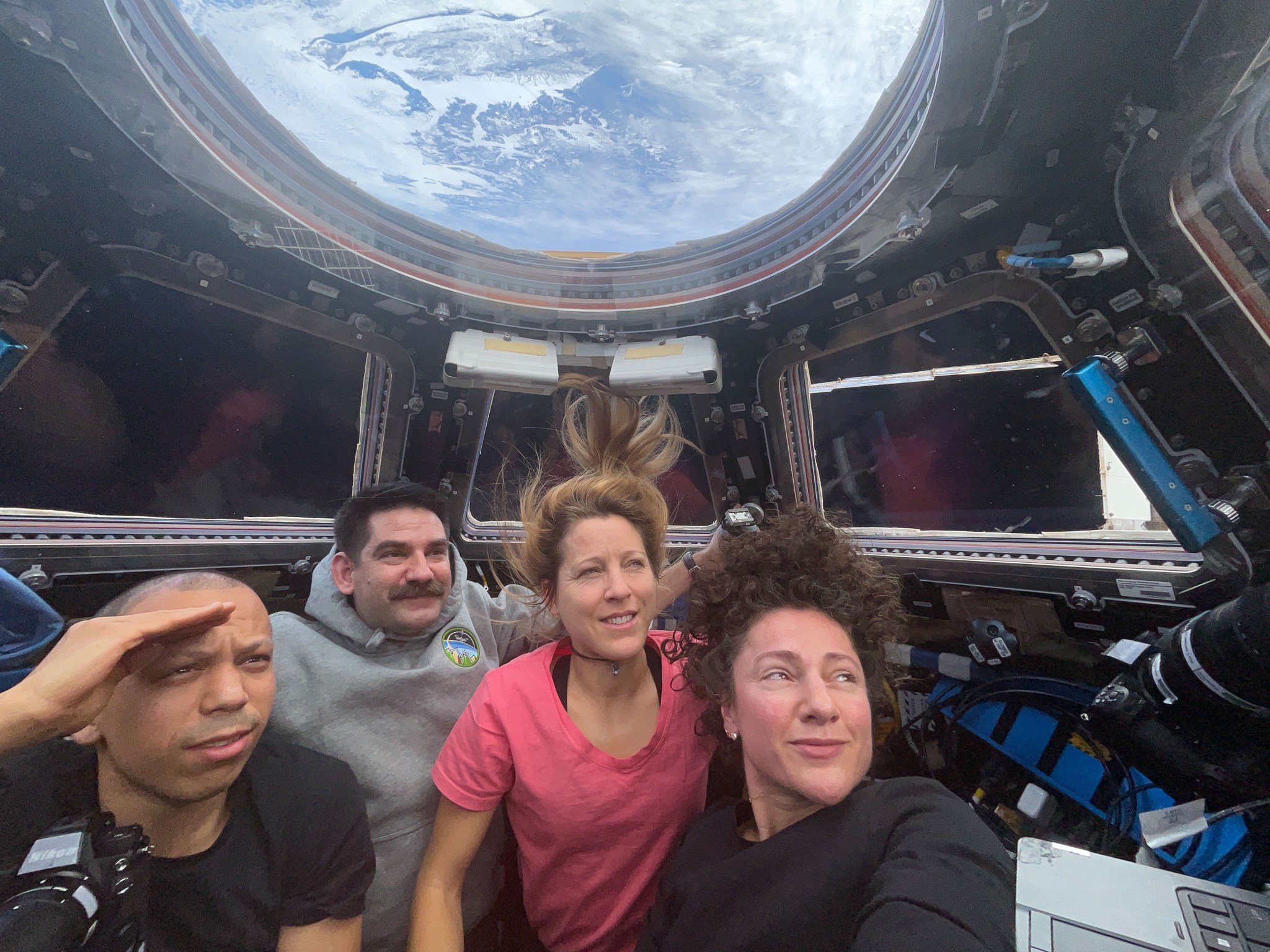
The International Space Station (ISS) remains a vital hub for scientific research that paves the way for future lunar and Mars missions. In 2026, astronauts aboard the ISS continued their work on various experiments that will support the Artemis program and eventual human exploration of the Moon and Mars.
One of the key objectives of the ISS is to test technologies and study how the human body adapts to long-duration spaceflight. Astronauts are conducting experiments to ensure that crews can live and work safely in deep space environments. For instance, the European Enhanced Exploration Exercise Device (E4D) is being tested aboard the ISS, which can simulate different gravity levels and help develop compact exercise technology for future exploration crews.
Another critical aspect of ISS research involves optimizing space technology to reduce the technology footprint and fine-tune systems ahead of missions beyond low Earth orbit. Exercise equipment is particularly important, as astronauts can lose up to 1% to 1.5% of their bone density each month due to microgravity. Regular exercise can help counteract this effect and maintain healthy bones during long-duration missions.
In addition to exercise, medical technologies are being developed and tested aboard the station. For example, the Intravenous Fluid Generation – Mini (IVGEN Mini) investigates producing intravenous fluids using the station's potable water supply. This could help meet medical needs during future missions, where launch mass and volume are limited.
Robotic technologies, such as the Test facility for lab-automation System in Kibo (TUSK), are also being studied to help address time constraints during missions, as microgravity may affect the precise movements required for delicate robotic operations.
Astronauts aboard the ISS serve as test subjects, collecting biological samples, conducting medical exams, and performing scans to understand how the body adapts to life in space. This research helps scientists and medical personnel understand the effects of spaceflight on health and protect crew members from potential risks, such as blood clots caused by weightlessness.
Additionally, research is being conducted on how microgravity affects cardiovascular and respiratory systems, which could impact blood pressure regulation during missions. By studying these factors, NASA aims to ensure the safety and well-being of astronauts during their extended stays in space.
Written by urgent.news from NASA's reporting — not their text. Machine-written — may contain errors; check the original before relying on it.
This story
This is one outlet's version. Read the fullest account.