Situation Overview: For Trump, the Strait of Hormuz is Open Again
US President Trump wants the problem with the Strait of Hormuz to be solved. The strait has been cleared of mines and is "100 percent" controlled by the US. Iran is unlikely to see it that way.
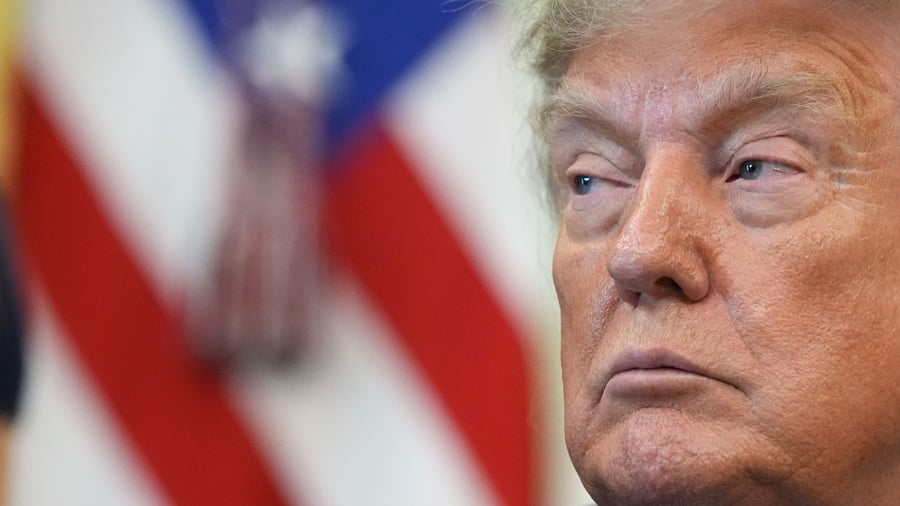
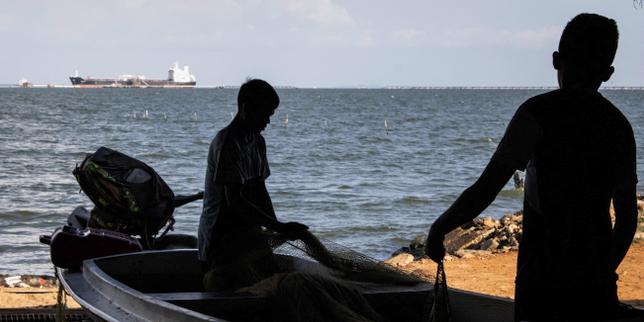
For US President Donald Trump, the struggle to open the Strait of Hormuz appears to be over, based on his recent statements. After demining, the strait is again navigable for ships and is "100 percent" controlled by the US, he said at the White House. Occasionally, Iran would lay a mine, but it would then be found and rendered harmless.
Beyond that, Trump demanded compensation payments from the leadership in Tehran. Iran, which threatens merchant ships, among other things with drones, initially did not react to the statements. Most recently, the Islamic Republic had made the opening of the sea route dependent on concessions from the US and its allies and intended to charge fees for passage through the strait.
Just on Sunday, the British Maritime Security Authority (UKMTO) reported that the threat situation in the strait remained serious due to the attacks by the powerful Iranian Revolutionary Guard on merchant ships and further harassment. The warring parties have long been struggling for the complete reopening of the Strait of Hormuz, which is used for a large part of oil exports from the Gulf states.
The Iranian National Security Council demanded for this, among other things, an end to all US threats against the Islamic Republic, a lifting of the naval blockade of Iranian ports and a withdrawal of US troops from the region, as well as full financial compensation for war damages.
All these demands had already been mentioned by Iran earlier as conditions for negotiations with the US. Before the war, shipping in the strait between the Persian Gulf and the Gulf of Oman was largely undisturbed. About a fifth of the world's oil needs were transported through the Strait of Hormuz, which is also central for the transport of liquefied gas and fertilizer.
After the start of the war, Iran brought shipping to a near standstill with threats and attacks on ships. As a result, world market prices for oil and gas rose sharply. The goal of the US government, according to Vice President JD Vance, is to restore the pre-war level of oil and gas transport through the Strait of Hormuz.
Trump demands compensation payments from Tehran. Like the Iranian leadership, Trump made compensation payments a condition for further negotiations to resolve the conflict. He wrote on his platform Truth Social that Iran should pay for every victim whose death or injury was the responsibility of the Tehran power apparatus.
The families of demonstrators killed in the past 50 years should also be compensated. Trump further demanded that Iran be held accountable for killings and damage in Lebanon, Syria, Yemen and Gaza. He had instructed his representatives to bring this point strongly into all future negotiations.
He made no statements about the amount of the demands. Wadephul calls for unconditional opening of the sea route Meanwhile, Federal Foreign Minister Johann Wadephul called on Iran in a telephone call with his Iranian colleague Abbas Araghtschi to "finally enter into constructive negotiations with the neighbors in the region and the US to end the conflict".
The Strait of Hormuz must be opened unconditionally to ensure free and safe shipping for all, he wrote on platform X. However, Iran does not seem to be yielding to US pressure - on the contrary: Foreign Ministry spokesman Ismail Baghai wrote on X that US Finance Minister Scott Bessent had boasted of strangling Iran with economic sanctions.
Whenever the US government is unable to pursue diplomatic paths, it resorts to sanctions and then imposes further ones. "It's an addiction that has supplanted even thinking," Baghai sneered. Bessent had said at the beginning of May that the US would strangle Iran with economic and financial pressure.
Most recently, the US government had tightened the screws on the country with new sanctions at the end of July. Tehran appoints new military leadership In the meantime, Iran appointed six new military leaders. The decrees for the new appointments were published on a Telegram channel that spreads news of the supreme Iranian leader Modschtaba Chamenei.
Two personnel stand out: Ahmad Wahidi is to be promoted to the rank of general and formally appointed as the commander-in-chief of the Revolutionary Guard. He had already been doing so in practice since the killing of his predecessor.
In addition, the paramilitary Basidsch militias will have a new chief in the form of intelligence veteran Hossein Taeb. After US and Israeli airstrikes had specifically targeted military leaders in the country, especially at the beginning of the Iran war, the new appointments could serve to bring more structural order to the leadership.
The appointments can also be seen as a sign that Tehran may be moving from an acute crisis mode towards formalization and consolidation of the power apparatus. Iranian media showed pictures of the appointment ceremony, on which Chamenei was not visible, however.
Since his appointment as the new supreme leader more than four months ago, he has not appeared in public. Since then, much has been speculated about his whereabouts and also his state of health.
Translated by urgent.news. Machine-written — may contain errors; check the original before relying on it.