China says US tried to buy its super magnet that has ‘40% higher’ performance
A US laboratory that once dominated the field of superconducting magnets is now hoping to buy Chinese technology used in a leading particle accelerator, official Chinese media reported on Tuesday. The US Department of Energy’s Brookhaven National Laboratory once “monopolised” this type of specialised technology, according to Science and Technology Daily. But in May last year it contacted the…
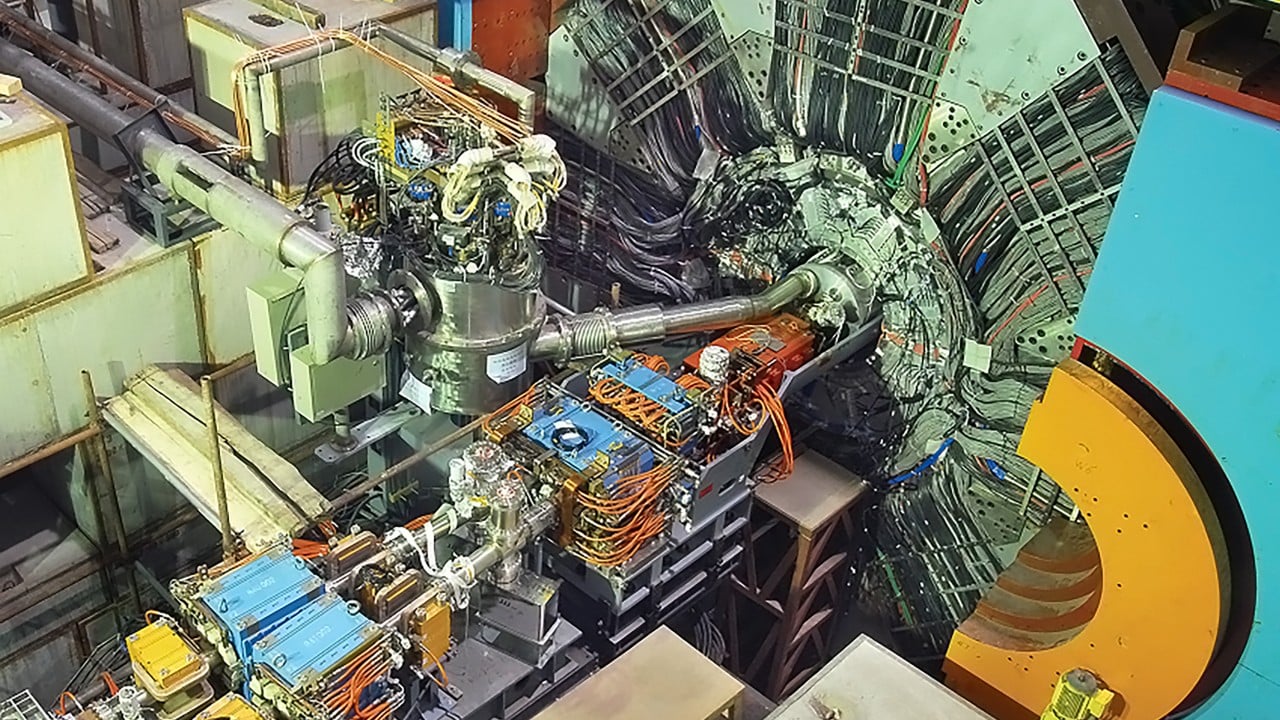
The United States Department of Energy's Brookhaven National Laboratory once monopolized a specific type of superconducting magnet technology used in particle accelerators, according to Chinese media. In May last year, the US lab reportedly contacted the Chinese Institute of High Energy Physics with the intention of purchasing such a magnet, similar to the one used in the Beijing Electron-Positron Collider's recent upgrade. However, there is no confirmation that the US lab has acquired the magnet.
Yu Chenghui, the chief operator of the collider, stated that China has demonstrated its capability to compete with the world's best in basic scientific fields and consistently win. Zhu Yingshun, a researcher at the institute, revealed that China spent 13 years developing the world's best combined superconducting magnet, which has a 40% higher performance than American products.
Combined superconducting magnets are single devices that can perform multiple magnetic functions simultaneously. Although China has imposed export controls on certain types of magnets containing dual-use rare earth elements, superconducting collider magnets typically use metals like niobium and titanium instead of rare earths.
The Beijing Electron-Positron Collider recently gained attention for providing the most conclusive evidence to date for the existence of the glueball, a rare particle made entirely of force that was first proposed by theoretical physicists over 50 years ago but remained elusive until now. The collider, first completed in 1988, recently underwent its most significant upgrade, completing the Beijing Electron-Positron Collider II in 2021.
This upgrade achieved 100% localisation of its equipment, thanks to the promotion of independent innovation, according to Yu.
Written by urgent.news from South China Morning Post's reporting — not their text. Machine-written — may contain errors; check the original before relying on it.