Bauarbeiten im Schienennetz: Bahn plant verändertes Sanierungskonzept für Korridore
Nach Problemen bei der Modernisierung wichtiger Strecken hat Bahnchefin Evelyn Palla angekündigt, das Sanierungskonzept zu überprüfen. Nun wird der Konzern konkreter.
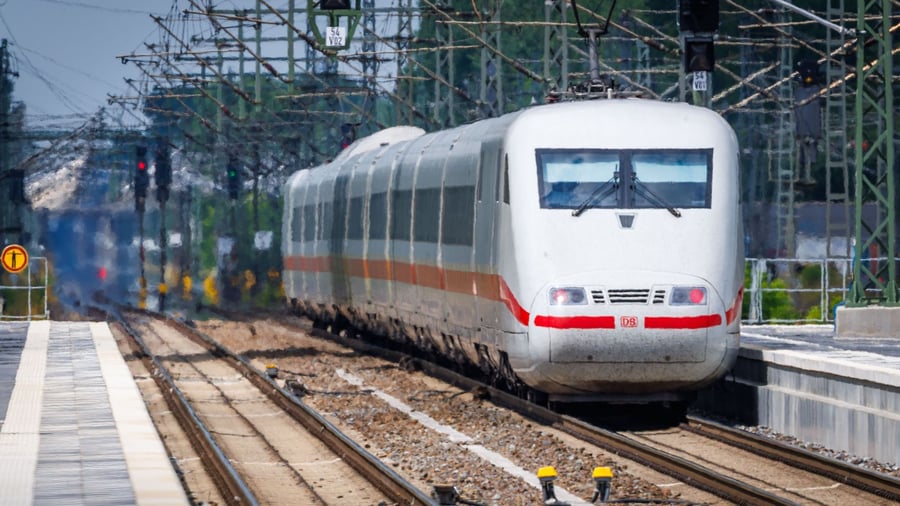
The Deutsche Bahn plans to revise its approach to the rehabilitation of dozens of railway lines by 2036, aiming to address infrastructure deficiencies and punctuality issues in long-distance rail services. However, recent problems have mounted: rehabilitation projects have been delayed, become more expensive, and despite improved infrastructure, trains have remained late.
DB CEO Evelyn Palla announced in early July that the concept of the so-called general rehabilitations would be reviewed. Initial points have now been confirmed, according to dpa information. The scope and number of projects are being examined, but some questions remain. Generally, the company intends to maintain the rehabilitations while making certain modifications.
Initially, the number and scope of projects will be reviewed and re-prioritized. Financial and personnel resources will be focused on measures that yield the greatest impact on rail quality and reliability. Whether this means the cancellation of other projects remains unclear. The rehabilitations will also be more spatially coordinated with other construction projects.
This aims to prevent overlapping closures of major corridors during delays and reduce overall network strain. Preparing tracks for digitalization A third point concerns digitalization. The rail company has repeatedly been criticized for not using rehabilitation to extensively equip affected lines with digital train control system ETCS.
According to the "Manager Magazin", the company now plans to prepare all lines for future digitalization. The company will also increase flexibility in reinstating tracks following the completion of rehabilitations. Future maintenance of rehabilitated lines will not occur all at once, but gradually. This holds particularly for critical signaling and safety technology.
The extent of individual construction sites and the overall rehabilitation timeline remains unclear. Baufreiheit (construction freedom) The final point concerns construction freedom. The rail company had promised in presenting the general rehabilitation concept that no further construction would be allowed on the lines for ten years following completion.
Later, this period was reduced to five years. Moving forward, the rail company will more clearly specify how long each line remains free from further construction after rehabilitation. Whether this softens the five-year promise is unclear. The rehabilitations will ultimately rehabilitate more than 40 heavily burdened railway lines by 2036.
Typically, sections are completely blocked for half a year to rehabilitate and modernize them. This gradually increases reliability on individual lines and the entire network, making rail traffic more reliable and punctual. New Transport Minister Steffen Bilger (CDU) expressed positive views on the plans, stating that there is a clear need for improvement in the processes and results of corridor rehabilitation.
"I consider it good and right that DB and Ms. Palla are thinking about this," he said to dpa. Bilger emphasized that after a line is rehabilitated, it must function measurably better than before and there should be no renewed construction measures soon after. The concept of general rehabilitations was originally conceived by former CEO Richard Lutz and Bilger's predecessor, former Transport Minister Volker Wissing (independent).
Kritics have long complained about the tight timetable: Originally, over 40 corridors were supposed to be completed by 2030. Later, the rehabilitations were stretched further in time. Problems have continued, particularly impacting passengers. For example, the resumption of the Berlin-Hamburg line was delayed by several weeks due to harsh winter weather in January and February making construction work impossible.
Recently, additional night operations are required to complete the signaling technology on the rehabilitated line, during which further closures are planned. The restored line currently has only one train in four arriving on time. Problems have also arisen with the Nuremberg-Regensburg line, which returned to operation with a three-week delay in late July.
Bilger recently criticized the timing of individual rehabilitations, noting that since July, the right Rhine line between Troisdorf near Cologne and Wiesbaden has been being rehabilitated with work expected to continue until December. He spoke of very unfavorable circumstances. Bahn CEO Palla was prompted to initiate a review of the corridor concept in early July due to problems and growing criticism. The plans will be presented in more detail in the coming weeks.
Written by urgent.news from Handelsblatt's reporting — not their text. Machine-written — may contain errors; check the original before relying on it.