Asiedu Nketiah calls for stronger political parties, judiciary to protect African democracy
National Chairman of the National Democratic Congress (NDC), Johnson Asiedu Nketiah, has called for reforms within political parties and the judiciary to strengthen democratic governance and rebuild public trust across Africa. He said political parties and the judiciary have critical roles to play in protecting democracy but cautioned that neither institution could effectively perform that […]
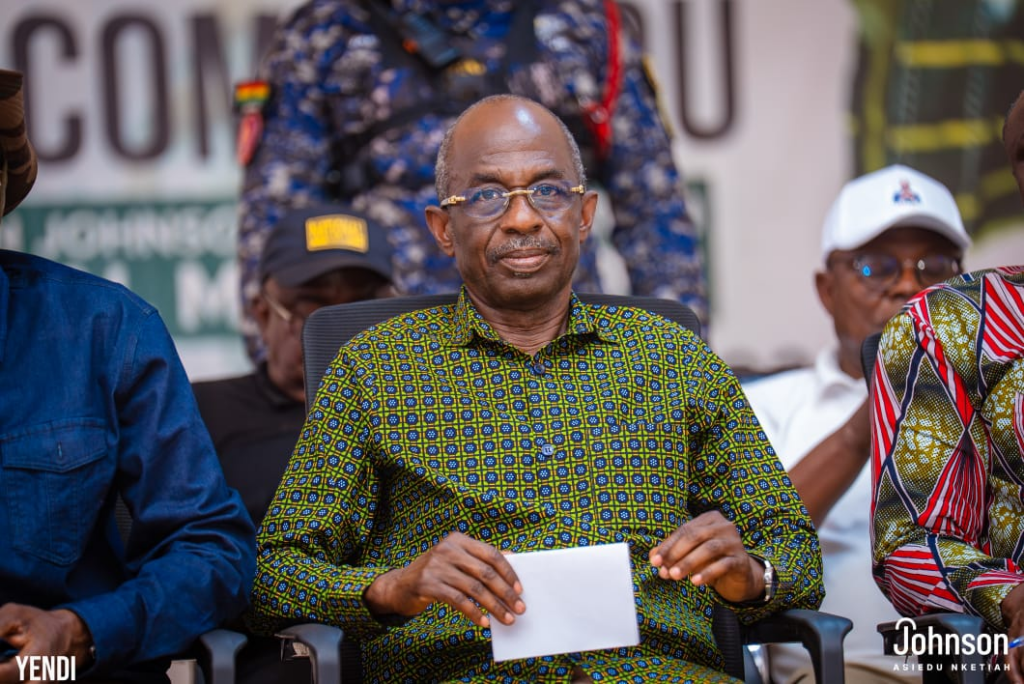
Johnson Asiedu Nketiah, the National Chairman of the National Democratic Congress (NDC), has advocated for substantial reforms in both political parties and the judiciary to bolster democratic governance and restore public confidence across Africa. During the 2026 Goodluck Jonathan Foundation Democracy Dialogue in Bauchi, Nigeria, Mr. Nketiah emphasized that while political parties and the judiciary possess essential roles in safeguarding democracy, their effectiveness hinges on credibility, accountability, competence, and public trust.
Speaking on the panel discussing the roles of political parties and the judiciary, Nketiah argued that democracy should be assessed not only by the outcome of elections but also by how political power is exercised between elections. He contended that elections determine who holds governing authority but do not inherently ensure that authority will be exercised lawfully, respect constitutional boundaries, maintain the legitimacy of opposition parties, or enhance the well-being of citizens.
Citing Ghana's experience under the Fourth Republic, Nketiah highlighted the country's nine consecutive general elections since 1992, including peaceful power transitions in 2000, 2008, 2016, and 2024. He underscored how political leaders, institutions, and citizens averted potential crises during the closely contested 2008 presidential election, where candidates and officials maintained a peaceful transition of power despite a narrow margin of victory.
However, Nketiah cautioned against complacency, citing election-related violence during the 2020 elections as a reminder that democratic progress can be jeopardized. He called for comprehensive reforms in political parties, urging them to evolve beyond serving merely as electoral machines or conduits for individual ambitions. Nketiah emphasized that parties must cultivate internal democracy, embrace legitimate dissent, and ensure that women, young people, persons with disabilities, and financially disadvantaged individuals can actively participate in politics.
Regarding financial constraints, Nketiah pointed out that the escalating cost of political campaigns poses a threat to internal party democracy. He argued that when political participation becomes heavily reliant on wealth, parties risk selecting candidates based on financial capability rather than competence. Consequently, he advocated for measures to lessen financial barriers to political involvement and reinforce party institutions dedicated to policy development, research, civic education, and leadership training.
Nketiah also stressed the critical need for an independent and credible judiciary to mediate political disputes and preserve constitutional democracy. He highlighted Ghana's presidential election petitions from the 2012 and 2020 elections as instances where political disagreements were effectively transferred from the streets to the courts.
He noted that while citizens may legitimately critique judicial reasoning, intimidation and threats are incompatible with constitutional democracy. However, Nketiah stressed that judicial independence should be matched with transparency, consistency, ethical standards, and public accountability.
Addressing concerns about Ghana's judiciary, Nketiah warned that public perceptions of issues such as access to justice, affordability, and delays could erode confidence in the institution. He urged African judiciaries to assert their authority in protecting opposition parties, upholding fundamental rights, and enforcing constitutional limits, while simultaneously avoiding the pitfall of becoming "alternative political chambers."
In his concluding remarks, Nketiah stressed that securing African democracy goes beyond merely holding more elections. He argued that the future of African democracy will be secured by institutions that make elections meaningful, hold governments accountable, enforce constitutional limits, and ensure peaceful transitions of power. He urged all stakeholders, including political parties, courts, electoral bodies, civil society organizations, the media, and academia, to engage in dialogue before political crises arise.
Written by urgent.news from Adom Online's reporting — not their text. Machine-written — may contain errors; check the original before relying on it.