Asean must protect vital sea lanes
LETTER: IN an increasingly uncertain world, prudence — not power — is likely to be the region’s greatest strategic asset besides robust domestic economic and security fundamentals.
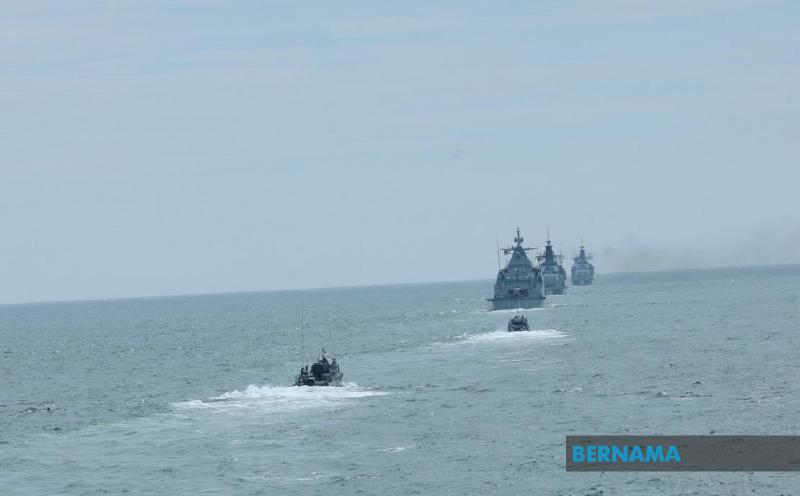
In an increasingly uncertain global landscape, prudence has become the region's greatest strategic asset, aside from strong domestic economic and security fundamentals. The Association of Southeast Asian Nations (ASEAN) has thrived by avoiding entanglement in major power politics. However, recent geopolitical shifts have tempted some member states to take ill-advised actions.
The rivalry between China and the United States for dominance in the South China Sea and Taiwan has escalated, with countries like Japan and Australia forming defense pacts with the Philippines, which is in conflict with China. Noted Singaporean diplomat S. Rajaratnam cautioned that Southeast Asia should not become a battleground for major power rivalries.
A united ASEAN holds greater diplomatic influence and centrality, while a fragmented ASEAN can become susceptible to external pressures. The Hormuz Strait maritime conflict could be replicated in Southeast Asia. The region possesses several strategic straits crucial for international navigation, most notably the Straits of Malacca and Singapore, which handle nearly 30% of global oil trade annually.
Over 120,000 vessels traverse these straits each year, making it the world's largest maritime oil transit chokepoint. The disruption of access to both straits could severely damage the economic and security environment of the Indo-Pacific region. Additionally, there are several other vital sea lanes in Indonesia and the Philippines, including the Lombok Strait, Sunda Strait, Makassar Strait, and the Philippines' Balintang Channel, Sibutu Passage, and Basilan Strait.
These straits play a crucial role in international maritime navigation. Governed by the UN Convention on the Law of the Sea (UNCLOS), which ensures unimpeded transit passage, the Straits of Malacca and Singapore are obligated to maintain free transit passage. ASEAN's prosperity hinges on open sea lanes, stable energy markets, predictable trade, and a rules-based international environment.
ASEAN's economic strength comes from a market of nearly 700 million people and a US$3.9 trillion economy. Although the ASEAN single market is appealing, investments are concentrated in certain member countries, creating an economic disparity that can be exploited by predatory powers.
Written by urgent.news from New Straits Times's reporting — not their text. Machine-written — may contain errors; check the original before relying on it.