Armistice Regime, Peace Regime, or Time for a Different Mindset on the Korean Peninsula?
Adopting a new mindset for peacebuilding on the peninsula requires preserving what works while targeting individual issues that remain unresolved.
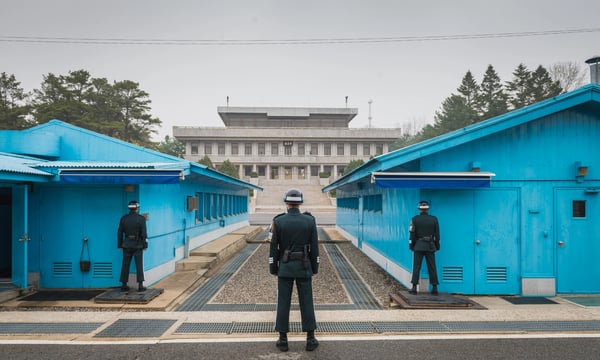
In the wake of the 73rd anniversary of the Korean Armistice Agreement, South Korean Minister of Unification Chung Dong-young has called for an end to the Armistice regime and a shift towards a peace regime. This transition was similarly advocated by South Korean President Lee Jae-myung earlier in July, when he assured the South Korean Peace Unification Advisory Council that his administration would strive to move away from the Armistice Agreement towards a "peace regime" framework. The question remains: what does this transformation mean and can it be achieved with North Korea?
The "peace regime" is a longstanding South Korean policy aimed at establishing a new framework for inter-Korean relations. This entails transitioning from the Armistice Agreement to an inter-Korean peace arrangement, diminishing foreign influence on the Korean peace process, and fostering interdependencies that could lead to eventual reunification.
While this approach has shown brief success during periods of increased cooperation, it has, in the long run, proven ineffective in attaining these goals. This failure can largely be attributed to the fundamental disparity in policy preferences and domestic politics between North Korea and South Korea.
However, treating the peace process as a series of distinct phases also contradicts the fundamental principles of peacebuilding, which creates arbitrary friction points and missed opportunities for cooperative efforts. Ultimately, a successful approach to inter-Korean policy will necessitate a shift in how peacebuilding efforts are conceptualized on the Korean Peninsula.
This would involve accommodating North Korea's decision to abandon unification as a priority, as well as an adaptation within South Korean politics that is currently fraught with competing stakeholder interests.
In the interim, the Armistice Agreement will continue to serve as a foundation for peacebuilding efforts on the peninsula, just as it has for the past seventy-three years. The agreement provides a foundation for maintaining a cessation of hostilities, institutionalizing the peace process, and creating opportunities for non-violent engagement.
This is achieved through the establishment of rights, duties, and obligations for both sides, the designation of buffer areas such as the demilitarized zone (DMZ), and the establishment of oversight mechanisms to ensure the implementation of ceasefire provisions.
Despite periodic violations of the armistice, both sides have largely adhered to its rules in recent years. The North's Panmunjom Mission is overseen by the Korean People's Army, while the South is governed by the United Nations Command Military Armistice Commission, which includes representatives from the United States, South Korea, Denmark, and New Zealand, among others. The Neutral Nations Supervisory Commission, comprising Switzerland and Sweden, provides third-party oversight.
This operational infrastructure has also facilitated communication between the two sides during periods of heightened tensions. For instance, the hotline between the UNCMAC and the KPA Panmunjom Mission has been operational since 2019, and both sides maintain a constant presence at the Joint Security Area in Panmunjom, allowing for routine and crisis communication as needed.
While the Armistice Agreement has its limitations, such as the failure to establish maritime boundaries and a lack of on-the-ground oversight of North Korean activities, it is crucial to remember that the agreement was never intended to be a permanent political resolution of the conflict.
Written by urgent.news from The Diplomat's reporting — not their text. Machine-written — may contain errors; check the original before relying on it.