Your Dog Really Can Tell When You're Happy
Facial cues are key to the dog-human connection, a new study finds.
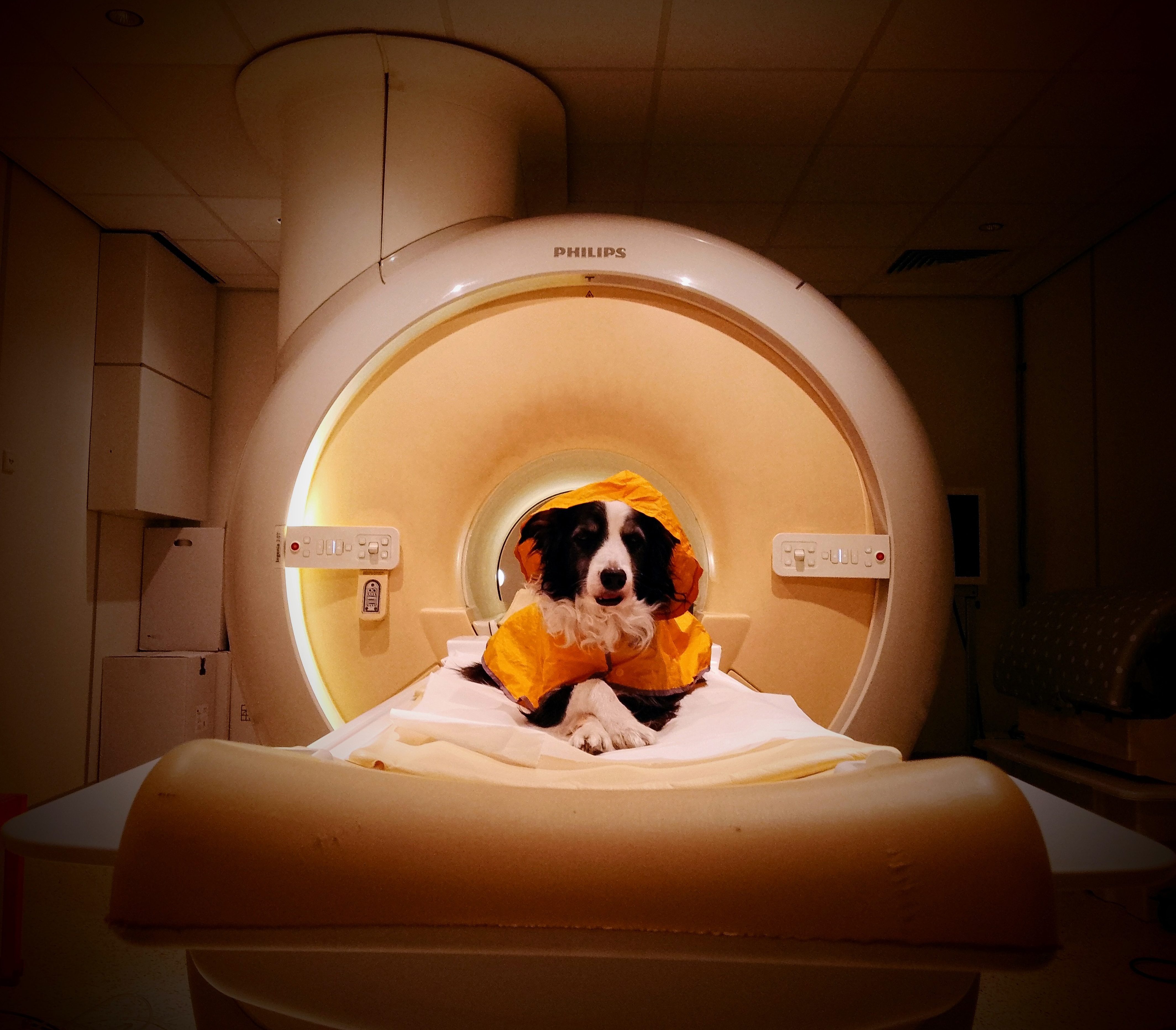
A new study published in the journal iScience reveals that dogs can indeed read human emotions through facial expressions, not through some mystical mind-reading ability. The researchers from the University of Vienna used functional magnetic resonance imaging (fMRI) to scan the brains of cooperative dogs while they viewed pictures of happy or neutral human faces.
Rául Hernández Pérez, the study's first author and a professor of psychology, notes that this ability to perceive human emotions is rare among other species. While chimpanzees and wolves can do it to some extent, dogs excel at the task. The study involved 14 dogs, including border collies, golden retrievers, and a Labrador Retriever, all of which were trained to remain still in the MRI scanner for at least six minutes.
The dogs were presented with pictures of happy or neutral human faces, and the fMRI scan revealed that the temporal cortex and caudate nucleus in their brains became active when they saw happy faces. These areas are involved in processing emotions, forming memories, mastering language, and responding to visual cues like familiar faces. The neutral faces did not elicit the same response in these areas.
When the dogs were shown a variety of human emotions, including happiness, sadness, fear, and anger, the researchers discovered that the dogs processed the emotions differently. For example, sadness and fear activated different regions of the dog's brain compared to anger and fear. This suggests that dogs have a more nuanced understanding of human emotions than previously thought.
The findings of this study can help improve the bond between dogs and humans. Cuaya believes that understanding the emotions of dogs can help humans be more aware of their dogs' feelings and how they express them. Additionally, the study can enhance the training process by allowing trainers to provide appropriate rewards and emotional cues to their dogs.
Written by urgent.news from Time's reporting — not their text. Machine-written — may contain errors; check the original before relying on it.