Why nine million were removed from a landmark Indian cash scheme for women
Until two years ago, Nirmala Bawaskar had no bank account of her own. A widow who works as a housemaid in Maharashtra’s Sambhajinagar district, she signed documents with a thumbprint and had little control over money entering her household. That changed when she enrolled in the Mukhyamantri Majhi Ladki Bahin Yojana, one of India’s biggest […]
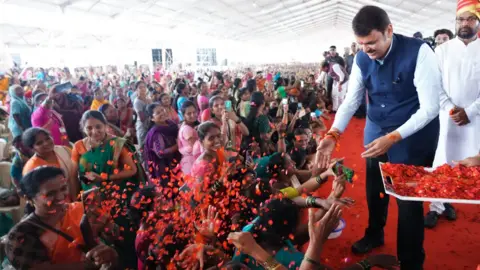
Until two years ago, Nirmala Bawaskar, a housemaid in Maharashtra's Sambhajinagar district, lacked her own bank account and had minimal control over household finances. This changed when she joined the Mukhyamantri Majhi Ladki Bahin Yojana, a large state cash-transfer program. Launched just before the state's 2024 election, the scheme provides eligible women 1,500 rupees ($17; £13) each month, offering financial support and a sense of empowerment.
Bawaskar became one of the 26 million women enrolled in the program, which now faces scrutiny over its management. India's national auditor revealed that Maharashtra's Women and Child Development Department exceeded its authorized budget by 35.41 billion rupees, spending 332.37 billion rupees in the inaugural year. Separately, a government verification drive removed over nine million beneficiaries, primarily for failing to complete mandatory identity checks, while others were deemed ineligible.
The Maharashtra government has yet to comment on the audit findings. When Ladki Bahin launched in June 2024, officials claimed it would enhance women's financial independence and help families manage daily expenses. The scheme targeted women aged 21 to 65 from low-income households, excluding taxpayers, government employees, and those already receiving similar benefits.
The timing of the scheme's launch was politically significant, as it coincided with the ruling Mahayuti alliance's setbacks in the 2024 general election. The Mahayuti, led by Prime Minister Narendra Modi's Bharatiya Janata Party and two regional allies, promoted Ladki Bahin as a symbol of women's unpaid work and a response to the opposition's criticism of vote-buying.
When the Mahayuti returned to power with a substantial majority, they attributed their victory to the scheme. A post-election survey by Lokniti-CSDS found that half of the surveyed women voted for the ruling alliance, compared to a third for the opposition; among those receiving Ladki Bahin benefits, Mahayuti's support increased to 54%.
However, experts cautioned against overestimating the scheme's impact, noting that women were only three percentage points more likely to support the Mahayuti than men. The auditor's report highlighted risks, including unauthorized spending and the transfer of 155.86 billion rupees into special accounts in the final months of the previous year, which undermined financial discipline and reduced legislative oversight.
The verification process also revealed that the number of beneficiaries dropped from 26.3 million to approximately 17 million after the government introduced mandatory electronic identity verification (e-KYC).
Written by urgent.news from The Island Sri Lanka's reporting — not their text. Machine-written — may contain errors; check the original before relying on it.