What he told me made my blood run cold - Michael Sheen investigates Wales' toxic legacy
Michael Sheen investigates claims cancer-causing chemicals were dumped across Wales.
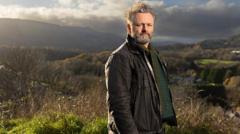
What Michael Phillips experienced as a child in the 1980s remains shocking in retrospect. He and other children played at a lagoon in Wales, firing air guns at rusty barrels that emitted clouds of colored powder, blissfully unaware of the toxic chemicals present within. Michael Sheen, a Hollywood actor and friend of Phillips', recently investigated these allegations and reported that several of Phillips' childhood friends and himself have subsequently developed rare cancers, which they suspect may be linked to exposure to these chemicals.
Researcher and whistleblower Douglas Gowan tried to alert authorities about these 14 toxic sites, 12 of which were in Wales, but unfortunately, he passed away before his warnings were heeded. Sheen, who spoke to Gowan just months before the latter's death, has now continued his investigation and documented his findings in a new BBC iPlayer documentary.
Gowan alleged that the chemical giant Monsanto had dumped vast quantities of industrial chemicals, including polychlorinated biphenyls (PCBs), across Wales. He described PCBs as "some of the worst contaminants known to man" and emphasized that they build up in the environment, animals, fish, and even humans. Eastman Chemical Company, which manages Monsanto's UK legacy production, did not comment on the allegations.
PCBs are now recognized as "the godfather of forever chemicals" due to their stability, resistance to extreme conditions, and insulating properties. These manmade chemicals were used in a wide range of products, from plastics and paint to electrical equipment. Regulations to ban such chemicals were implemented worldwide in the 1970s, but these substances persist in the environment, often leaching into waterways and eventually the sea.
At the lagoon in Llwyneinion near Ruabon, East of Wales, a fire in the 1980s required the efforts of 60 firefighters to extinguish for over 18 hours, with the toxic impact reportedly felt up to 20 miles away. Phillips, who watched the fire, believes his health issues began in 2001 when he started experiencing lumps on his shoulder. He was later diagnosed with cancer and lost a significant portion of his shoulder.
Another close friend of Phillips, who used to frequent the lagoon, succumbed to breast cancer. Sheen's other friends have also been affected, suffering from brain cancer and having their lymph glands removed due to cancer. One friend's odds of contracting the same type of cancer as Phillips, diagnosed with similar symptoms, were likened to winning the lottery.
Phillips' blood tests revealed elevated PCB levels, normalizing the presence of these chemicals in human bodies, even if one had never lived near any dump sites. Sheen, too, had his blood tested and found 81 different types of PCBs in his system, despite not residing near any contamination sites. He emphasized that there is no safe level of PCB exposure, and the lower the concentration in an individual's blood, the lower the risk of cancer.
Paul Pemberton, a Wrexham councillor, expressed concern over the site's history of abuse and the presence of cyanide, arsenic, and PCBs. Scientists recommended cleaning up the site, but Wrexham council argued that the contamination did not meet legal requirements for remediation. In 2017, Gowan suggested that the responsible companies should be compelled to remediate the sites, citing the government's decision not to impose restrictions on PCB imports into the UK.
Written by urgent.news from BBC News's reporting — not their text. Machine-written — may contain errors; check the original before relying on it.
This story
This is one outlet's version. Read the fullest account.