The Toxic Appeal of “Big-Reveal” Content on Social Media
For well over a century now, families have sported rows of rictus grins for the camera, but the subgenre of family portraiture (and, later, video clips) dedicated to conception, gestation, and birth is very much a product of the social
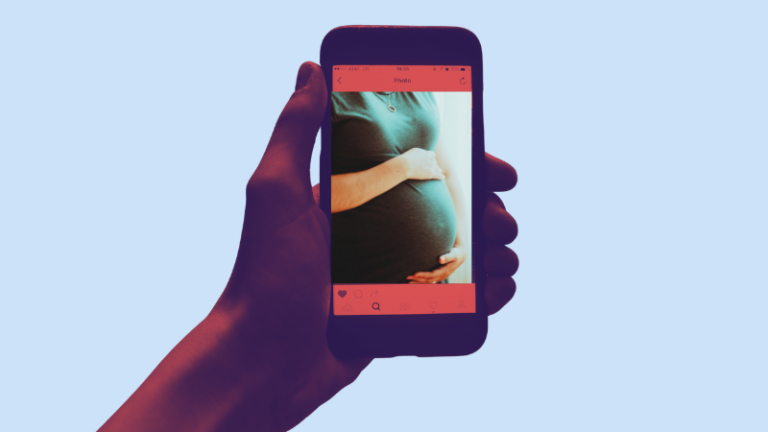
The evolution of pregnancy as a visual phenomenon on social media is a result of the age of digital communication. Family portraits and videos dedicated to conception, gestation, and birth have been a part of the social media landscape for well over a century. While cultural norms and infant survival rates have changed, the public fascination with pregnant bodies remains constant.
Pregnancy announcements, "bump" portraits, and gender reveals are all visual conventions that have emerged due to the combination of changing cultural norms and the visual nature of social media.
The public's fascination with pregnant bodies stems from a biological phenomenon that has become more public due to improved health conditions and birth rates, paired with a communication medium that thrives on visual surprises. Viewers are drawn to scrutinize the pregnant body's transformation and the surprise it brings, elevating the routine biological process into a spectacle of status and economic fitness.
The portrayal of pregnancy on social media comes with a set of stringent visual conventions. Pregnancy is now displayed "right" through a rigidly codified visual representation, a stark contrast between the protruding belly and the rest of a woman's body. Small-bodied pregnant women often face rigid expectations to conform to the visual norms of health and fitness.
Women with bigger bodies are frequently excluded from the social media representation of pregnancy, which further reinforces a shared visual language of permissible pregnancy.
The postpartum period can also be challenging for many women, who are often pressured to "bounce back" quickly to their pre-pregnancy size. For women who cannot or do not meet this expectation, social media can add a layer of shame.
Overall, the way pregnancy is represented on social media has changed significantly since Demi Moore's Vanity Fair cover in 1991. What was once a site of strictly enforced feminine modesty has now become a site of praise and scrutiny, where women with small bodies are celebrated and those with bigger bodies are often left out of the conversation.
Written by urgent.news from Literary Hub's reporting — not their text. Machine-written — may contain errors; check the original before relying on it.