How JD Salinger’s Experience of WWII Suffused All of His Writing, Even Catcher in the Rye
Among the things troops carried with them on the battlefields of World War II was the “heart shield bible”—a pocket-sized, government-issued book of scripture, sometimes with a metal cover, that fit snugly in a G.I.’s standard-issue shirt pocket. In at
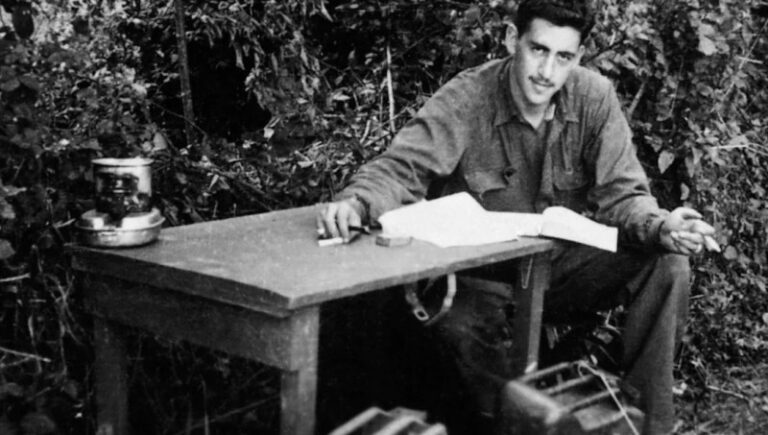
When 23-year-old Jerome David Salinger was drafted into the military at the outset of World War II, he brought his own personal arsenal to the battlefield – a pocket-sized "heart shield bible" and a typewriter. During a particularly harrowing moment when his unit faced intense gunfire, a soldier witnessed Salinger fervently typing away at the typewriter while huddled under a table.
Salinger’s wartime experiences would later permeate his writing, including the groundbreaking novel, "The Catcher in the Rye." His reflections on the horrors of war found their way into the novel, challenging the traditional narratives of G.I. heroism and masculinity that were prevalent during that era. Salinger’s writing was raw and unapologetic, providing a stark contrast to the prevailing myths surrounding warfare.
Like many veterans, Salinger returned home severely traumatized, and he turned to his writing as a means of processing his experiences. He rarely spoke about his own service record, instead choosing to explore his wartime memories through the lens of fiction. Though he was reluctant to discuss his service, moments of personal candor revealed the profound impact of the war on his psyche.
One of the most haunting fragments of Salinger’s wartime writing is the unpublished short story "The Magic Foxhole," in which he grapples with the theme of survivor's guilt. The story follows a young soldier, Gardner, who miraculously avoids injury during the bombing of Normandy but struggles with the psychological toll of war. Gardner's hallucinations and descent into madness serve as a poignant reminder of the lasting impact of combat on individuals.
Salinger’s writing during the war was heavily influenced by his experiences, but he also drew inspiration from his time at Valley Forge Military Academy, where he matriculated after flunking out of a previous school. The academy, known as the "Forge," often served as a backdrop for Salinger’s fictional works, providing a rich tapestry of troubled youth, corrupt teachers, and privileged cadets.
In his novel "The Catcher in the Rye," Salinger pays homage to his time at the Forge, albeit with a critical eye, exposing the vulnerabilities and harsh realities that often lurked beneath its façade.
Written by urgent.news from Literary Hub's reporting — not their text. Machine-written — may contain errors; check the original before relying on it.