The Native History of NYC's Oysters
Who needs IMAX? See a real papyrus fragment of Homer’s Odyssey at The Met.
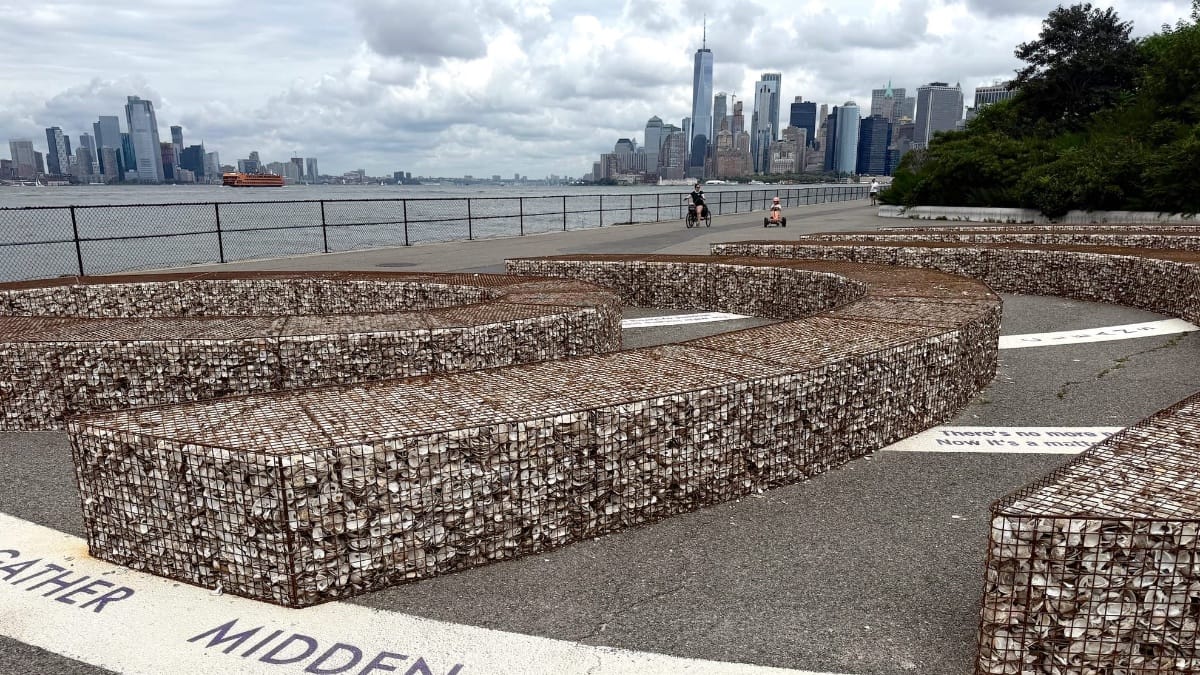
In New York City, the humble oyster holds a symbolic significance that transcends culinary value. The oyster, according to writer Hrag Vartanian, is perhaps the city's most emblematic creature. An installation by Mohawk artist Alan Michelson on Governor’s Island serves as a poignant reflection on Native land and historical memory.
The installation features about a million oyster shells reclaimed from Manhattan restaurants, which serve as a reminder of the city's rich history and the detrimental impact of their depletion on the ecosystem.
Michelson's work presents the oyster shells as "forces of insurgency," challenging settler innocence and the notion that "nothing was here" before extraction. The Metropolitan Museum of Art is currently displaying a rare 2,300-year-old papyrus fragment bearing lines from Homer's epic Odyssey. This discovery adds to the city's cultural heritage, showcasing the blend of ancient history and modern urban life.
The name Pearl Street in Manhattan's Chinatown is an echo of the city's early Native history. Originally, Pearl Street marked the 17th-century East River shoreline of New York City, named for a Lenape shell midden situated along its southern edge. This area, believed to be adjacent to a Lenape canoe landing, was one of many prominent middens that marked the region. These oyster shell piles, as noted by Mark Kurlansky in his book "The Big Oyster: History on the Half Shell" (2006), were sometimes as deep as four feet.
Written by urgent.news from Hyperallergic's reporting — not their text. Machine-written — may contain errors; check the original before relying on it.