The Mecca Pact: As West Asia rearms and realigns, can India hold its ground?
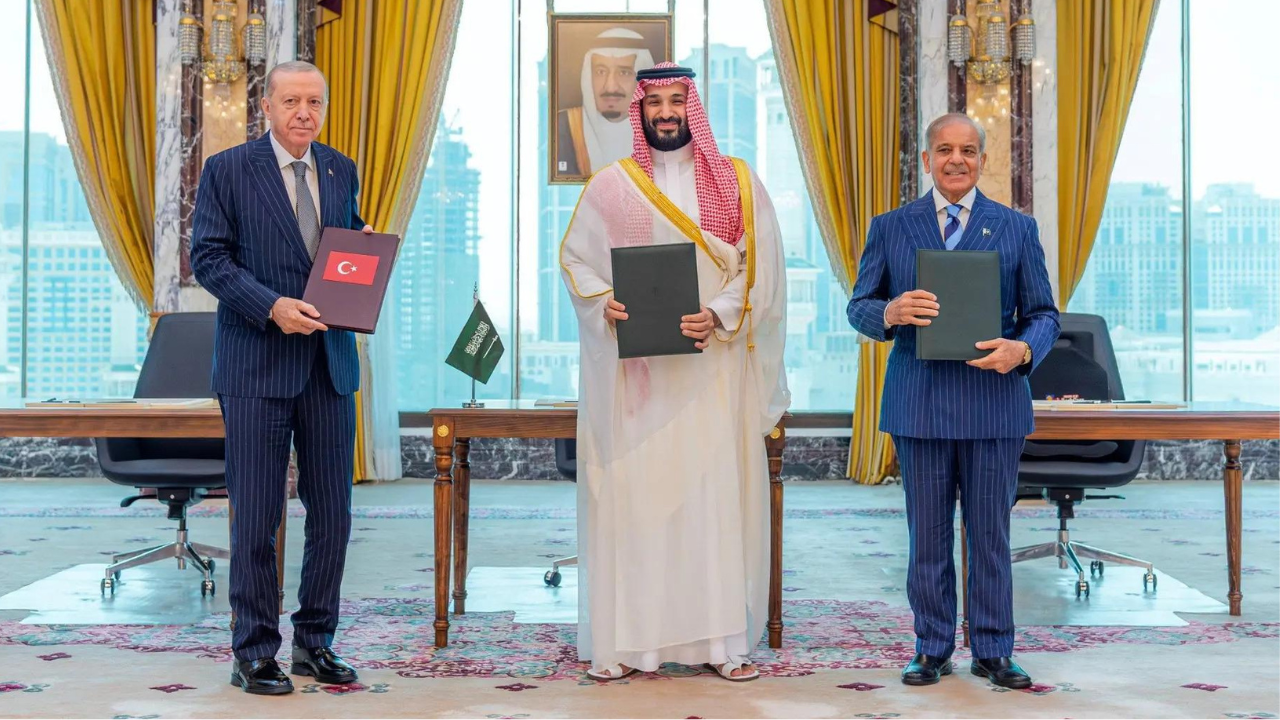
The Mecca Joint Defence Agreement, signed by Saudi Arabia, Türkiye and Pakistan on August 7, arrives at a time of significant change in West Asian geopolitics. The pact asserts that an armed attack on any one of the three nations will be viewed as an attack against all. The agreement's timing and location are intriguing, as it comes after the end of the Iran conflict and the shifting regional alliances.
The three nations emphasize that the arrangement is defensive and directed against no specific state. While the timing and location may appear to be a Sunni response to Iran, the real question is why nations with strong ties to the United States have established this arrangement now. The complex relationship between Israel and Türkiye may play a role in this, as Israeli political and strategic discourse has begun to describe Türkiye as "the new Iran", due to concerns about Ankara's presence in Syria, its stance on Palestine and its growing influence in the region.
For Washington, maintaining Türkiye within the Western strategic framework may be more important than Israeli concerns about Türkiye. Syria could become the main arena for this rivalry, with Türkiye holding significant influence in the north, the US engaged in the northeast, and Israel strengthening its position in the south. The US has limited interest in another conflict, especially one involving Israel and Türkiye, two key NATO allies.
The Mecca agreement could indirectly benefit American interests by strengthening political deterrence and raising the costs of any confrontation between Türkiye and Israel. With Saudi financial and diplomatic influence, Türkiye's defence capabilities and military experience, and Pakistan's nuclear deterrence, the Mecca pact serves as an instrument of political deterrence, strategic reassurance and signaling.
The absence of the United Arab Emirates is notable, given the divergence in their strategic interests over Yemen, Sudan, oil policy, regional leadership and Israel. The emerging regional order may be shaped by great-power calculations, with Washington seeking to prevent Iran's ties with Russia and China from forming a competing regional security axis while encouraging regional powers to take on more security responsibilities.
This arrangement could benefit India, as it may necessitate a reevaluation of its strategic standing in West Asia and reaffirm its balanced engagement across regional divides.
Written by urgent.news from Times of India's reporting — not their text. Machine-written — may contain errors; check the original before relying on it.