The hidden mathematics behind why you find things beautiful
“Some people will hate what I say,” the mathematician Marcus du Sautoy tells me, “because it’s all about unweaving the rainbow. Some people want to retain the magic and don’t want to know why something’s working. That’s fine. But actually, for me, you know, the rainbow becomes much more interesting when you understand what is happening to the light that makes the rainbow like that.” Du Sautoy ,…
Mathematician Marcus du Sautoy argues that beauty can be explained through formalism, which points out the formal parts that make something up. He believes that the rainbow becomes more interesting when we understand the light that creates it. Du Sautoy, the Simonyi Professor for the Public Understanding of Science and Professor of Mathematics at the University of Oxford, is a strong advocate of formalism and Platonism, which posits that the universe is a physical piece of mathematics.
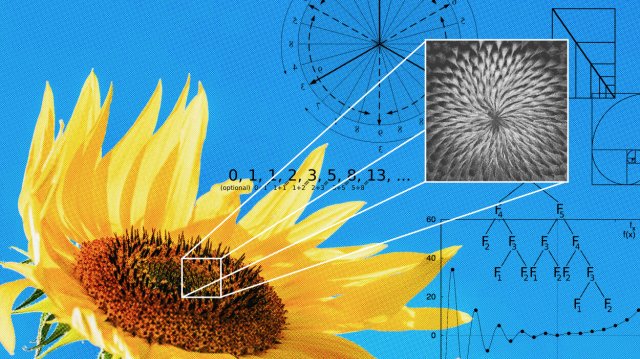
This perspective extends to art, where beauty can be attributed to mathematical structures. Du Sautoy provides examples from nature, such as chickens ordering their numbers, cicadas counting 17 years, and symmetry indicating something significant in the natural world. He also delves into the mathematics behind beauty, discussing the Golden Ratio, prime numbers, and fractals.
For instance, Mozart used the golden ratio in The Magic Flute, Debussy and Bartók loved the golden ratio, and Fibonacci numbers were used by Le Corbusier in building design. In music, Messiaen used prime numbers to create a sense of tension in his Quartet for the End of Time. Jackson Pollock's abstract expressionist paintings can be seen as fractal geometry, which never simplifies, adding to the beauty of his work.
Shakespeare, too, was a master of numbers, often employing iambic pentameter and prime numbers to create significance in his works. According to Du Sautoy, mathematics acts as the hidden scaffolding of beauty, connecting art, nature, and the cosmos, and understanding this connection can only enhance our appreciation of beauty.
Written by urgent.news from Big Think's reporting — not their text. Machine-written — may contain errors; check the original before relying on it.