Spinal Deformities in Saber-Toothed Cat Fossils Reveal How the Now-Extinct Felines May Have Spent Their Final Days
Researchers studied saber-toothed cat vertebrae found in the La Brea Tar Pits in Los Angeles. They identified a surprisingly high number of deformations, including signs of spinal nerve tumors, hinting at a dwindling population suffering the consequences of inbreeding
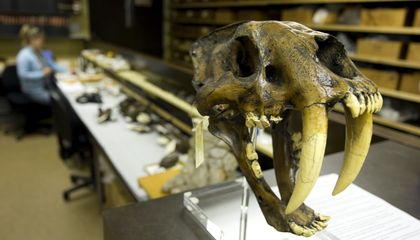
Thousands of years ago, sticky tar pits in Los Angeles, California, became the final resting place for saber-toothed cats suffering from deformities and disease. Afterward, these prehistoric felines vanished entirely. Fossilized spines from La Brea Tar Pits reveal tumors and other deformities, indicating inbreeding as the population shrank.
Researchers found signs of spinal nerve tumors in approximately 3.5% of saber-toothed cat vertebrae, a much higher prevalence than in modern-day animals. These deformities may have made the felines more likely to fall into the tar pits and die, as they were drawn to trapped prey. This study offers insight into how population decline can lead to inherited disorders in animals, which may also be relevant to endangered wild cats today.
Written by urgent.news from Smithsonian's reporting — not their text. Machine-written — may contain errors; check the original before relying on it.