Space Agencies Are Trying to Keep Astronauts From Losing Their Sight
A device currently being used to help octogenarians do self-administered eye exams could be part of future space missions to monitor astronauts’ ocular health.
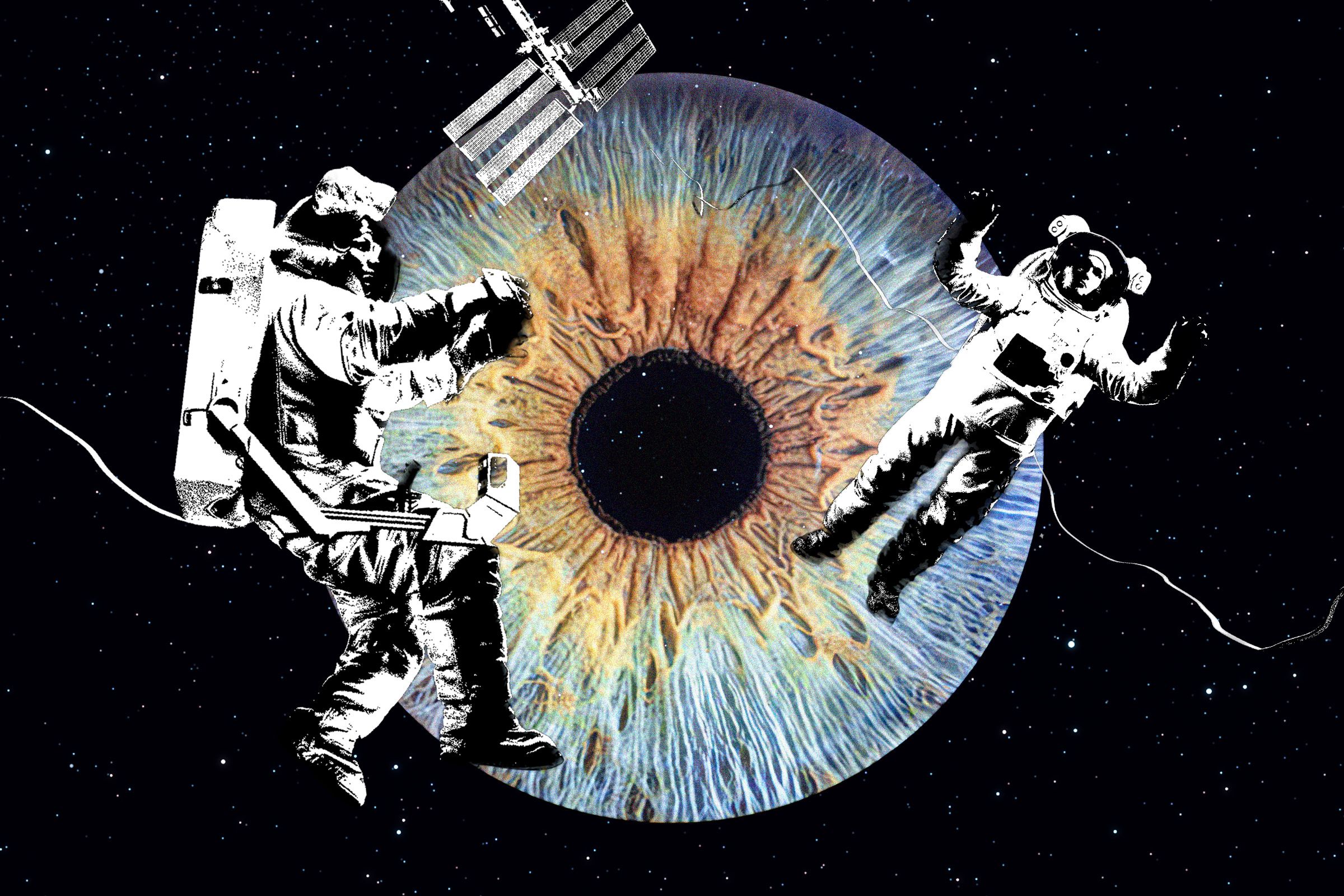
Space agencies are striving to prevent spaceflight-associated neuro-ocular syndrome (SANS) from harming astronauts' vision during long missions to the moon and deep space. British eye-scanning startup Siloton, founded by physicists in 2020, is collaborating with the UK’s National Health Service to enable patients with retinal conditions to self-scan at home.
The company aims to develop a compact eye-testing device using quantum technology to fit on a photonic chip smaller than a coin. SANS, caused by prolonged exposure to low-gravity environments, affects around 70 percent of astronauts on the International Space Station, leading to eye and brain changes. A notable case is NASA astronaut John Phillips, who experienced a significant decline in vision during his six-month stay on the ISS.
Space agencies are concerned about the operational risks and long-term health impacts of SANS. Siloton's technology could allow astronauts to scan their retinas more frequently, reducing the need for ground support due to communication delays in deep space missions. However, technical challenges remain, such as powering the device without fire risks and finding space for the equipment in spacecraft.
Despite these obstacles, Siloton is confident that their research will benefit both space and home device development, ultimately improving eye health for both astronauts and patients on Earth.
Written by urgent.news from Wired Science's reporting — not their text. Machine-written — may contain errors; check the original before relying on it.
This story
This is one outlet's version. Read the fullest account.