Space Agencies Are Trying to Keep Astronauts From Losing Their Sight
A device currently being used to help octogenarians do self-administered eye exams could be part of future space missions to monitor astronauts’ ocular health.
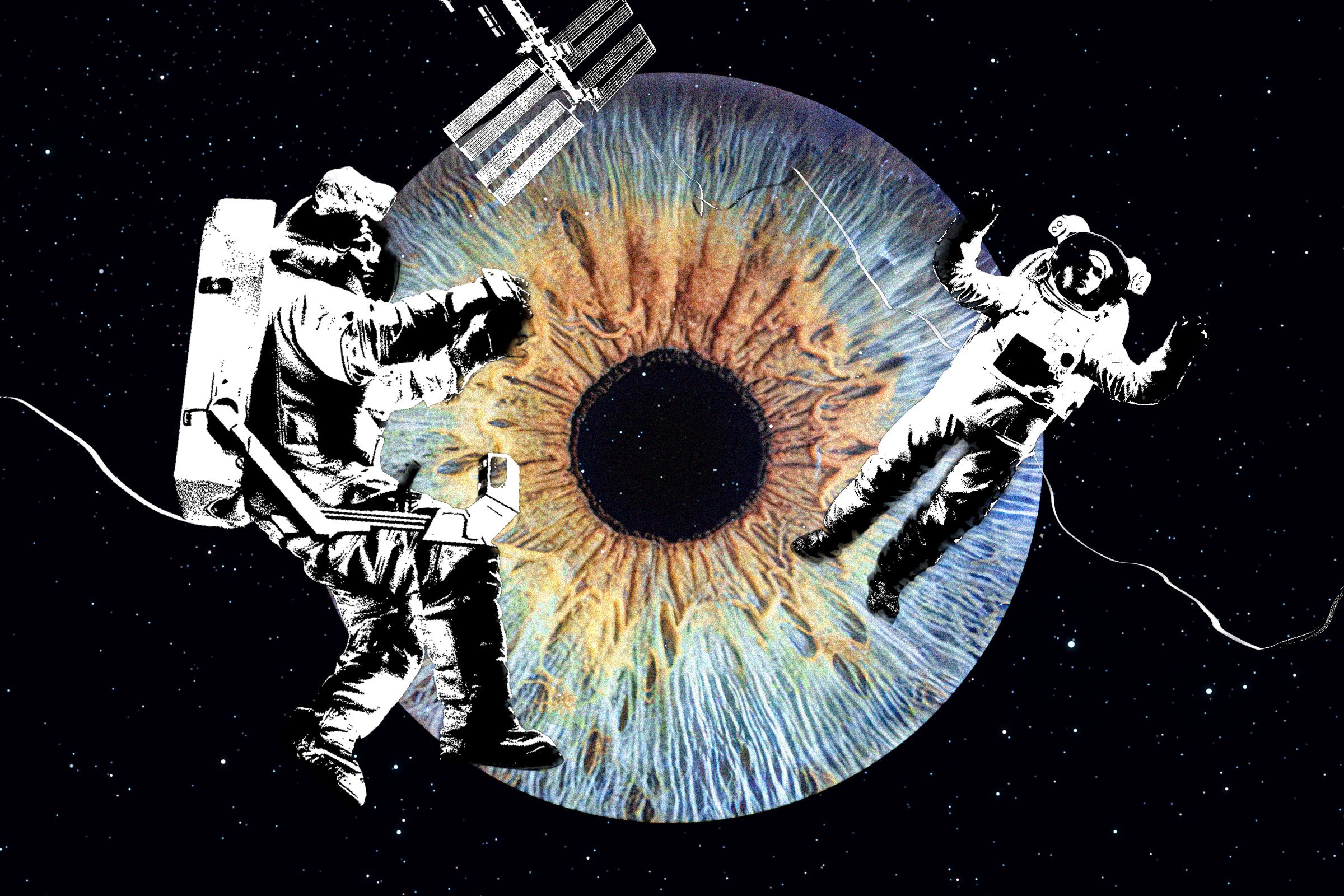
Space agencies are striving to prevent astronauts from experiencing vision loss during extended missions, particularly on the upcoming Artemis flights to the Moon and other deep space expeditions. To address this concern, the European Space Agency (ESA) has enlisted British eye-scanning startup Siloton to create a compact solution.
Siloton's technology utilizes quantum technology to miniaturize core components of eye-testing equipment, fitting them onto a photonic chip smaller than a coin. Founded in 2020, Siloton has already collaborated with the UK's National Health Service to enable patients with retinal issues to perform self-scans at home. The ESA aims to replicate this capability in a space environment where SANS, a condition affecting around 70% of astronauts, results from prolonged exposure to low-gravity conditions.
SANS can cause significant vision impairment, as evidenced by the case of NASA astronaut John Phillips, who lost half his vision during a six-month stint on the ISS. Space agencies are wary of the operational risks and potential long-term health impacts of vision loss during missions. Rebecca Evernden, director of the UK Space Agency, emphasizes the need to manage ocular damage and potentially prevent it altogether.
Current monitoring on the ISS involves bulky equipment requiring real-time ground support, which becomes impractical for deep space missions due to communication delays. Siloton's miniature device would automate the scanning process, eliminating the need for ground support and generating more data on ocular degeneration. However, technical challenges persist, such as powering the device, as batteries pose a significant fire risk in spacecraft.
Additionally, designers must determine where to place the binocular-sized equipment and how to position astronauts' heads without the restraining effect of gravity. Despite these hurdles, Siloton remains confident in their ability to develop a solution that could benefit both astronauts and patients with visual impairments back on Earth.
Written by urgent.news from Wired's reporting — not their text. Machine-written — may contain errors; check the original before relying on it.