Regulating foreign funds sovereign step; U.S. has similar laws: India's Ambassador to the U.S. on FCRA
Mr. Kwatra’s post on X came days after a U.S. lawmaker voiced concern over the FCRA amendments, claiming that it would allow the Indian government to take control of churches and charities
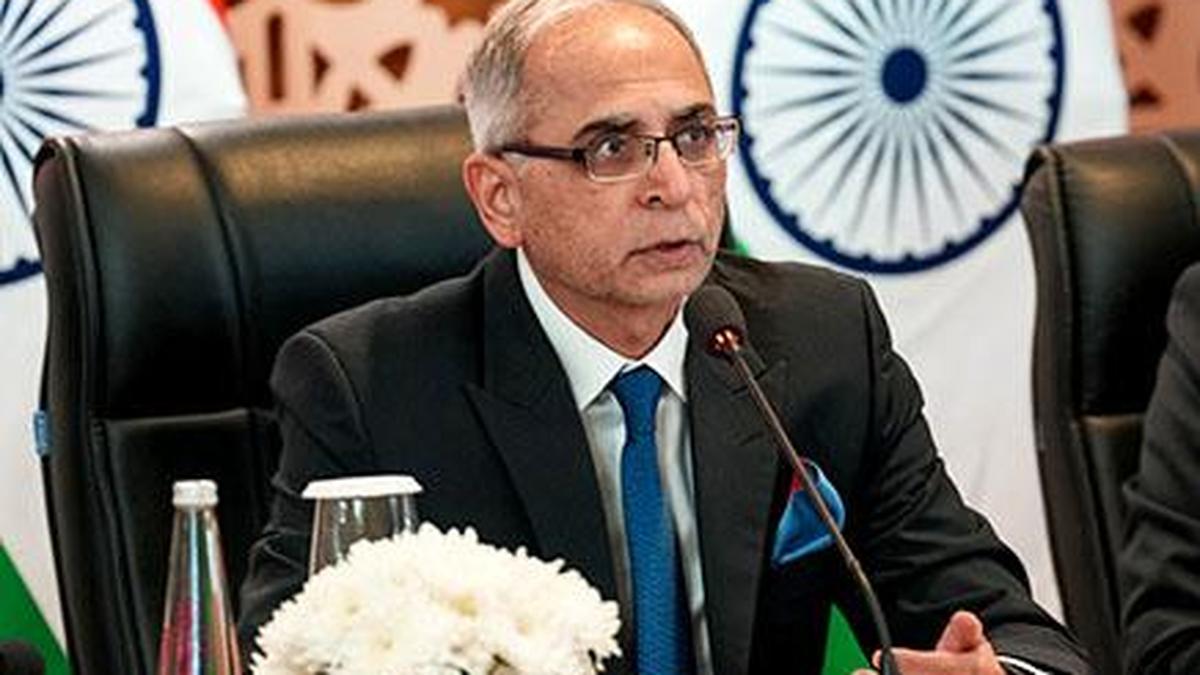
India's Ambassador to the U.S., Vinay Mohan Kwatra, has stated that the amendments to the Foreign Contribution (Regulation) Act (FCRA) are intended to enhance transparency and require organizations receiving funds to operate through a defined process. Speaking on August 9, 2026, Kwatra emphasized that regulating foreign financial flows in public and political spheres is a sovereign measure driven by national security concerns.
He cited similar legislation in the U.S. (Foreign Agents Registration Act since 1938, Foreign Account Tax Compliance Act since 2010) and other countries, including Australia (2018), Canada (2024), the UK (July 2025), and the EU (currently legislating).
Kwatra addressed concerns raised by a U.S. lawmaker who suggested the FCRA amendments could enable the Indian government to control churches and charities. He clarified that when a registration is canceled or surrendered, the foreign contributions and assets generated from them revert to a state government authority since 2010. Kwatra assured that the 2026 Bill establishes a designated authority to manage such assets and ensure their return if the organization renews its registration.
Places of worship are protected, with foreign-funded property remaining with another FCRA-registered organization of the same faith to maintain the religious character.
The Ambassador dismissed worries that the new law would limit foreign aid to civil society. He noted that India has over three million NGOs, only 14,450 of which hold FCRA registration. Thus, the vast majority of civil society organizations remain unaffected by the act. India enacted FCRA in 1976, modernizing it in 2010, and further strengthening it with amendments in 2016, 2018, and 2020.
Kwatra reiterated that the 2026 Bill and rules aim to increase transparency, improve governance, and establish clearer regulations, aligning with modern governance practices in democracies worldwide. He emphasized that the FCRA amendments are not targeted at any particular community, applying uniformly to all organizations regardless of religion, community, or ideology.
Written by urgent.news from The Hindu's reporting — not their text. Machine-written — may contain errors; check the original before relying on it.