Para o Fed de St. Louis, AI não garante inflação menor, e o Fed precisa apertar
Kevin Warsh, o novo chairman do Federal Reserve, se alinha aos economistas que veem a inteligência artificial como um potente e rápido choque na produtividade – exercendo uma força desinflacionária que permitirá juros mais baixos. Mas a visão está longe de ser um consenso dentro do próprio Fed – e uma das principais vozes contra […] The post Para o Fed de St. Louis, AI não garante inflação menor,…
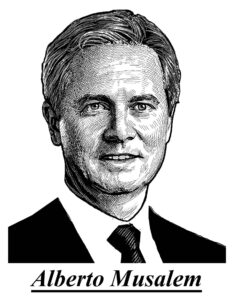
The Federal Reserve of St. Louis's new chairman, Kevin Warsh, agrees with economists who consider artificial intelligence (AI) as a powerful and rapid shock to productivity, exerting a disinflationary force that allows for lower interest rates. However, this perspective is far from a consensus within the Fed itself. Alberto Musalem, the president of the Federal Reserve of St. Louis, is one of the main voices against the argument that higher inflation in the short term should be tolerated for potential future productivity gains.
Musalem, during a presentation at São Paulo's Center for Public Policy Debate (CDPP) on Thursday, said he is optimistic about AI, but the evidence doesn't justify setting monetary policy based on the expectation of future productivity growth. "Adopting a more expansionist monetary policy than conditions would justify in the attempt to achieve higher growth would be an error," Musalem affirmed.
The magnitude of potential productivity gains is highly uncertain, and the case for a more lax policy assumes the credibility of monetary policy.
Musalem emphasized that a central bank's most valuable contribution to long-term growth is providing a price stability scenario, where companies can plan investments and innovations that drive economic expansion. The task of fostering increased productivity should be better left to fiscal and regulatory policies, according to Musalem.
For Musalem, the idea that tolerating higher inflation and lower interest rates would lead to more investments, which in turn would bring more productivity and lower production costs, is "seductive." However, he argued that this reasoning takes for granted the credibility of the central bank. The credibility of the central bank only works if households, businesses, and investors continue to expect inflation to return to its target.
Once credibility is lost, Musalem said, it is costly to restore. He argued that it could require a long period of painfully high real interest rates, high unemployment, and lost production. Musalem did not have a vote on the Fed's interest decisions, but he argued that the Fed should have raised the rate by 0.25 points in last week's meeting, instead of keeping it unchanged within the 3.5% to 3.75% range. The vote was 9 to 3, with all three regional Fed representatives voting for a 0.25% increase.
Written by urgent.news from Brazil Journal's reporting — not their text. Machine-written — may contain errors; check the original before relying on it.