After the summer break: pensions, care, elections - full agenda for Merz in the autumn
The government quarter in Berlin is currently dozing off. It's summer recess. But the calm won't last long. Chancellor Merz and his team have a lot of work ahead of them. And many problems.
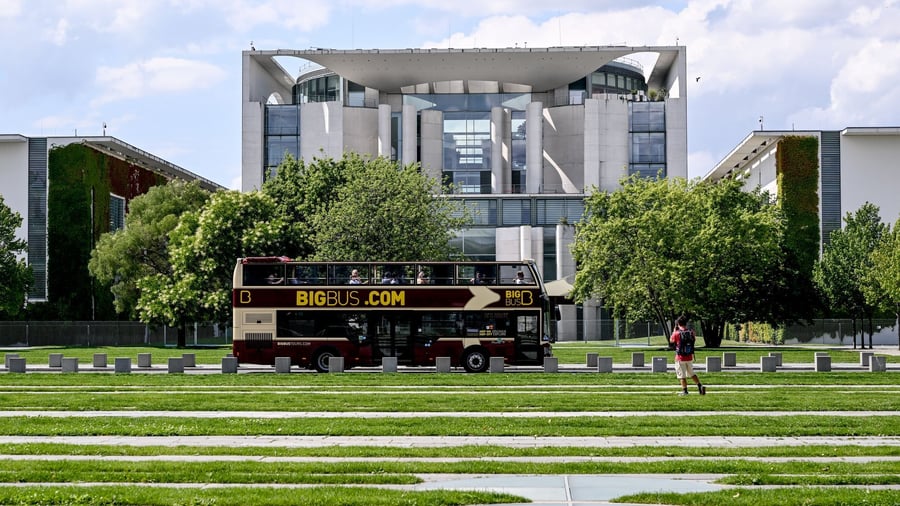
The Chancellor's office is quiet in the August heat, with no black politician limousines driving through the government district, only tourist buses, and the Bundestag's faction meeting rooms are firmly in the hands of construction workers. Politics in Berlin is - slightly delayed - in the summer break. Even the Chancellor, about whom his spokespeople like to say that he is always on duty, is allowing himself some rest.
And Friedrich Merz can use some rest. On the one hand, the days after the resignation of CDU/CSU faction leader Jens Spahn were exhausting due to the reshuffle in government, faction, and party. On the other hand, the Chancellor and CDU leader will hardly be granted any breaks after the summer break. Merz and his team are facing a mountain of tasks and problems.
A selection: completion of the personnel reshuffle
After the summer break, it's a bit like before the summer break for Merz, because the personnel restructuring is not yet complete. For example, the successor to sports minister Christiane Schenderlein, who has switched to the Ministry of Health, still needs to be clarified. In the Union faction, the important post of First Parliamentary Manager is vacant because Steffen Bilger (CDU) is now sitting in the cabinet as Minister of Transport.
And Merz is still looking for a new treasurer for the CDU, after he has promoted Franziska Hoppermann to General Secretary.
The completion of the cabinet reshuffle will be comparatively simple: the new ministers just have to take their oath of office in the first session week of the Bundestag at the beginning of September.
Difficult budget situation
This first session week traditionally belongs to the budget for the coming year. The draft by Finance Minister Lars Klingbeil (SPD) provides for a record new debt of 118.7 billion euros for 2027. With the credit-financed special assets for the Bundeswehr and for infrastructure and climate neutrality, it is even around 200 billion euros.
In view of planned cuts, for example, to parental and housing allowance, maintenance advances, or the climate fund, it is likely that the budget negotiations will be even tougher than usual. And no one knows yet whether further burdens will not come to Germany, for example, due to the Iran war.
Even in the medium term, things don't look good. According to the cabinet's draft, the financial gap is 22 billion in 2028, 38 billion in 2029, and 47 billion euros in 2030.
Rescue of the pension reform
The reform package to stabilize the pension system had basically been ticked off - with the Chancellor's clear announcement that all elements must now be implemented quickly. But then, precisely the three eastern German CDU prime ministers Michael Kretschmer (Saxony), Sven Schulze (Saxony-Anhalt), and Mario Voigt (Thuringia) rebelled and opposed the planned end of the pension at 63.
This also called on SPD state leaders like Anke Rehlinger (Saarland) and Andreas Bovenschulte (Bremen). Manuela Schwesig (Mecklenburg-Vorpommern) had been warning against this central reform component from the start.
The Chancellor and his Minister of Labor, Bärbel Bas (SPD), will have to do a lot of convincing work in the autumn to save the overall project. Time is pressing with the care reform.
It is undisputed that a reform of the care insurance is necessary in view of the expected billion-euro deficit. However, the Chancellor also sees the present draft of the Ministry of Health critically in one point: it concerns planned cuts in pension contributions for caring relatives. The CSU also rejects this.
Income tax reform
In principle, the planned tax reform to relieve low and middle incomes has been decided, but it has not yet been enshrined in law. The annual relief volume is supposed to be around ten billion euros. It is only partially clear where the money is supposed to come from. The reform is supposed to apply from 2027 - so speed is required.
At least: unlike with the pension reform, the details have not been argued out here.
Critical elections in the East
The fact that the eastern German prime ministers started the pension dispute may also be due to the state elections there in September. In Saxony-Anhalt, it is not impossible that the AfD will win an absolute majority and provide the prime minister. This would send shockwaves as far as Berlin. The AfD is also leading in the polls in Mecklenburg-Vorpommern. In Berlin, the CDU could lose power.
Depending on the election outcome, a new firewall debate threatens the Union - also in relation to the Left - and a debate about the SPD's Berlin top personnel. There are already calls for Bas and Klingbeil to give up the party leadership and focus on their ministerial offices.
International conflict potential
War in Ukraine, war in Iran, Middle East conflict: all these hotspots have partly direct consequences for Germany, for example, in the form of disrupted supply chains or sharply rising fuel prices. Depending on further developments, they may also force Berlin to act at short notice.
But even below this threshold, there is explosive material. For example, a compromise for the next EU budget is supposed to be found by the end of the year. Chancellor Merz considers the present budget draft with a volume of 1.76 trillion euros for 2028 to 2034 to be unacceptable. He demands that several hundred million euros be saved. The positions of the 27 member states are still far apart.
Translated by urgent.news. Machine-written — may contain errors; check the original before relying on it.