Mile 201: The invisible line where fishing becomes environmental poaching
A postcard of environmental disaster at first sight: hundreds of trawlers with lights blazing navigating at the edge of Argentine waters. This fleet flying the flags of distant countries seeks banks of the Illex squid, hake and other species. Specialists warn of the ecological damage from uncontrolled fishing. Leer más
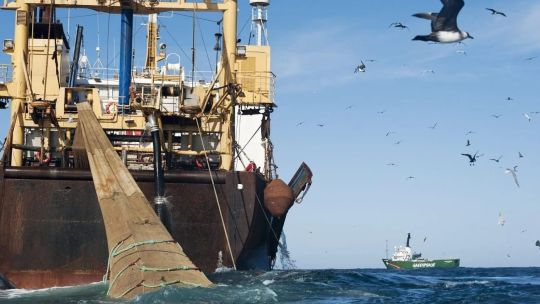
The Argentine Sea is marked by a line known as Mile 201, where fishing transitions from environmental protection to poaching. This invisible boundary, located 370 kilometres off the Patagonian coast, signifies the end of Argentina's Exclusive Economic Zone (EEZ) and the beginning of the high seas, governed by free navigation and open fishing principles.
Illegal fishing at Mile 201 causes Argentina significant financial losses, estimated between US$600 million and one billion annually. Private studies reveal that between 400 and 600 trawlers, primarily from China, Korea, Taiwan, Spain, and various other nations, congregate during the high season. These vessels, often flying the flags of these countries, extract 1.5 to three million tons of fish annually, four times more than the Argentine fishing industry's total output of 750-900,000 tons.
Raúl Cereseto, president of Fulasp, the foundation protecting fisheries, warns that the overfishing at Mile 201, combined with global warming, threatens the survival of key species like the Argentine Illex squid (Argentinus argentinus). This species, living for only one or two years, serves as a crucial food source for hake and various birds and marine mammals. The loss of this fundamental resource could result in both economic and ecological consequences.
Sergio Almada, Coast Guard co-ordinator of Eicemar, explains that while illegal fishing is not recognized beyond national jurisdictions, it becomes illegal when vessels cross into the Argentine EEZ and are pursued by the Coast Guard and Navy. Milko Schvartzman of the Círculo de Políticas Ambientales emphasizes that environmental damage caused at Mile 201 affects the entire Argentine Sea.
Greenpeace's study underscores the ecological role of the squid as both predator and prey, highlighting its critical role in the South Atlantic food chain and broader oceanic functions.
The trawlers' fishing practices also inadvertently impact other species. Andrés Nápoli of FARN Environmental Foundation points out that the trawlers' dragnets affect non-target species, with significant portions of their catches being unrelated to their intended prey. The Blue Hole, a region of international waters near Argentina's continental platform, is particularly high in biodiversity, attracting a variety of marine life.
To combat these issues, Milko Schvartzman suggests following and improving international instruments like the United Nations High Seas Treaty. This treaty would enable the creation of protected maritime areas outside national jurisdictions, a solution that requires global cooperation. While the issue is visible at the 201st mile, a larger environmental risk arises from the increased number of foreign trawlers fishing 365 days a year, with a 70 percent increase in their presence over the past five years.
Written by urgent.news from Buenos Aires Times's reporting — not their text. Machine-written — may contain errors; check the original before relying on it.