Moving grass led Australian caver to discover one of Victoria’s longest caves
In 2006, Australian caver Kim Van Dyke observed an unusual movement in a patch of grass while traversing a reserve near Buchan, located in Victoria's East Gippsland. The inexplicable motion, set against a backdrop of still vegetation and absent wind, prompted Van Dyke and her husband, John, to investigate further. Their curiosity led them to unearth rock and evidence of an underground airflow.
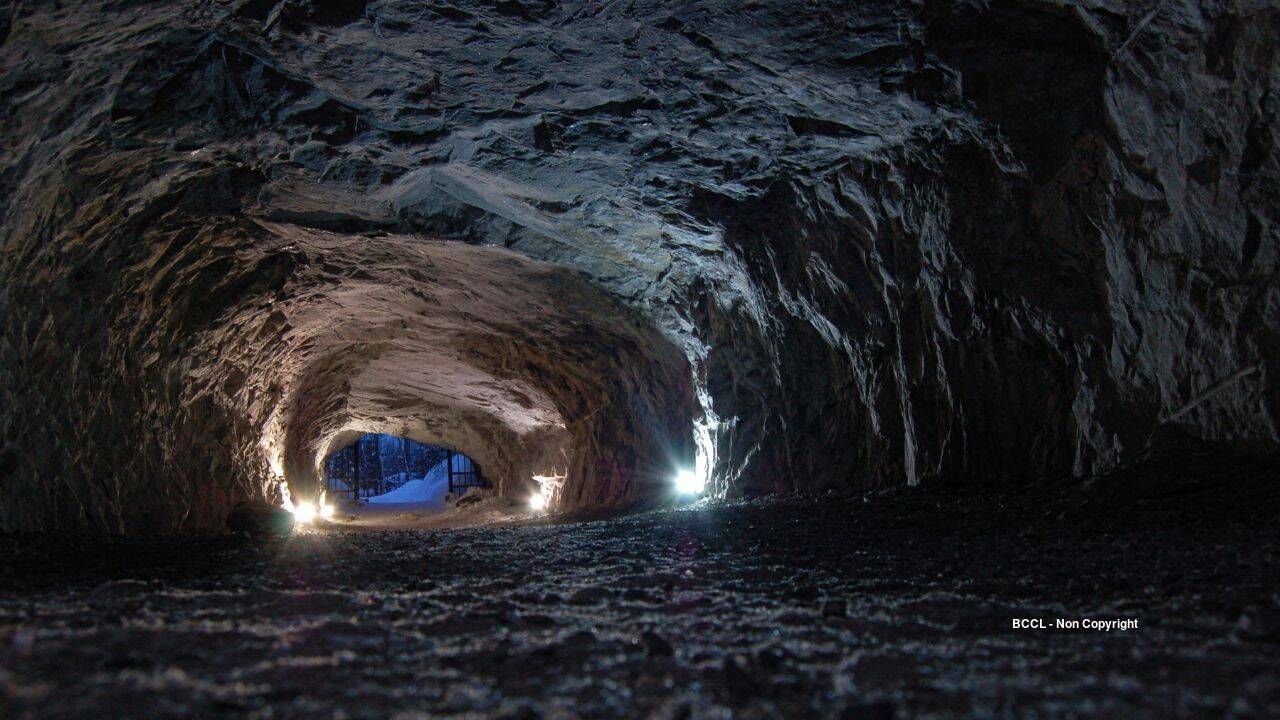
This serendipitous clue ultimately culminated in the discovery of Elk River Cave, a vast subterranean system concealed beneath a seemingly ordinary paddock.
Nearly two decades later, explorers have meticulously mapped 3.13 kilometres of the cave, positioning it among Victoria's longest and deepest known caves. Situated approximately 135 metres below the surface, Elk River Cave resides within the limestone-rich region of East Gippsland, colloquially known as Gunaikurnai Country. The area is renowned for its intricate limestone formations and extensive cave networks, many of which have evolved from water erosion over eons.
Concealed beneath the verdant hills, underground waterways have been sculpting the limestone for over 350 million years. However, from the surface, there were few outward signs of a major cave system lying beneath the verdant grasslands. The location where Van Dyke discerned the moving grass was a doline, a sunken area that forms when limestone dissolves underground, causing the surface to gradually collapse or settle.
Such formations are commonplace in karst landscapes, where water meanders through crevices and cavities in soluble rock.
The unexpected movement of the grass indicated that air was traversing a concealed opening. Upon digging beneath the patch, the cavers unearthed the entrance to a passage which would eventually be christened Elk River. For the local exploration team, this serendipitous finding was the dream of every caver - a small surface feature providing a clue to an unseen subterranean world.
The initial descent into the newly discovered passage was undertaken by Van Dyke, accompanied by fellow explorers Eric Munro and Laurie Brown. It was the first human to venture into the newly unearthed passage. The early exploration unveiled a flowing underground streamway, a discovery of paramount importance, as researchers and cavers had long hypothesized the existence of a significant underground river in the area.
Elk River played a pivotal role in resolving some of the century-old geological and hydrological questions about the region.
The cave's hidden river emerged as the focal point of an extended exploration effort involving the Victorian Limestone Caving Team and specialist cave divers. The exploration extended underwater, requiring additional planning due to potential dangers such as flooding from heavy rains. Every metre mapped contributes to the scientific understanding of how water has shaped the region on a geological scale, underscoring the profound and enduring impact of Elk River Cave on the broader understanding of the area's geology and hydrology.
Written by urgent.news from Times of India's reporting — not their text. Machine-written — may contain errors; check the original before relying on it.