Lake Mead falls to 1,040.4 feet as Colorado River crisis deepens
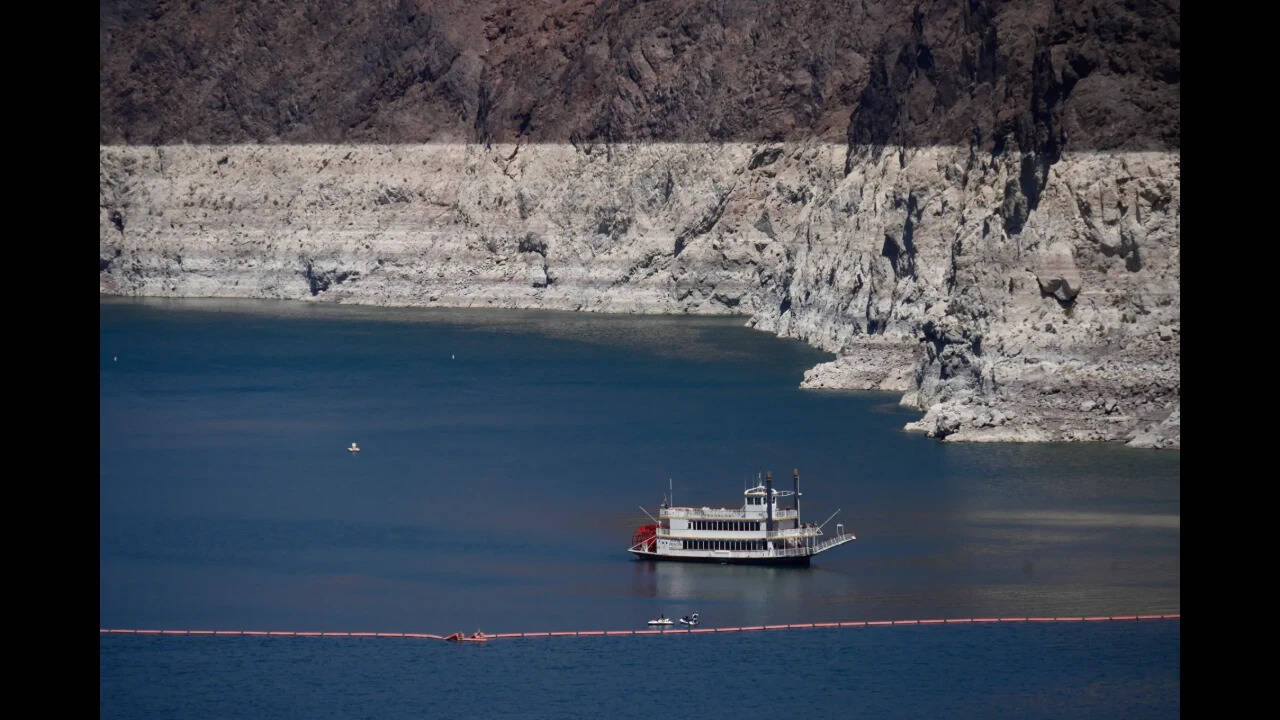
Lake Mead, the largest U.S. reservoir, now sits at its lowest point since its creation nine decades ago, measuring 1,040.4 feet above sea level, according to recent reports. This marks a drop below the previous record low from July 2022. In tandem, Lake Powell, the second-largest reservoir in the country, remains significantly depleted, heightening concerns over water supplies, hydropower, agriculture, wildlife, and communities in the Southwestern United States.
Together, these two reservoirs govern water for around 40 million individuals spanning seven U.S. states, tribal communities, and Mexico, and act as a buffer to store water from wet years for use during prolonged droughts. However, due to a combination of factors such as a poor snowpack, excessive heat, drought, overuse, and increased evaporation, this vital reserve is quickly dwindling.
The looming question now is not merely about the reservoirs' diminished sizes, but the potential repercussions should Lake Powell and Lake Mead fall to such an extent that they can no longer serve their critical roles.
Lake Mead, contained by Hoover Dam near Las Vegas on the Arizona-Nevada border, is experiencing a rapid decline that mirrors the wider stressors faced by the Colorado River Basin, particularly in the Rocky Mountains where most of the river's annual flow originates from melting snow. Both reservoirs have now reached levels unseen in nearly seven decades, with their combined storage at a historic low, as reported by CNN.
The effects are already palpable, with boat ramps and marinas forced to close or be reconstructed as shorelines recede. At Lake Powell, access to the water is becoming increasingly challenging, affecting recreational businesses that rely on the reservoirs. This crisis has prompted federal officials to consider drastic measures, including proposing water use reductions for Arizona, California, and Nevada, known as the Lower Basin states. However, reaching an agreement on the equitable distribution of these cuts has proven challenging.
The immediate impact of this crisis is likely to be felt in the energy sector, particularly in hydropower production. Glen Canyon Dam, which holds Lake Powell, relies on the water's pressure to generate electricity. As the reservoir level drops, the pressure diminishes, threatening to halt electricity production at the dam. Currently, Lake Powell is only a few dozen feet above the threshold at which Glen Canyon Dam can no longer produce electricity.
Though the dam's total generating capacity is around 1,320 megawatts, powering several Western states and supporting various entities, a shutdown would not immediately plunge the Southwest into darkness. The regional power grid includes alternative energy sources. However, Glen Canyon Dam offers flexible power generation that can swiftly respond to spikes in demand, such as sweltering summer afternoons or reduced solar and wind energy.
Its shutdown could result in higher electricity costs and strain smaller utilities and irrigation districts, while also diminishing the financial revenues derived from federal hydropower, which supports maintenance, salinity control, environmental projects, and other Colorado River initiatives.
Moreover, Hoover Dam, situated downstream from Lake Mead, would also confront similar challenges as the lake's water level continues to recede. The dam can continue releasing water even after its turbines cease operation, but its electricity generation efficiency decreases as the reservoir loses hydraulic pressure. Should Lake Mead plummet to approximately 895 feet, it would breach the dead-pool threshold for Hoover Dam's existing intakes, preventing the normal passage of stored water downstream.
Legal water rights do not guarantee the physical ability to transport water through a submerged intake. Consequently, states, farms, cities, or irrigation districts with senior claims to Colorado River water might find their entitlements hampered should the dead pool threshold be crossed. Arizona, California, and Mexico are all potentially affected, facing the grim prospect of diminished water allocations.
Written by urgent.news from Times of India's reporting — not their text. Machine-written — may contain errors; check the original before relying on it.