Mehr Standorte: Drohnenabwehreinheit der Bundespolizei soll größer werden
Dass Deutschland bei der Abwehr von Drohnen vorankommen muss, war schon vor dem Drohnenfund am Flughafen Leipzig/Halle klar. Jetzt soll eine erst vor wenigen Monate dafür aufgestellte Einheit wachsen.
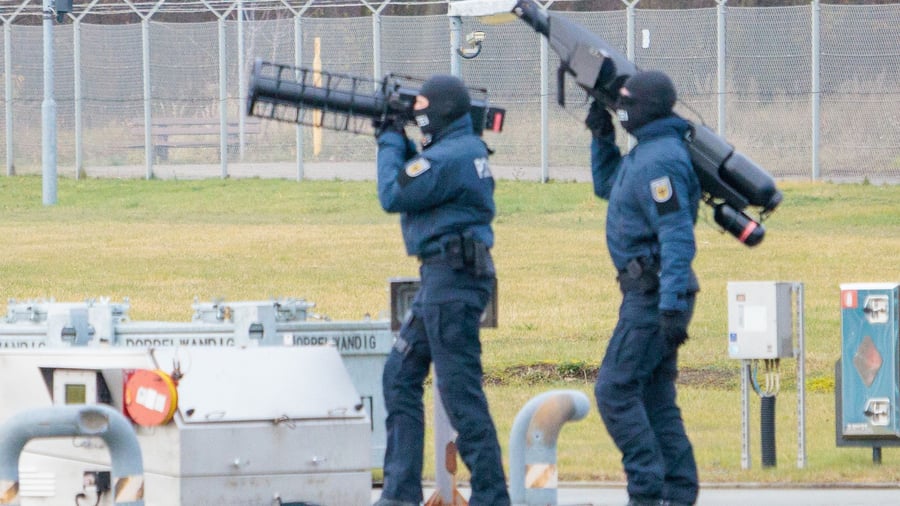
The Bundespolizei is set to expand its Drone Defense Unit significantly following the discovery of a bomb-laden drone at Leipzig/Halle Airport. Federal Interior Minister Alexander Dobrindt of the CSU party has reportedly instructed the police force to grow the unit to 300 personnel, up from the originally planned 300, according to a ministry spokesperson.
Instead of the initial four locations, eight sites are now being considered to ensure rapid and flexible deployment when needed. Initially, the press outlet "Bild" had reported on the planned expansion. Previous incidents at the airport included a drone carrying explosives and a detonator, as well as a collision with an unidentified smaller flying object, possibly a second drone.
The Federal Prosecution Office is investigating the suspected attempt to carry out a bomb explosion and dangerous interference in air traffic. However, the government has not commented on progress in the investigation or potential connections to previous operations with ties to Russia. Experts, though, are convinced that the drone was likely built by a professional with technical expertise.
In July 2024, a parcel at a DHL logistics center in Leipzig exploded, believed to have been placed on behalf of Russia. It was narrowly averted as a disaster, possibly due to a coincidence, according to former Constitutional Protection President Thomas Haldenwang. The new Drone Defense Unit was established in December 2025 in response to the escalating threat, particularly from Russia.
The force, stationed at airports, the federal capital, and security-relevant locations nationwide, aims to quickly respond at the incident sites. Initially planned to have up to 130 specialized forces, the unit will start with around 60 Bundespolizei members and aim to expand to 130 specialized personnel. It will utilize AI-based counter-measures and automated interception drones, as well as provide support to state police forces when necessary.
The Bundesregierung, however, asserts that there is no legal need for action and points to already implemented changes, such as those in the Air Security Act. Sebastian Hille, Deputy Government Spokesperson, stated that the Bundesregierung feels well-prepared in terms of the legal framework for drone defense. Schleswig-Holstein's Prime Minister Daniel Günther (CDU) argued that federal military deployments should also be allowed domestically due to the difficulty in distinguishing between foreign and domestic threats.
Changing the Grundgesetz (Basic Law) would require a two-thirds majority in both the Bundestag and Bundesrat. SPD Foreign Policy expert Ralf Stegner dismissed the idea, stating that there is currently no Grundgesetz-changing majority in the Bundestag and Bundesrat. The new Joint Drone Defense Center, established at the beginning of the year by federal and state authorities, aims to exchange expertise and coordinate actions in drone defense.
Günther emphasized the importance of using the best technology, stating that the professionalism displayed is hard to imagine without a state infrastructure.
Written by urgent.news from Handelsblatt's reporting — not their text. Machine-written — may contain errors; check the original before relying on it.