Last Month Was the Hottest July on Record for the World's Oceans
Oceans globally recorded their hottest July ever last month, according to a new analysis. The severe ocean heat was evident around Europe, which is coping with a scorching summer. Read more on E360 →
Last month marked the hottest July recorded on the planet's oceans, according to a fresh analysis. The intense ocean heat was notably felt across Europe, which is currently grappling with an unusually hot summer. Outside polar zones, the ocean's surface temperature averaged 69.73 degrees Fahrenheit (20.96 degrees Celsius), surpassing the previous July record from 2023, as reported by the Copernicus Climate Change Service.
The ocean heat was particularly pronounced in the Pacific region, fueled by an intensifying El Niño phenomenon. While land surface temperatures were marginally lower, both land and sea temperatures collectively marked the second hottest July on record globally. In Europe, heat records kept falling, with Samantha Burgess, deputy director of Copernicus, noting that July 2026 was the third consecutive month of extreme heat in Western Europe.
This consecutive heat spell brought the combined temperature for June and July to a new regional record. Samantha Burgess explained that the drying up of soils in Western Europe, due to recurrent heat spells and scant rainfall, exacerbates heat severity by reducing their natural cooling capacity. She emphasized that this situation is a clear illustration of how climate change is intensifying heat extremes, with heat and drought reinforcing each other.
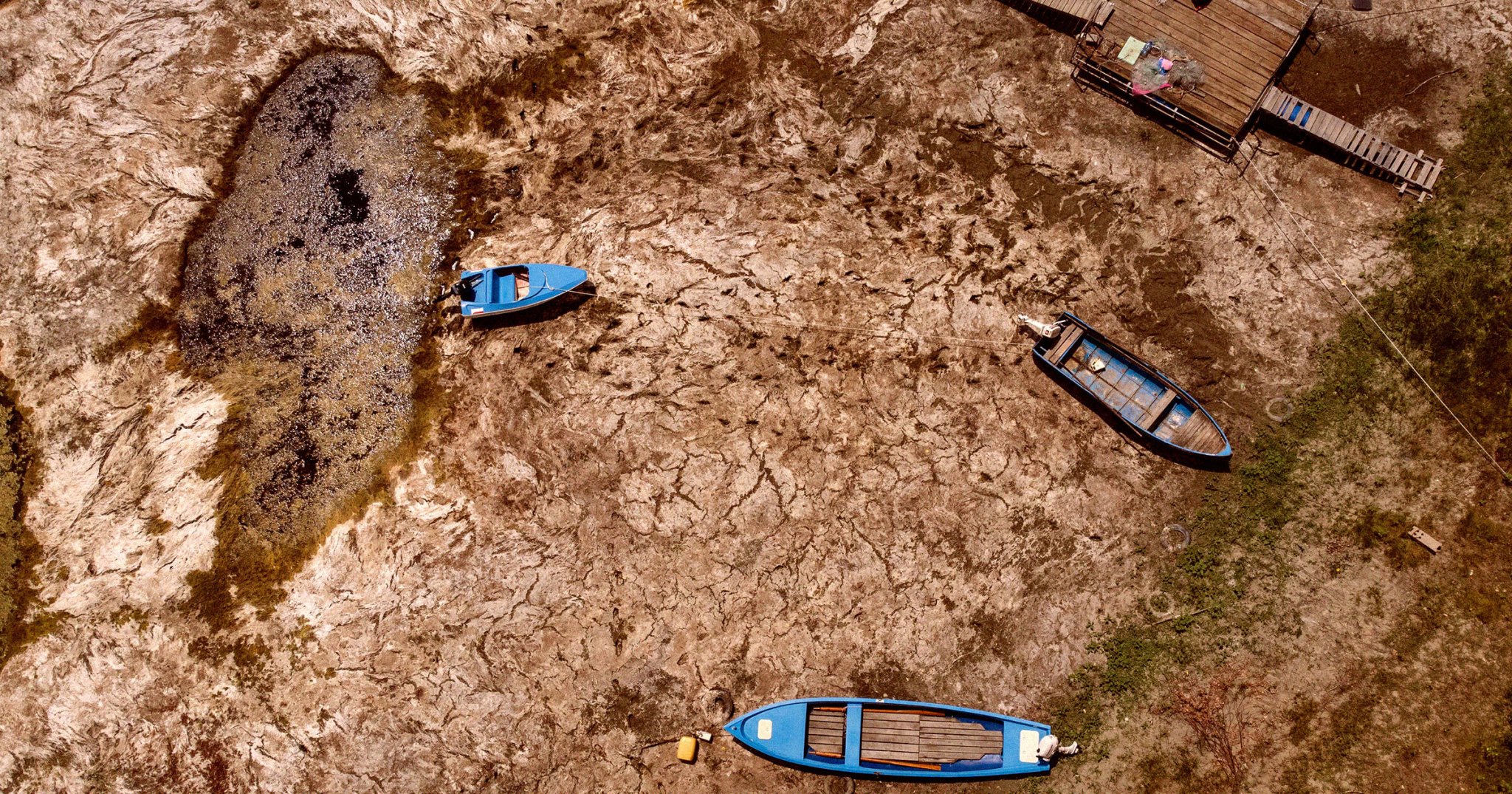
The drought has also drained European rivers. On the Danube River, which borders Serbia and Romania, the receding water levels have unearthed dozens of World War II shipwrecks, including those of a Nazi fleet that was sunk near the war's end to impede Soviet advances. In Slovakia, authorities found an unexploded WWII bomb along the Danube.
Written by urgent.news from Yale Environment 360's reporting — not their text. Machine-written — may contain errors; check the original before relying on it.
This story
This is one outlet's version. Read the fullest account.