Italy’s $4.7 billion cheese economy is feeling the heat as climate change threatens its cheese banks that hold Parmigiano wheels as loan collateral
Extreme heat is straining the vaults that hold Parmigiano wheels as loan collateral, and economists say the damage runs wider than the vault
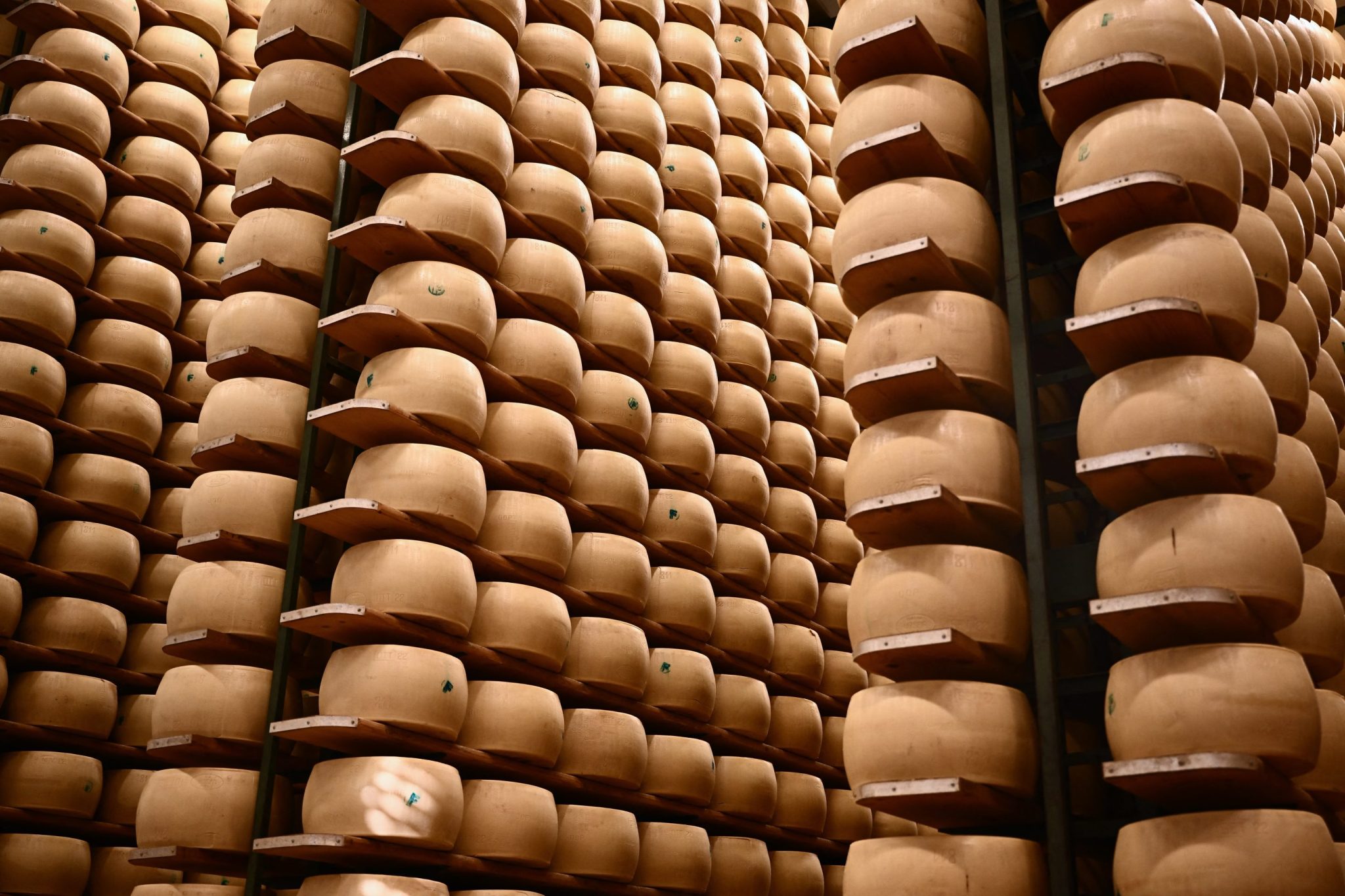
In the rolling hills of Emilia-Romagna, a banking institution safeguards more than half a million wheels of Parmigiano Reggiano, valued at over 300 million euros. Known as Credito Emiliano, or Credem, the bank has been accepting young Parmigiano Reggiano wheels as collateral for loans to local dairy farms since 1953. However, extreme heat is now threatening Italy's "cheese banks," with economists indicating the impact extends beyond a single vault to include the country's vineyards, olive groves, and broader economy.
Credem's subsidiary, Magazzini Generali delle Tagliate, ages the wheels in two warehouses located in Reggio Emilia and Modena. Typically, producers receive 60% to 80% of a wheel's value upfront. Nevertheless, the process has evolved over time through the use of blockchain technology, enabling farmers to pledge wheels even while the cheese remains in their facilities. This development has doubled Credem's lending capacity.
According to Giancarlo Ravanetti, who manages the bank's cheese warehouse business, Italy produces approximately 4 million wheels of Parmigiano Reggiano annually, with Credem's vaults housing around 500,000 of them, accounting for about 2.3 million wheels yearly. The cheese banks' significance lies in sustaining a 4 billion-euro industry, supported by roughly 300 certified dairies.
Regulating the temperature for this vast amount of cheese has become increasingly costly due to the 2026 European heatwaves, which have raised daily energy consumption by around 30%, necessitating upgrades to cooling systems, boilers, insulation, and the expansion of renewable power generation.
Climate change is also affecting the country's vineyards and olive groves. In Lombardy's Franciacorta region, the 2026 harvest began on July 30, the earliest start on record, as budbreak occurred more than a week ahead of the historical average. In Sicily, the harvest has extended to a hundred-day picking season across various microclimates, as producers attempt to stay ahead of the heat.
Coldiretti, Italy's largest farmers' association, has labeled 2026 as one of the earliest harvests nationally, attributing it to record temperatures and drought, which are accelerating sugar accumulation in grapes before their flavors fully develop, posing challenges for late-ripening red grapes like Nebbiolo, the base for Barolo.
Some producers have begun using shade netting over vineyards, originally designed for hail protection, to mitigate the sun exposure that would otherwise strip the grapes of acidity.
Olive groves in Puglia and Calabria, Italy's two largest olive-oil-producing regions, have experienced a significant decline in national production, falling below the historical average of more than 350,000 tons, with the 2025/26 season yielding between 270,000 to 300,000 tons. In previous drought years, Puglia's output has plummeted by more than half in a single season.
R. Jisung Park, a labor economist at the University of Pennsylvania's Wharton School and author of Slow Burn, highlights the pattern of heat's impact on Italy's cheese, wine, and olive oil industries as part of broader research linking heat to decreased economic output. Park suggests that even though the percentage of GDP lost to extreme heat is lower in Spain and Italy compared to Germany, a small top-line number can still conceal substantial damage in the form of supply chain spillovers affecting firm valuations downstream.
Written by urgent.news from Fortune's reporting — not their text. Machine-written — may contain errors; check the original before relying on it.