India’s IPO Boom Continues, 366 Issues Raise ₹1.9 Lakh Crore
New Delhi: India remained one of the world’s busiest initial public offering markets in FY26 , with 366 companies raising nearly Rs 1.9 lakh crore through mainboard and small and medium enterprise (SME) IPOs. According to a report by Grant Thornton Bharat, fundraising remained strong during the financial year. However, investors became more careful while selecting companies. Mainboard Record…
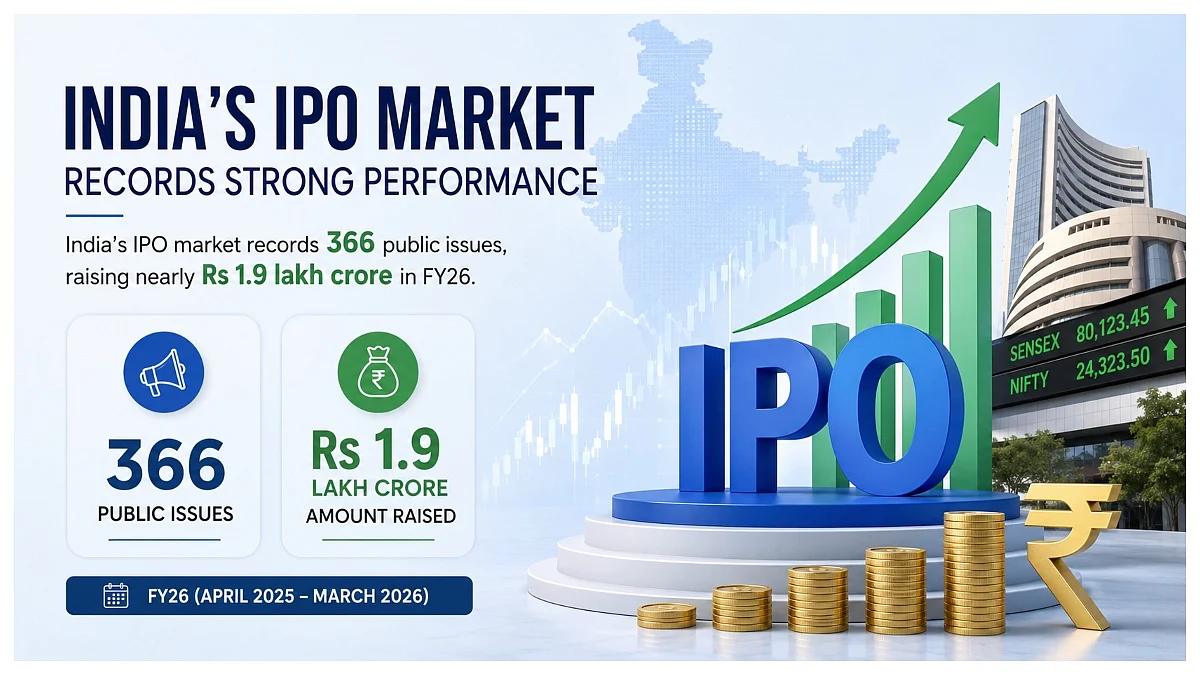
In the fiscal year 2026, India's initial public offering (IPO) market demonstrated exceptional activity, with a total of 366 companies raising approximately Rs 1.9 lakh crore via mainboard and small and medium enterprise (SME) IPOs. According to a report by Grant Thornton Bharat, fundraising remained robust throughout the financial year; however, investors became increasingly discerning in their company selections.
The mainboard witnessed a record high in IPO activity, with 109 companies collectively raising around Rs 1.77 lakh crore, constituting the majority of the total funds collected. The remaining issues originated from the SME platform, which continued to offer smaller enterprises access to public funds, despite the global uncertainties and inflation concerns.
Despite the record-level fundraising, subscription levels and listing gains were below the highs observed in the previous fiscal year (FY25). Investors scrutinized company valuations, earnings, governance standards, and future growth prospects more meticulously before applying for IPOs. The report highlighted the significance of pricing discipline and institutional investors' involvement in the success of public issues.
Behari Lal Engineering set an IPO price band of ₹271-285 for a ₹302 crore issue, with the subscription opening on August 12.
Karan Marwah, Partner and CFO Advisory Leader at Grant Thornton Bharat, emphasized that IPO success now extends beyond merely obtaining a listing. Companies must also demonstrate their ability to operate responsibly as listed businesses and retain investor confidence post-debut. Strong domestic investor participation played a crucial role in maintaining India's capital markets' resilience throughout the year.
However, global developments, commodity prices, and currency fluctuations continued to influence investor sentiment and risk appetite.
Regulatory reforms have focused on enhancing transparency, making IPOs more accessible, and fortifying investor protection. The report also noted that India's IPO pipeline remained robust, driven by domestic investment, long-term economic growth, and an expanding investor base. Companies with solid financial fundamentals, reasonable valuations, and meticulous IPO planning were more likely to succeed in raising funds from the public market and sustain investor confidence post-listing.
Written by urgent.news from Free Press Journal's reporting — not their text. Machine-written — may contain errors; check the original before relying on it.