How long can the AI memory price boom last? Research suggests not much longer
A sharp run-up in global memory-chip stocks is beginning to falter as cooling price growth raises questions over how long the sector’s explosive boom can last, even as artificial intelligence demand remains robust and Chinese producers prepare to add more supply. While data-centre spending continues to fuel appetite for high-end memory, analysts are warning that the steep price increases – which…
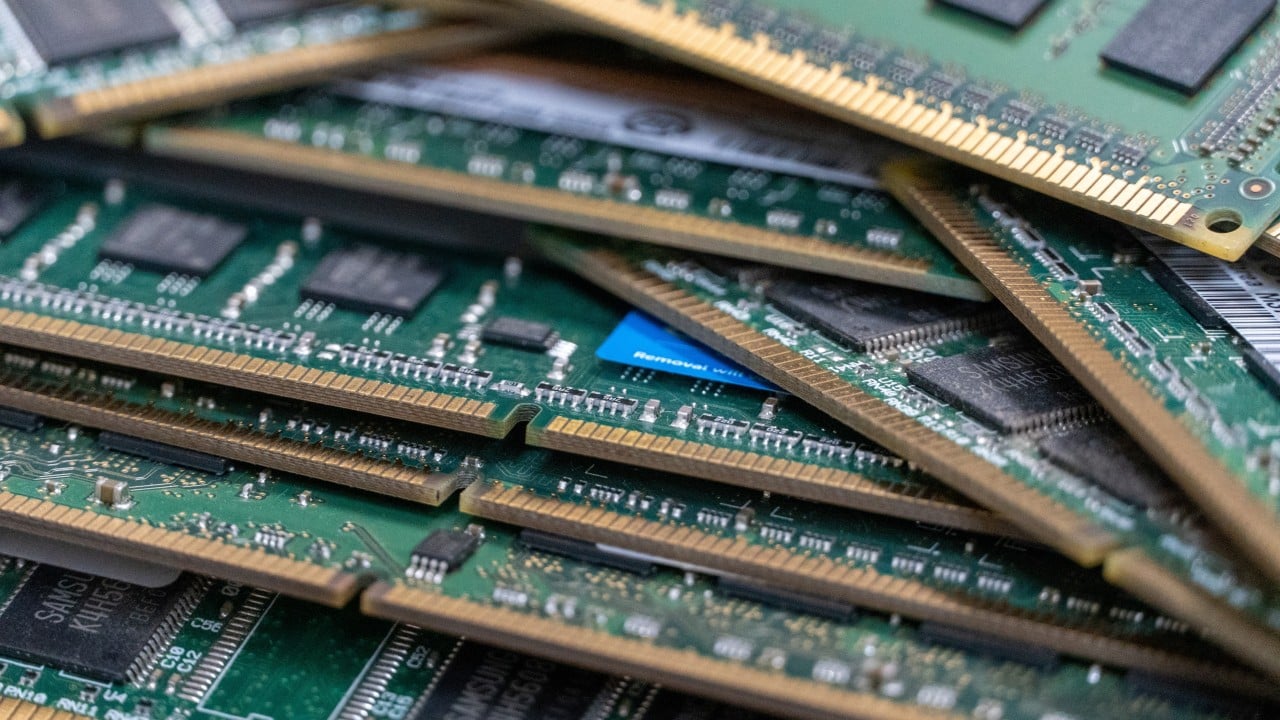
Sharp run-up in global memory-chip stocks is cooling as rising prices raise doubts about the sector's enduring boom, despite robust demand for AI applications and Chinese producers gearing up to increase supply. While data-center spending sustains enthusiasm for high-end memory, analysts caution that escalating prices suggest the industry is in a late-cycle phase.
This sentiment is echoed in recent forecasts by financial institutions. Morgan Stanley's report warns that the memory cycle may shift to its late stage in the fourth quarter as prices moderate and inventories expand. Major memory firms like Micron, SK Hynix, and SanDisk have retreated from recent highs as investors scrutinize the sustainability of the surge.
Contract pricing has also slowed, with Bernstein Research projecting a 17% increase in conventional DRAM contract prices for the third quarter, compared to roughly 65% growth in the April-June period. Expansion ambitions by China's top memory producers, such as ChangXin Memory Technologies (CXMT) and Yangtze Memory Technologies Corp (YMTC), further intensify supply-side pressure.
CXMT aims to nearly double its monthly DRAM capacity by late 2028, while YMTC is ramping up its NAND flash capabilities. These expansions are expected to boost their global DRAM bit supply share from 7% to 10% and 10%, respectively. However, the cooling effect varies across sectors, with consumer electronics firms, particularly PC and smartphone manufacturers, resisting further price hikes, while server and AI data center demand remains strong.
Citi Research projects servers will account for 51.1% of global NAND production in 2027, up from 44.2% in 2026. Morgan Stanley analysts note that a robust AI cycle and a cyclical downturn can coexist. Despite the deceleration, JPMorgan expects memory shortages to persist for another two years, estimating that roughly 300,000 additional monthly wafer starts of DRAM capacity and 45,000 of NAND would be required to restore balance by 2028.
The path to equilibrium is long and complex, as new semiconductor fabrication plants require years to build and ramp up, while the surge in AI accelerator memory production continues to consume wafer capacity. This tension is especially pertinent for CXMT, whose ambitious expansion plans still face an undersupplied global DRAM market until at least the second quarter of 2028.
Written by urgent.news from SCMP Tech's reporting — not their text. Machine-written — may contain errors; check the original before relying on it.