Europe Will Get Its First Total Solar Eclipse in Over 25 Years. Here's What You Should Know
From Greenland to Spain, a rare sky show will dazzle a few lucky million.
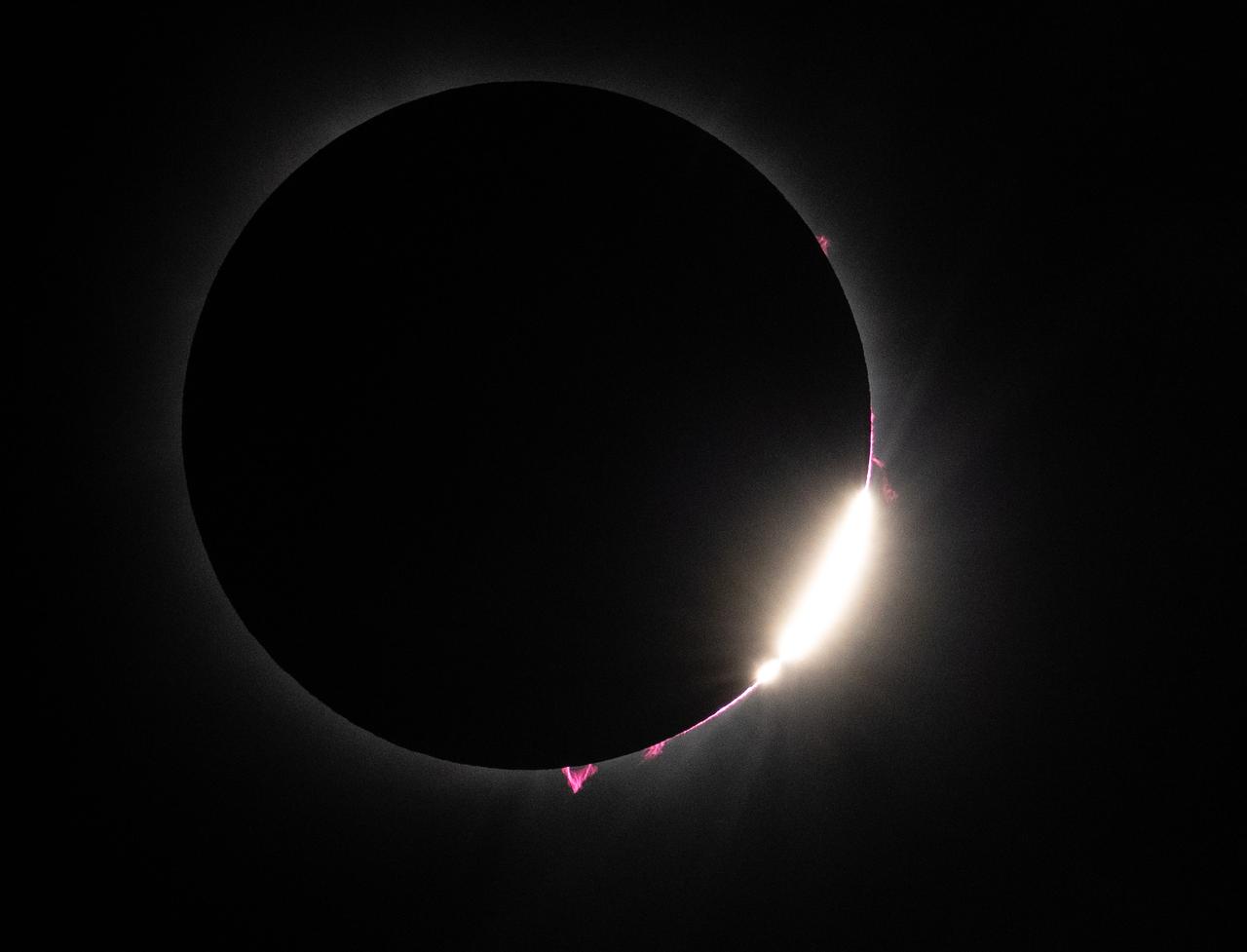
On August 12, 2026, a celestial event will not resemble the myths of ancient civilizations, despite the legends of a cosmic dragon swallowing the sun, a wolf chasing the sun, or a giant squirrel consuming the sun. Instead, the total solar eclipse that will take place will be a marvel to witness and study.
The eclipse, beginning over northern Russia, will pass through Greenland, Iceland, Spain, and the Mediterranean Sea, passing through central Europe after 25 years. This eclipse will be the first to cross central Europe since 1999.
Total solar eclipses occur only once every 350 years at any given location, due to the precise alignment of the sun, moon, and Earth. The sun is approximately 400 times larger than the moon, but it is also about 400 times farther away, making the two appear similar in size from our perspective.
While partial and annular eclipses are more common, total eclipses are rarer, with observers needing to be within a narrow, 182-mile-wide path on August 12 to witness the full effect. The period of totality will last no longer than two minutes and 18 seconds, depending on the location.
Total solar eclipses provide not only a spectacle for skywatchers but also a platform for scientific research. In 1919, total solar eclipses were used to validate Einstein's theory of general relativity, measuring the bending of starlight as it passed near the sun. During the 2026 eclipse, NASA will conduct experiments to observe the sun's corona in various wavelengths, while students will study atmospheric dynamics using research balloons.
Written by urgent.news from Time's reporting — not their text. Machine-written — may contain errors; check the original before relying on it.