Dogs can tell if you're scared or sad
fMRI scans show happiness, fear, anger, and sadness have distinct brain activity patterns in doggy brains.
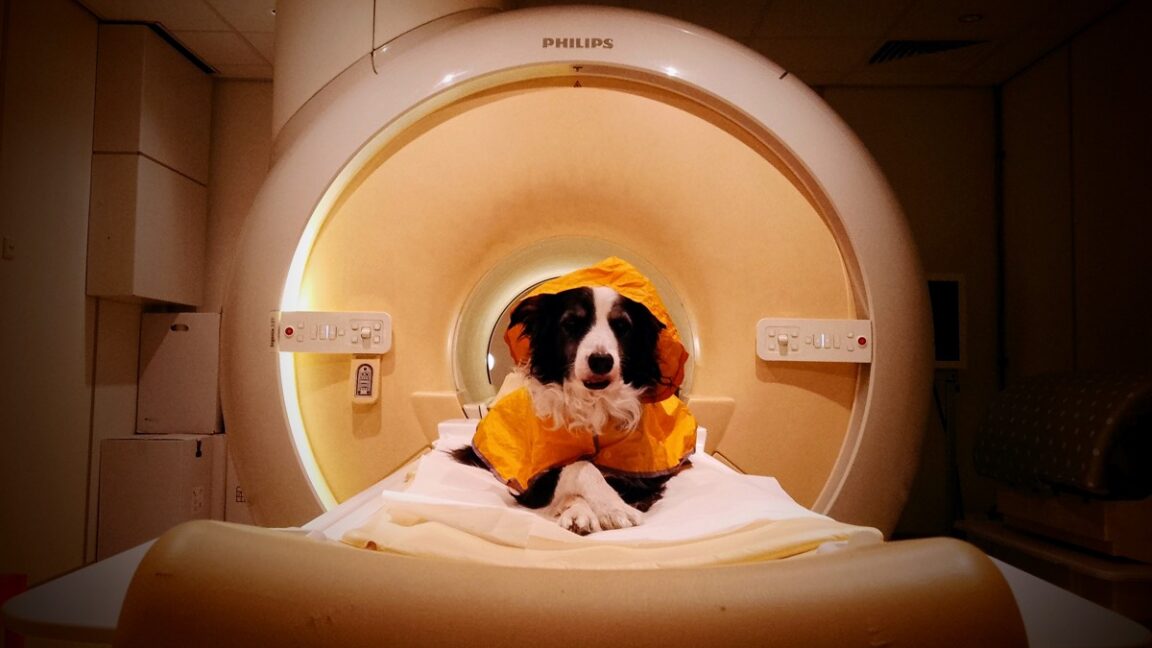
Recent research published in the journal iScience reveals that dogs possess the ability to discern humans' emotional states. A team of scientists from the University of Vienna conducted experiments using functional magnetic resonance imaging (fMRI) scans to identify the specific brain region responsible for processing happy human facial expressions.
They discovered that dogs can differentiate between negative facial expressions, including anger, sadness, and fear. According to co-author Raúl Hernández-Pérez, dogs are exceptionally skilled at detecting subtle facial cues, making them a valuable subject for studying human–dog social and emotional interactions. Previous behavioral studies have also shown that dogs exhibit a preference for choosing boxes associated with a happy human expression over those labeled with fear or disgust.
Prior fMRI research has demonstrated that the canine left temporal cortex demonstrates a stronger response to human faces compared to dog faces. Additionally, the caudate, hippocampus, and amygdala show a greater response to human faces displaying emotions than to neutral faces.
Written by urgent.news from Ars Technica Science's reporting — not their text. Machine-written — may contain errors; check the original before relying on it.
This story
This is one outlet's version. Read the fullest account.
- Dogs can tell if you're scared or sad arstechnica.com