Days of heavy rain leave at least 13 dead in Philippines
The rains, exacerbated by tropical storms, have led to school and government office closures across the main island of Luzon and flooding in the streets of Manila.
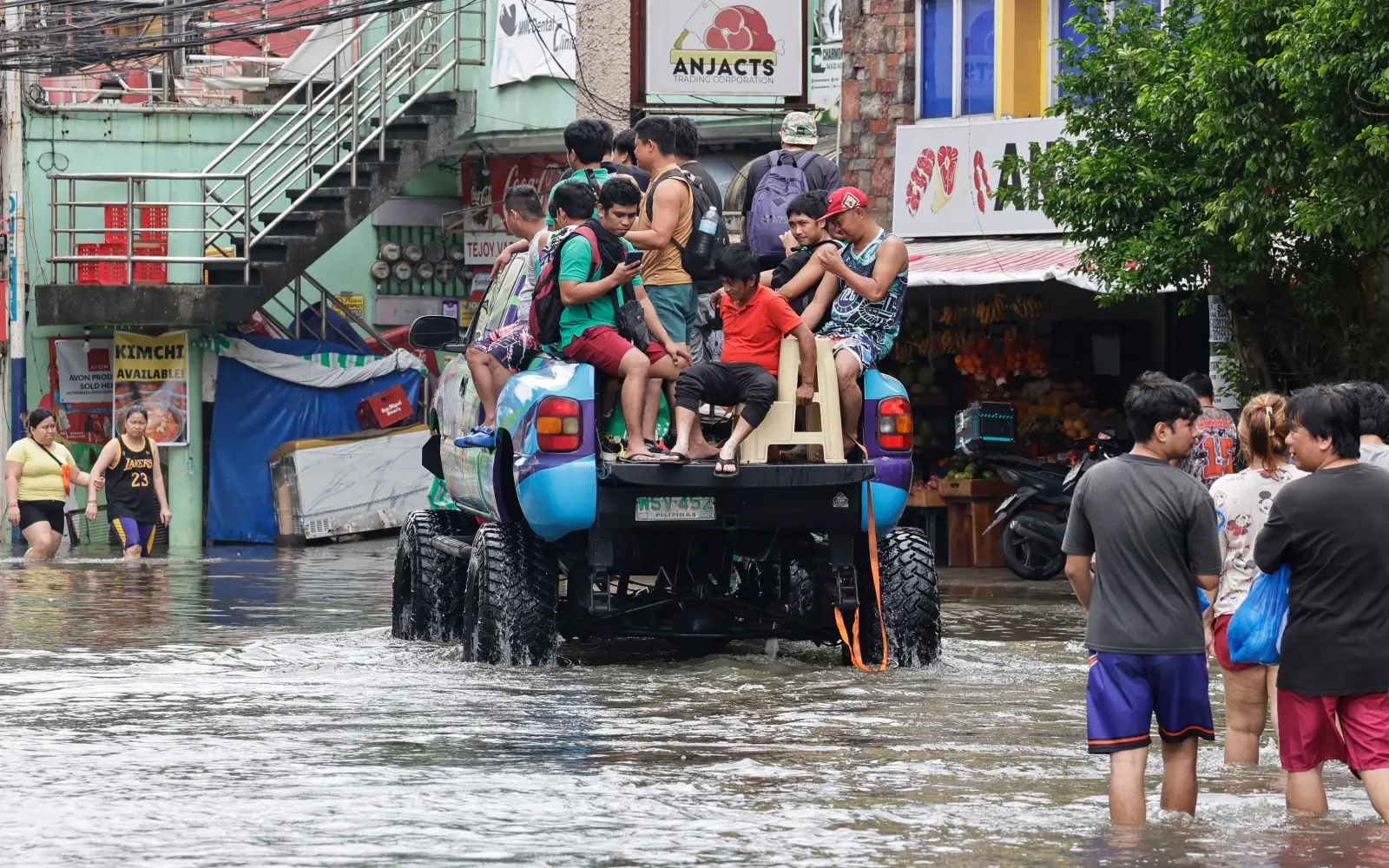
Rescuers in the Philippines have confirmed at least 13 fatalities following a series of floods, landslides and accidents caused by a prolonged downpour equivalent to over a month's worth of rain in certain regions. The heavy rains, exacerbated by tropical storms, have forced schools and government offices to close, resulting in street flooding in the capital city of Manila.
Four deaths occurred in the mountain town of Baguio, where a rain-soaked mountainside collapsed onto several houses, burying four residents. Search teams are currently sifting through the rubble to find at least six more people who remain missing after the incident.
According to Dan Villamil, a state weather forecaster, the rainfall in Baguio, located four hours north of Manila, has been 47% higher than the norm for the entire month. The city typically receives 963.2 millimetres of rain during August, but recorded 1,413.2 millimetres from August 1-9.
In addition to Baguio, landslides claimed six more lives on Luzon, while another death was attributed to drowning, one was struck by a falling tree, and another met their end due to electrocution, as per a civil defence office tally. Despite the ongoing heavy rain, public works secretary Vince Dizon stated that floodwaters are receding.
He emphasized the need to rectify years and decades worth of faulty flood mitigation efforts, referencing a scandal involving fraudulent flood-control projects that have drained taxpayers' money.
The Philippines, situated at the forefront of the Pacific cyclone belt, experiences an average of 20 storms and typhoons each year, placing millions of people in vulnerable disaster-prone areas in a state of persistent poverty. Scientists attribute the rising frequency, duration, and intensity of extreme weather events to human-induced climate change.
Written by urgent.news from Free Malaysia Today's reporting — not their text. Machine-written — may contain errors; check the original before relying on it.
Also reported by 3 other outlets
- Days of heavy rain leave at least 13 dead in Philippines freemalaysiatoday.com
- Days of heavy rain leave at least 13 dead in Philippines malaymail.com
- Days of heavy rain leave at least 13 dead in Philippines torontosun.com