Can a photo save orangutans?
In Indonesian Borneo, conservation organization KehatiKu is testing a new approach: paying local people to photograph wildlife and upload the sightings through an app. In just one year, the project has collected around 175,000 records. Participants can earn about $6 for a photo of an orangutan, while smaller payments are offered for more common species. […]
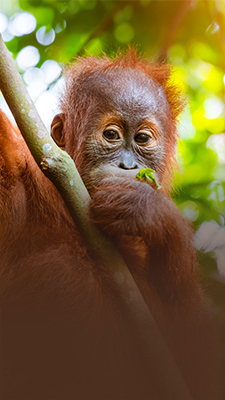
In Indonesian Borneo, a conservation organization named KehatiKu is experimenting with a novel method to protect orangutans. This innovative approach involves compensating local residents for documenting wildlife sightings via a mobile application. Over the course of a year, this unique scheme has amassed roughly 175,000 records.
For photographing an orangutan, participants can earn around $6, while smaller rewards are offered for spotting more commonplace species. As a result, local communities are now actively engaged in efforts to thwart illicit hunting activities in their territories.
The rationale behind this unconventional conservation strategy is rooted in the fact that, during the past two decades, over $1 billion has been allocated towards orangutan preservation. However, despite this substantial investment, approximately 100,000 orangutans have been lost. KehatiKu contends that their novel conservation approach is demonstrating tangible results, albeit at a significantly lower expense compared to conventional conservation efforts.
Nevertheless, some experts caution against the adoption of this conservation method. Paul Ferraro, a professor of human behavior and public policy at Johns Hopkins University in the United States, expresses concern that this technique necessitates a continuous stream of financial support. He posits that such a dependency could pose challenges in the future. Ferraro suggests that while the approach may effectively garner initial participation, its long-term sustainability might prove to be a formidable challenge.
Written by urgent.news from Mongabay's reporting — not their text. Machine-written — may contain errors; check the original before relying on it.