7.4-magnitude earthquake rocks Colombia, crumbling homes and buildings
A powerful and deadly earthquake hit Colombia on Monday, killing at least 111 people, toppling buildings and leaving a trail of destruction. Geoff Bennett reports.
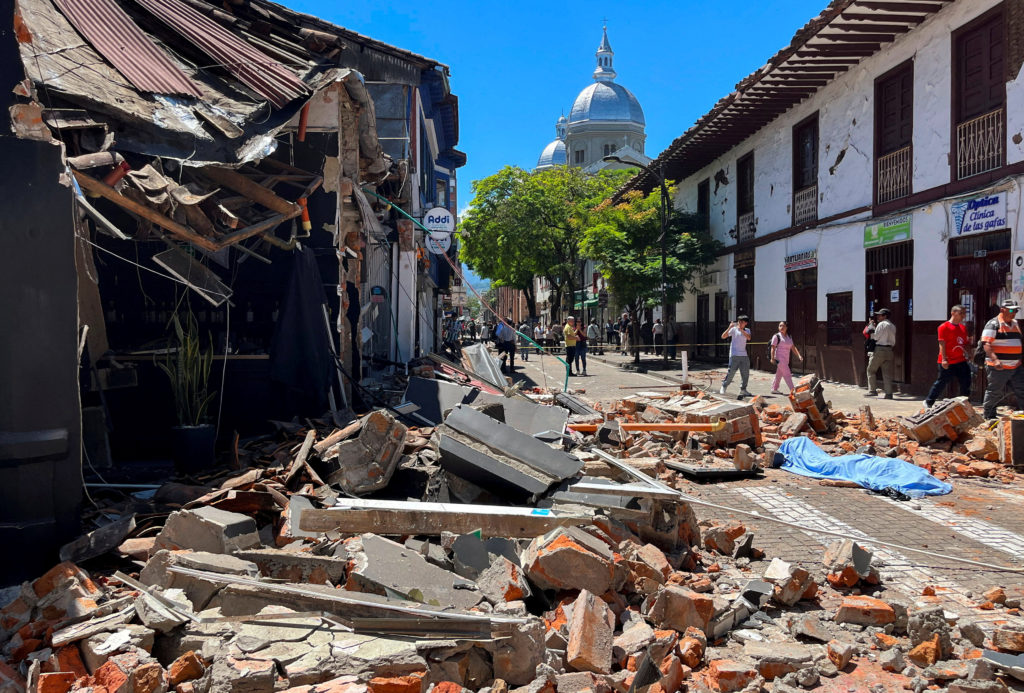
A devastating 7.4-magnitude earthquake struck Colombia on Monday, resulting in at least 111 fatalities and widespread destruction. The tremor, centered near San Jose del Palmar south of Medellin, extended across Western Colombia, including the renowned coffee-growing region. In Manizales, roughly 160 miles from the capital Bogota, thick smoke billowed as buildings collapsed, forcing residents to flee for safety.
The renowned Cathedral Basilica of Our Lady of the Rosary in the city bore the brunt of the quake, with strangers instinctively huddling together as they witnessed the tremor's impact. Rescue teams in Pereira responded to the scene, combing through the debris in pursuit of survivors. Panic ensued as vendors and delivery drivers hurried to safety, as one four-story edifice buckled in mere minutes.
Outside an apartment complex, a woman fervently prayed for the shaking to cease while onlookers helplessly observed the structure sway. The earthquake affected even Colombia's new president, who only recently took office following the inauguration in Santiago de Cali. Mayor Alejandro Eder reported at least 20 buildings in his city had collapsed, with people trapped inside.
He urgently sought assistance from the mayors of Bogota and Medellin. President Alejandro Eder reaffirmed his commitment to the nation, pledging to lead the emergency response and travel to the areas most severely hit by the disaster.
Written by urgent.news from PBS NewsHour's reporting — not their text. Machine-written — may contain errors; check the original before relying on it.
This story
This is one outlet's version. Read the fullest account.
- At least 77 killed after powerful earthquake hits western Colombia dawn.com
- Powerful 7.4 earthquake hits Colombia, injuries reported dailytimes.com.pk
- Sheinbaum pledges ‘all the support’ Colombia needs following deadly earthquake: Monday’s mañanera recapped mexiconewsdaily.com
- Colombia rescue efforts press on after deadly earthquake france24.com
- At least 111 dead in the magnitude 7.4 earthquake that struck western Colombia en.mercopress.com
- Powerful earthquake rocks Colombia and neighbors lemonde.fr
- What to Know About the Earthquake in Colombia time.com
- In the news today: B.C. wildfire reinforcements, Colombia earthquake, car thefts down winnipegfreepress.com