Who killed Tupac? Three decades later, there may finally be answers
Three decades after the murder of rapper Tupac Shakur, the world may get some answers about who killed the young superstar, and why.
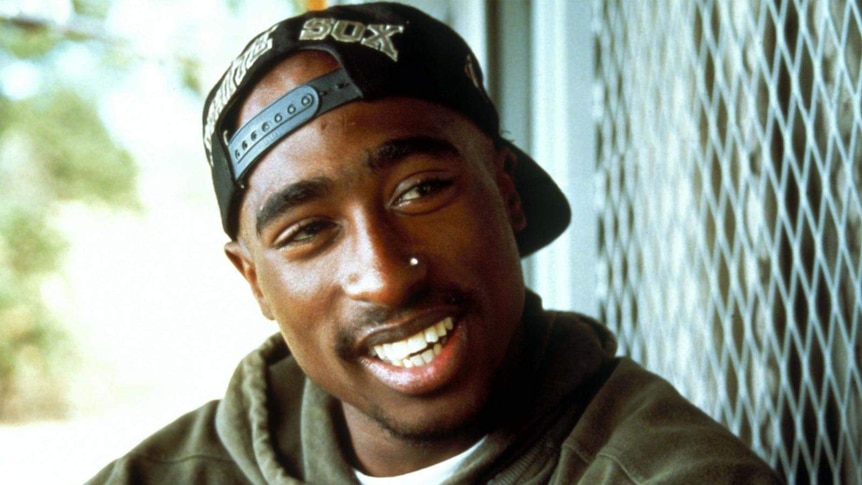
In a murder trial set to commence in Las Vegas, fresh insights regarding the 1996 assassination of rap icon Tupac Shakur may soon emerge. Duane Keffe D Davis, who is alleged to have masterminded the rapper's demise, has entered a plea of not guilty. This case stands as one of hip-hop's most enduring enigmas, with Davis being the sole individual to face charges pertaining to Shakur's murder.
Prior to achieving global fame, Shakur was a gifted high school student in Baltimore, described by Richard Pilcher, his former principal acting instructor, as a charismatic and polite individual possessing remarkable talent and charisma. Pilcher recalled how he perceived Shakur's potential for stardom, although he did not anticipate the magnitude of his future success.
Shakur's career was tragically cut short at the age of 25 when he was struck by gunfire during a drive-by shooting in Las Vegas. This event ignited numerous conspiracy theories and sparked a three-decade-long investigation into his murder. Recently, a member of a rival gang disclosed a tell-all memoir revealing their alleged involvement in Shakur's death.
For the first time, the circumstances surrounding the rapper's demise will be presented in a court of law, potentially offering answers to the lingering questions about who killed the young superstar and why.
Born in 1971 in East Harlem, New York, Tupac Shakur took on the name of a powerful Peruvian revolutionary. His mother, Afeni Shakur, a former Black Panther Party member, envisioned her son embracing the name of a powerful man of color. Shakur's godmother, Assata Shakur, was also a Black Panther and a member of the Black Liberation Army who was convicted of killing a New Jersey state trooper but maintained her innocence and fled to Cuba.
These influential women played a significant role in shaping Shakur's worldview, particularly concerning race, oppression, and justice, which would later permeate his music.
At the age of 13, Shakur relocated with his family to Baltimore, where he enrolled in the Baltimore School for the Arts, where he delved into acting, poetry, jazz, and ballet. He forged a deep connection with fellow student Jada Pinkett, who also pursued an acting career. However, in 1988, the family moved west to California in search of a reprieve from the hardships they had faced in Baltimore, including poverty, housing instability, and drug addiction.
The transition to California proved challenging for Shakur, who felt a sense of loss upon leaving the supportive environment he had cultivated at the Baltimore School for the Arts. Upon arriving in California, Shakur immersed himself in the burgeoning hip-hop culture, rapidly ascending to stardom. Within just a few years, he transitioned from a dancer and backup rapper to one of hip-hop's most prominent figures.
He released four studio albums, including the groundbreaking double-disc masterpiece, "All Eyez on Me," which became one of the best-selling rap albums of all time. Shakur also starred in seven feature films, including a memorable collaboration with Janet Jackson in "Poetic Justice."
However, it was during his time on the West Coast that Shakur found himself embroiled in a fierce rivalry between the Death Row Records and Bad Boy Records factions. The East Coast-West Coast feud was fueled by the rivalry between Death Row Records, based in Los Angeles, and Bad Boy Records, founded by Sean "Diddy" Combs in New York.
Death Row Records hired security guards associated with the Bloods gang, while Bad Boy Records was affiliated with the Crips. This escalating rift culminated in violence in 1994, when Shakur was shot five times during an apparent robbery at a New York recording studio. Although he survived the attack, it further intensified the animosity between the two sides.
The East-West feud reached its zenith on September 7, 1996, when Shakur and Suge Knight, co-founder of Death Row Records, traveled to Las Vegas for a nightclub performance. As they drove along the glitzy strip, a white Cadillac pulled up alongside their vehicle, and a passenger rolled down their window, opening fire. Shakur was shot four times, while Knight sustained a graze from a bullet.
Cathy Scott, a crime reporter for the Las Vegas Sun, vividly remembers the harrowing incident. She recounted being awakened by a homicide detective who informed her that Shakur had been shot. Despite receiving medical attention, Shakur succumbed to his injuries six days later, marking the end of a promising career cut short by violence and unrest.
Written by urgent.news from ABC News AU's reporting — not their text. Machine-written — may contain errors; check the original before relying on it.