What is the significance of India’s first privately built FFSC rocket engine? | Explained
Globally only three commercial companies have successfully developed high thrust FFSC engines, which are SpaceX and Stoke Space, both from the United States of America, and Land Space from China
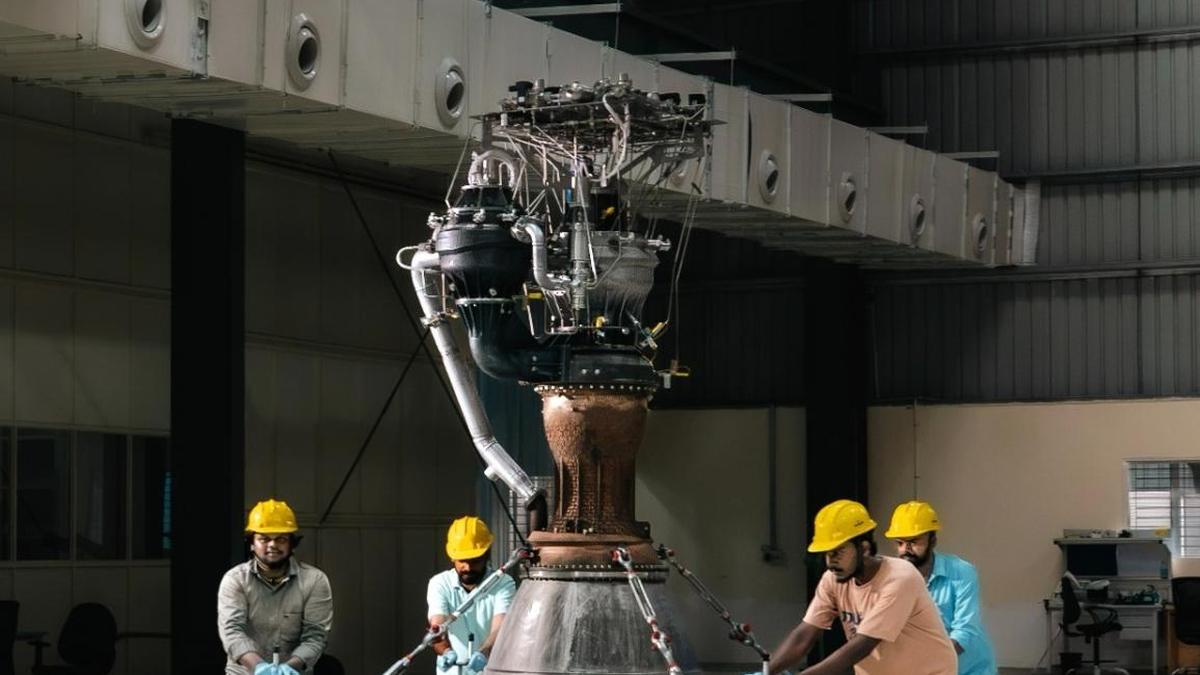
The unveiling of India's first privately developed FFSC rocket engine, named EVEREST, by Bengaluru-based space company Astrobase Space Technologies has garnered significant attention in the aerospace industry. This marks India's entry into the club of nations possessing Full-Flow Staged Combustion (FFSC) engine technology, which now includes Russia, the USA, and China.
FFSC engines stand out for their ability to route both fuel and oxidiser through separate pre-burners before entering the main combustion chamber, enhancing propulsion efficiency and enabling precise throttle control. This advanced architecture is particularly advantageous when paired with LOX-Methane propellants, which allows for cleaner combustion and simplifies refurbishment efforts, leading to faster turnaround between missions.
While FFSC engines are complex to design and develop, Astrobase Space Technologies, founded in 2024, has emerged as the fourth global entity to successfully develop this high-thrust technology. The company's achievement further positions India to support reusable launch systems and strengthen its long-term access to space. With plans to manufacture and test multiple engines before its first orbital flight in December 2028, Astrobase's development of the EVEREST engine represents a significant leap forward in India's space capabilities.
Written by urgent.news from The Hindu's reporting — not their text. Machine-written — may contain errors; check the original before relying on it.