Matter of pure force: US, Israeli physicists hail China’s glueball discovery as ‘triumph’
The international physics community has hailed a Chinese-led discovery as a “triumph” after researchers presented the strongest evidence yet for the existence of the “glueball” – a mysterious particle made of pure force. On Chinese social media, the conversation centred on whether the research could lead to a Nobel Prize. The announcement was made last week at the International Conference on High…
International physicists have praised a Chinese-led discovery of a "glueball" as a "triumph," according to the latest report from the International Conference on High Energy Physics in Natal, Brazil. The elusive particle, composed of pure force and made entirely of gluons, had remained one of the greatest unsolved puzzles of modern physics since its theoretical prediction in the early 1970s.
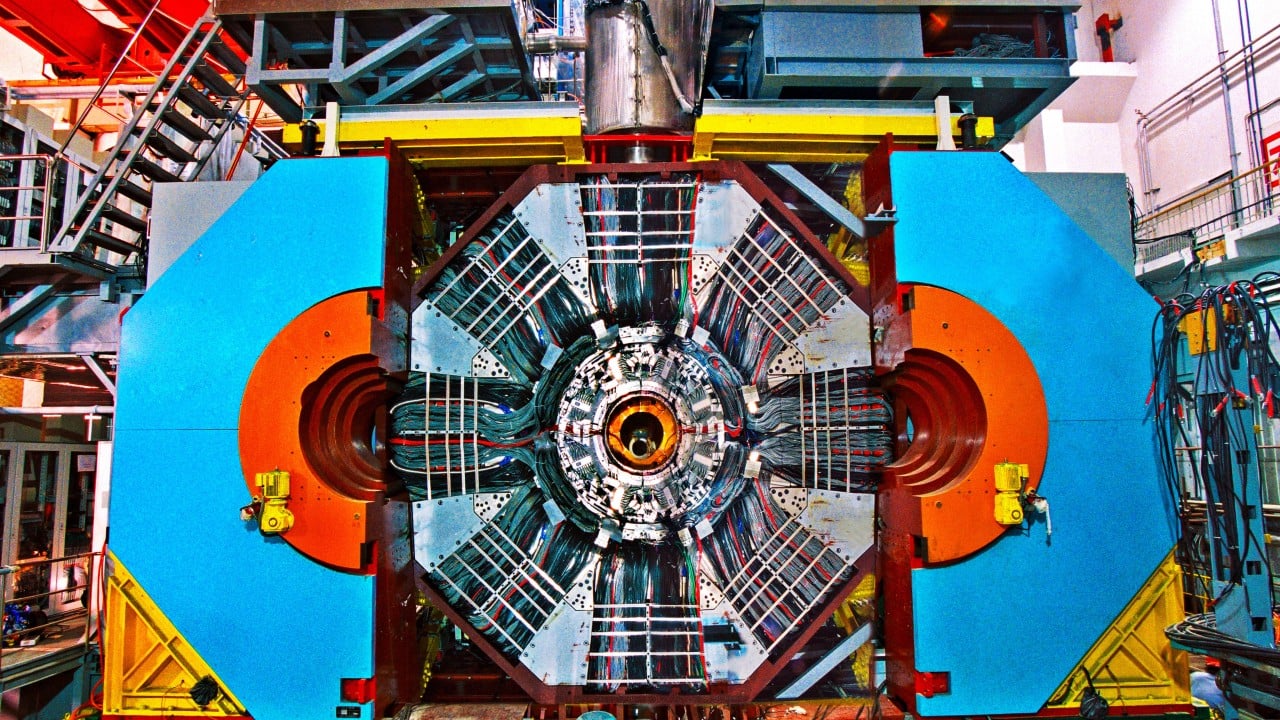
The breakthrough came after 15 years of collaborative research by physicists from 15 countries, who meticulously analyzed billions of measurements at the Beijing Electron Positron Collider (BEPC) in western Beijing. Colin Morningstar, a theoretical physicist at Carnegie Mellon University, hailed the study as an "experimental triumph," while Marek Karliner from Tel Aviv University called it an "experimental tour de force" for patiently completing a long checklist of tests, including measuring the particle's mass, quantum numbers and a final identifying feature known as a "flavour singlet."
Although X(2370), the particle initially identified as a glueball candidate, is likely not a pure glueball, the confirmation of one of the last major predictions of quantum theory still deepens our understanding of nature's fundamental laws and could potentially lead to unforeseen technological applications.
Written by urgent.news from South China Morning Post's reporting — not their text. Machine-written — may contain errors; check the original before relying on it.