Unregulated placer gold mining raises concerns in GB
A recently sealed placer gold extraction site in Hunza. —Photo by Gilgit-Baltistan Environmental Protection Agency • Authorities warn of risks to Diamer-Bhasha Dam, roads, bridges and settlements • Untreated wash water, debris and oil from machinery areas of concern GILGIT: Increasing placer gold mining activities in streams and rivers are threatening the fragile ecosystem of Gilgit-Baltistan…
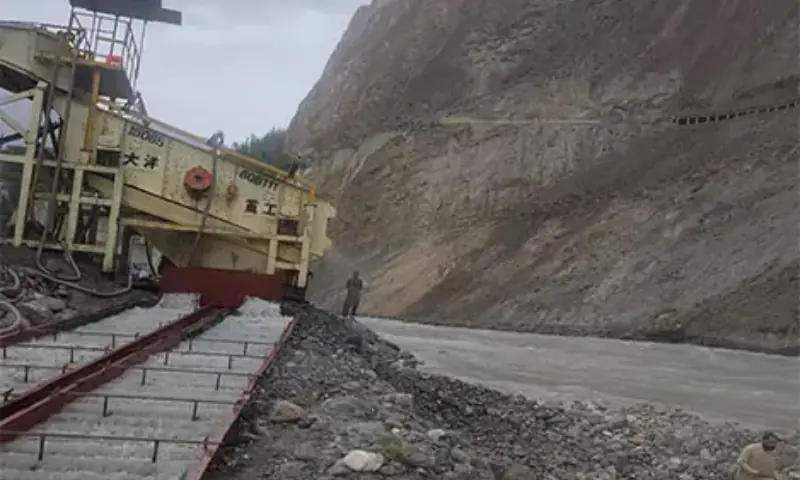
Recent reports have raised concerns over unregulated placer gold mining activities in Gilgit-Baltistan (GB), warning of potential risks to critical infrastructure and the environment. Authorities are particularly worried about the impact on the Diamer-Bhasha Dam, alongside roads, bridges, settlements, and agricultural land situated along riverbanks.
Placer gold mining has seen a surge in recent years, driven by both local and international companies operating in the region. However, this activity is occurring in direct violation of environmental laws, leading to severe ecological degradation. Reports indicate that heavy machinery used for extracting gold from riverbeds and streams is leaking oil and other materials into the water, mixing with river systems and causing water, air, and land pollution.
Moreover, untreated wash water and debris generated during the gold-washing process are being discharged into rivers without any sedimentation or settling mechanism. This contaminated water is then used by local communities for drinking and other daily needs, exacerbating health and safety risks.
The rapid construction of protection walls along riverbanks for mining purposes, combined with the use of excavated materials, has altered the natural flow of rivers and streams. This has led to the diversion of water towards roads, bridges, human settlements, infrastructure, and agricultural land, posing a significant risk of erosion and the destabilization of slopes near these vital structures. Such damage could be particularly severe during periods of high river discharge.
Furthermore, the dumping of excavated materials has caused irreversible damage to sensitive infrastructure, threatening public health and safety. Additionally, the lack of proper campsites, waste disposal mechanisms, and sanitation facilities at mining sites has led to improper waste management, further endangering the environment.
In response to these concerns, the Gilgit-Baltistan Environmental Protection Agency (GBEPA) and the Water and Power Development Authority (Wapda) have taken action to curb the damage. A fine of Rs1 million was imposed on a placer gold mining company in Nasirabad, Hunza, with operations suspended following violations of environmental protection laws. The project premises were sealed, and the company was ordered to cease operations immediately and comply with environmental regulations.
However, the GBEPA and the minerals department admit to facing challenges in monitoring mining activities and enforcing environmental protection laws due to a shortage of human resources. The Wapda has also expressed concerns about sediment erosion caused by mining activities in the dam project area, specifically within the reservoir area of the Diamer-Bhasha Dam.
The agency has requested measures to control sediment erosion from gold extraction in the Indus River bed, and a ban on excavation activities near bridges over the Indus River has been requested by the Communication and Works Department in Astore.
Written by urgent.news from Dawn's reporting — not their text. Machine-written — may contain errors; check the original before relying on it.