Safeguarding Your Systems: An Introduction to the Circuit Breaker Pattern
The circuit breaker pattern is a modern software design strategy used to detect failures and prevent an application from repeatedly executing an operation that is highly likely to fail. It acts as a protective wrapper around external calls, monitoring for errors and temporarily blocking traffic to a broken dependency once a threshold is crossed. By failing fast, it preserves your system's…
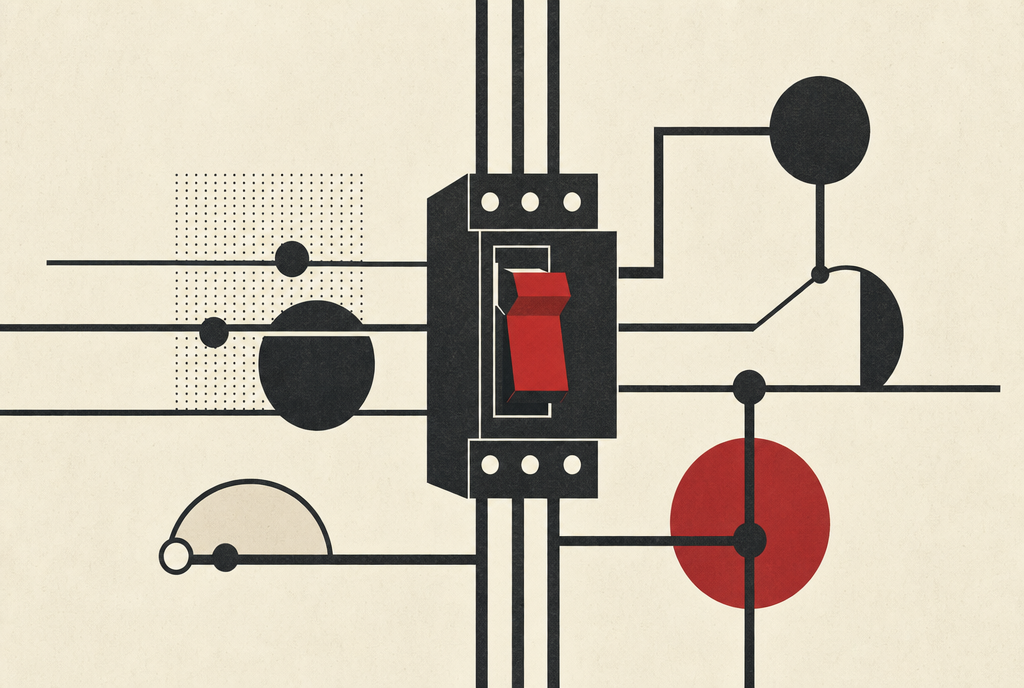
The circuit breaker pattern is a software design technique that prevents applications from continuously executing operations that are likely to fail. Acting like a protective shield around external calls, it keeps track of errors and halts traffic to a broken service once a certain threshold is met. By halting traffic fast, it conserves system resources and gives the faulty service time to recover.
This analogy can be likened to the circuit breaker in a home's electrical system. If a faulty appliance suddenly draws a large surge of electricity, the physical circuit breaker trips, cutting off power to that outlet immediately. This prevents a potential house fire. In the realm of software engineering, this concept is applied to distributed systems.
Applications today heavily rely on external services like payment processors or database clusters. If one of these services crashes or slows down, a standard application continues sending requests, waiting for responses that never arrive. This depletes system memory, CPU threads, and network sockets, potentially leading to the entire application crashing.
By employing a software circuit breaker, developers can instantly redirect traffic away from a failing dependency, maintaining functionality—perhaps by displaying a message like "our payment provider is offline" instead of the website crashing. The circuit breaker operates in three states: Closed, Open, and Half-Open. In the Closed state, all requests pass through without issues.
If the error rate surpasses a threshold, the breaker trips into the Open state, blocking all requests. After a cooldown period, it enters the Half-Open state, allowing a small batch of traffic to test if the service has recovered. If the test is successful, the breaker closes again; if it fails, it returns to the Open state. This JavaScript code demonstrates a simple implementation of a Circuit Breaker: it tracks the status of an external call and enters the Open state if failures exceed a certain threshold, throwing an error for subsequent attempts.
After the cooldown period, it moves to Half-Open to test if the service has recovered, resetting itself to Closed upon a successful call. The circuit breaker pattern emphasizes that failure is inevitable in distributed environments. Instead of assuming every external API will always be online, defensive engineers design systems that can gracefully degrade.
Implementing this pattern turns fragile applications into resilient architectures, allowing them to survive localized outages without the entire system collapsing. Resources: GitHub Repository: react-hook-lab; npm package; LinkedIn: Saurav Pandey; originally published on my blog.
Written by urgent.news from Dev.to's reporting — not their text. Machine-written — may contain errors; check the original before relying on it.