Perseid meteor shower 2026: It’s time to watch
The moon is waning smaller every day and will be gone by Perseid meteor shower peak around the mornings of August 13, 2026 The post Perseid meteor shower 2026: It’s time to watch first appeared on EarthSky .
The Perseid meteor shower is set to peak in 2026, offering skywatchers the chance to witness an impressive display of shooting stars. The best time to observe the meteor shower is during the midnight to dawn hours on August 12 and 13. During this period, moon-free skies will present ideal conditions for stargazing.
According to EarthSky founder Deborah Byrd, the Perseids are often bright, with the potential to see 50-100 meteors per hour. Even a single bright meteor can make the night truly memorable. To maximize your chances of spotting meteors, Byrd shares nine easy tips for watching the Perseid meteor shower.
The shower is predicted to reach its peak at 14:53 UTC on August 13, 2026. Therefore, the mornings of August 12 and 13 are expected to provide the best viewing opportunities. Keep in mind that the Perseids tend to decline rapidly after their peak, so August 14 may still offer good viewing but with a diminished number of meteors.
An added advantage of the 2026 Perseid meteor shower is that the moon will be in a new moon phase during the peak. This means there will be dark skies for optimal meteor viewing, allowing you to focus on the celestial spectacle without the interference of lunar light.
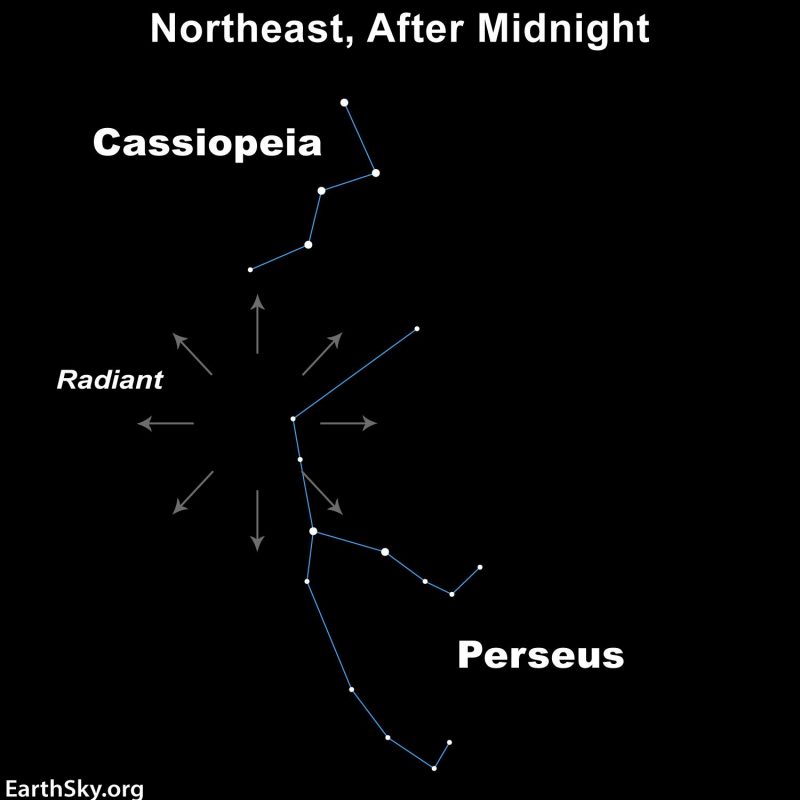
As the Perseid meteors radiate from the constellation Perseus, they become more numerous as the night deepens into the early morning hours. It is generally best to observe the shower just before dawn when the radiant is highest in the sky.
In summary, the 2026 Perseid meteor shower is expected to provide an exceptional opportunity for skywatchers to witness a dazzling display of shooting stars, with the best viewing conditions occurring on August 12 and 13, under dark moon-free skies. By following a few simple tips, anyone can enhance their chances of witnessing this natural wonder.
Written by urgent.news from EarthSky's reporting — not their text. Machine-written — may contain errors; check the original before relying on it.