Mount Toba eruption doesn't seem like it could nearly kill our species
The massive Toba eruption seems to have had little climate impact.
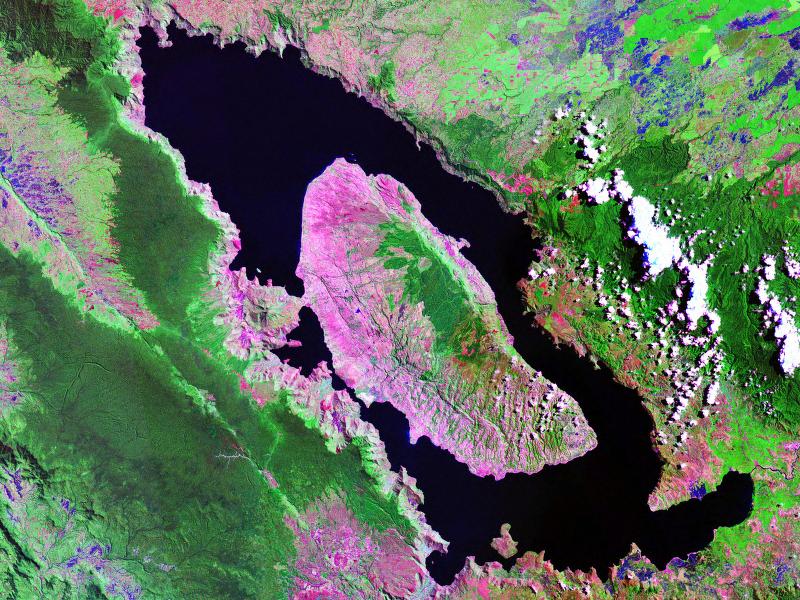
Mount Toba erupted around 74,000 years ago, releasing an immense amount of magma over a two-week period. This eruption is considered the largest of the past 2.6 million years. Jinheum Park, a geoscientist at Johannes Gutenberg University, explains that this event caused significant global cooling, potentially threatening the survival of early human ancestors.
Park and his team studied sediment from a small crater lake on the Kenya-Tanzania border to uncover the aftermath of the eruption. However, their findings suggest that the cooling effects of the Mount Toba eruption were brief, lasting less than two years and resulting in only a half-degree of cooling. While volcanic eruptions inject sulfur dioxide into the atmosphere, forming a haze that reflects sunlight back into space, the cooling effect diminishes when the eruption exceeds a certain magnitude.
Bigger sulfate aerosols settle more quickly due to their weight, making them less effective at scattering incoming solar radiation.
Written by urgent.news from Ars Technica Science's reporting — not their text. Machine-written — may contain errors; check the original before relying on it.