Longest serving volunteer helps boost bird numbers
Bird charity's longest serving volunteer helps achieve big success in boosting species recovery.
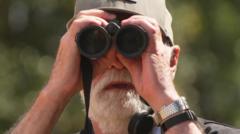
Nigel Hewitt, the longest-serving volunteer with the Royal Society for the Protection of Birds (RSPB), has dedicated 60 years of his life to bird conservation. Born in 1946, Hewitt began his volunteer work with the charity in 1966 while taking a break from studying for his A levels. He initially helped protect ospreys, a species that had not bred in the UK for over a century, as part of Operation Osprey.
Hewitt has a particular fondness for the cirl bunting, a small finch-like bird that once thrived in farmland across southern England but is now listed as a conservation priority. He played a crucial role in managing the habitats of cirl buntings at Labrador Bay and Ashill nature reserves in Devon, as well as contributing to the red-backed shrike project on Dartmoor. Fellow birder John White praised Hewitt's extensive knowledge, saying, "His knowledge is unbounded. He loves it. He'll talk for ever about birds."
During his 60 years of volunteering, Hewitt has shown remarkable consistency and influence. RSPB volunteering development officer Tim Hughes commended Hewitt's significant contributions, stating, "Few individuals can demonstrate such sustained commitment, breadth of impact and enduring legacy as Nigel." Hewitt's work has been instrumental in achieving major successes in species recovery, particularly for the cirl bunting.
Hewitt's approach to bird conservation is simple yet effective. He explained that cirl buntings prefer to stay inconspicuous, quietly raising their young without drawing attention. By creating and preserving their habitats, Hewitt has not only helped the cirl bunting but also benefited a wide range of other bird species at the reserves.
Reflecting on his long-standing commitment, Hewitt said, "The pleasure of seeing a bird that you know you've done work to protect gives me so much satisfaction." While he plans to retire from volunteering, Hewitt remains hopeful that he may continue his birdwatching adventures for years to come.
Written by urgent.news from BBC Science's reporting — not their text. Machine-written — may contain errors; check the original before relying on it.