I've gone from writing about SD-WAN to depending on it
Starlink and 5G home internet are helping close the digital divide, but they're far from perfect. Glue them together, and you can get awfully close.
In the spring, the author and their wife relocated from the Denver suburbs to the Colorado Rockies, seeking a break from their tech-heavy lifestyle. However, this rural move presented a challenge: limited internet connectivity. Prior to their relocation, the author covered SD-WAN, a technology that had gained prominence due to the rise of SaaS applications and the shift to remote work brought on by the COVID-19 pandemic.
When they arrived at their new high-altitude home, the fastest wired connection available was DSL, with CenturyLink promising up to 20 Mbps down and 1.5 Mbps up. This was a significant decline from the gigabit fiber connection they enjoyed in Denver. To bridge the digital divide, the couple explored 5G and Starlink, two emerging technologies that promised faster internet speeds.
T-Mobile's 5G internet service delivered near-gigabit download speeds and uplink speeds ranging from 30–40 Mbps, while Starlink offered download speeds between 100 and 400 Mbps with uplinks at around 30 Mbps. While these options provided substantial improvements, they still had limitations and occasional outages. To ensure uninterrupted internet access, the authors turned to SD-WAN, a technology designed to address the needs of businesses relying on SaaS applications.
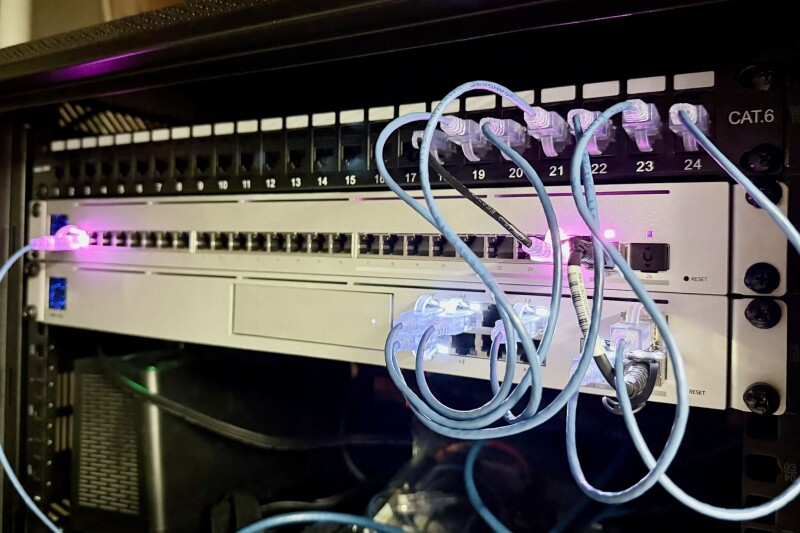
SD-WAN gateways allow for multi-WAN configurations and policy-based routing, enabling traffic to be routed through private WANs and internet connections as needed. The author's router, a Ubiquiti UniFi Dream Machine SE (UDM-SE), supported both SD-WAN capabilities, making it an ideal choice for their situation. Setting up the UDM-SE was straightforward: they connected each ISP-provided gateway to one of the UDM-SE's WAN ports and configured the device to either balance traffic or fail over to the backup connection in case of an outage.
Although the UDM-SE was not the newest or most advanced gateway on the market, it offered the necessary features at an affordable price. Once everything was connected, the authors configured the UDM-SE to prioritize T-Mobile as the primary connection and Starlink as the backup. Despite experiencing a dozen dropped connections over the past two months, the UDM-SE's failover feature proved effective, automatically switching to Starlink when T-Mobile connections failed.
This setup allowed the authors to maintain reliable internet access, even in a remote location far from the amenities of the Denver suburbs.
Written by urgent.news from The Register's reporting — not their text. Machine-written — may contain errors; check the original before relying on it.
Also reported by 1 other outlet
- I've gone from writing about SD-WAN to depending on it theregister.com