Ireland gears up for 'special' partial solar eclipse
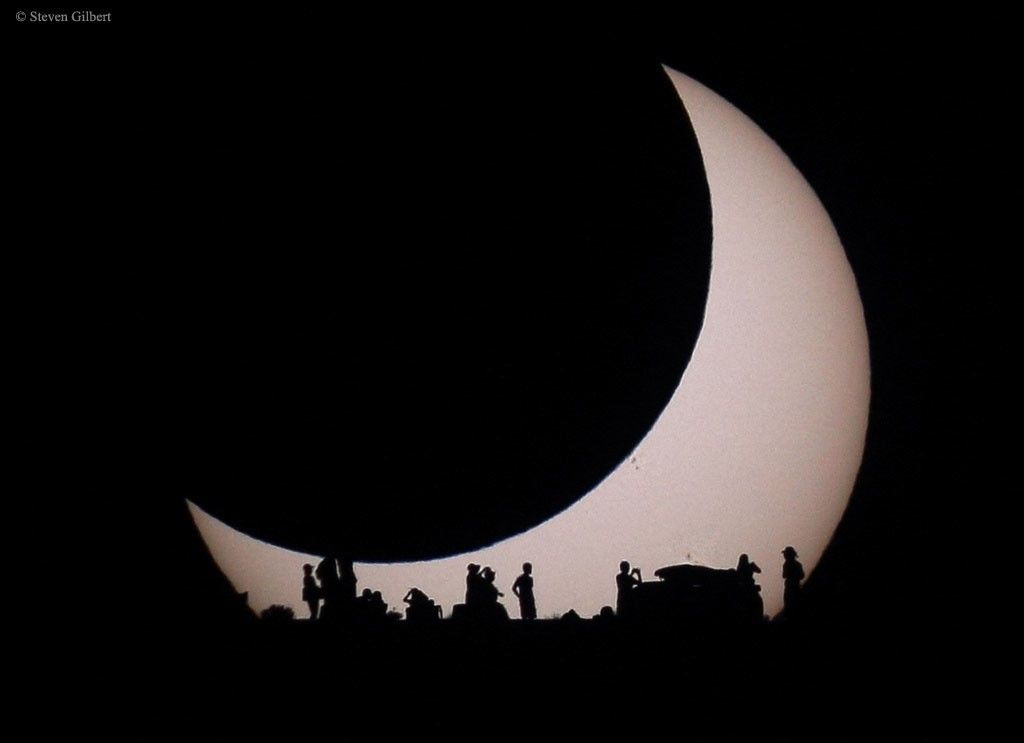
People all over the country will get to experience a partial solar eclipse next Wednesday evening, 12 August, as the Moon moves in front of the Sun.
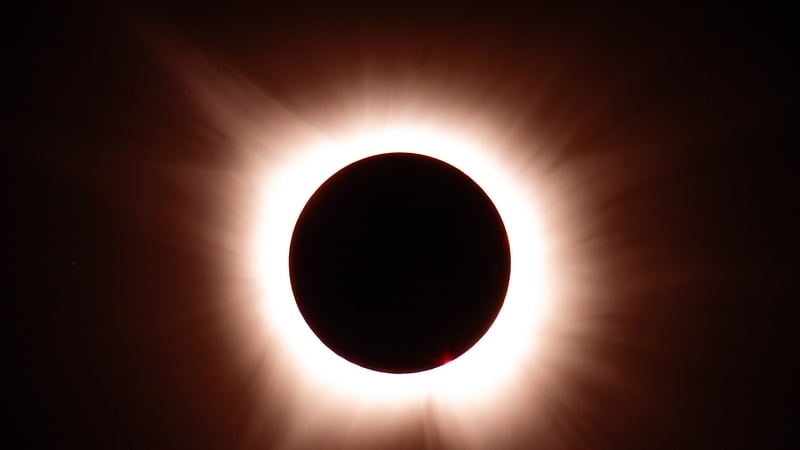
Parts of Ireland and Europe will witness a rare partial solar eclipse on Wednesday evening, 12 August, as the Moon passes in front of the Sun. The eclipse will be visible from the west and south of Ireland, with up to 98% coverage of the Sun in the west, and 94% in the east and north. The event will become visible just after 6pm, with maximum coverage occurring shortly after 7pm, and the Moon clearing the Sun by around 8pm.
Professor Peter Gallagher from the Dublin Institute for Advanced Studies (DIAS) at Dunsink Observatory describes this event as a unique lifetime experience, as the next eclipse in Ireland will not occur until 2090. A team from DIAS will be using an Italian-made solar telescope to capture high-resolution images of the solar corona on the outer layer of the Sun's atmosphere. NASA's crew will also be conducting similar observations above the north Atlantic Ocean, west of Iceland.
Public events have been organized across the country to view the eclipse, including at observatories in Dublin and Armagh, and at Blackrock Castle in Cork. Similarly, public events are being hosted at Maynooth University, Queen's University Belfast, and Phoenix Park in Dublin. Due to high demand, many of these events are already sold out, so attendees should verify availability before traveling.
Safety precautions are crucial during a solar eclipse. The public is advised against using sunglasses or binoculars to view the eclipse, as this can cause eye damage. Certified eclipse viewers or glasses are available for purchase from retailers and organizations organizing official viewings. Dr Emma Whelan from Maynooth University's Department of Physics emphasizes the importance of protective glasses and filters to prevent retina damage, as the Sun's radiation remains strong during the event.
She notes that Maynooth University has sold out its 450 tickets for a public viewing event, with hundreds on a waiting list, reflecting unprecedented public interest in this rare astronomical occurrence.
Written by urgent.news from RTE News's reporting — not their text. Machine-written — may contain errors; check the original before relying on it.